








icon-account icon-glass

Popular Products

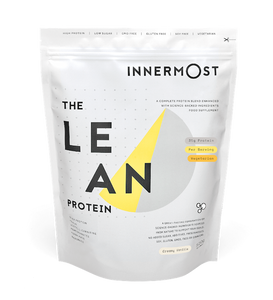
The Lean Protein
Whey protein powder for weight-loss.
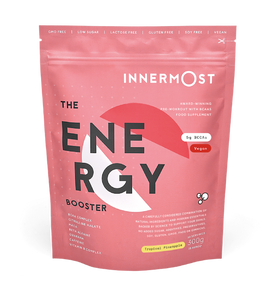
The Energy Booster
Pre/intra-workout powder with BCAAs.

Why Do We Become Unfit? Here’s How To Maintain Fitness

3rd May 2023

3rd May 2023

By Beth Shelper

We’ve all been there – your rest day lasted a little bit too long. Talk about rest week, or maybe even rest month(s). Now you’re stuck in the vicious cycle of wanting to get back into it, but not wanting to get back into it because you just know that you’ve lost some of that all-important progress that you made in terms of fitness, stamina and technique.

Don’t worry – it’s totally normal. And more so something that we’ve all struggled with. But why does exercise get harder when we’ve been doing less? What is the science behind becoming unfit?

Well, Leeds University have provided the answers. The answers we’ve all been waiting for, more accurately.

But first, what do we technically mean by ‘unfit’ and is it truly feasible to always maintain fitness? Why is it that exercise gets harder?

Here’s what ‘unfit’ really means

When one describes a physically unfit person, there are a few key signs and features that are considered. It’s important to note that being described as unfit isn’t a personal or even negative description, just one that considers physical and psychological attributes and abilities.

Key signs of an ‘unfit’ person include:

  • Laboured breathing
  • Chronic illness
  • Excess weight
  • Insomnia
  • A high resting heart rate
  • Diabetes
  • Heart disease
  • High blood pressure

The study: why exercise gets harder the less you do

The brand-new study released by students from The University of Leeds investigates the age-old conundrum around a decrease in performance and ability following a lack of exercise.

The study was conducted through the observation of mice, chosen due to our sharing of a particular protein: Piezo1, a blood flow sensor that is thought to have a pretty large impact on the transportation of blood to the muscles, and as a result, of course, on our performance during exercise.

The study (and the mice) highlighted a crucial link between exercise and the production of the Piezo1 protein, showing that the less exercise we do, the less of this protein is produced, and thus when we do eventually reengage in said exercise, it’s levels are limited.

Aka – exercise gets harder because our ability to exercise reduces from a scientific perspective. This shows its actually nothing to do with motivation at all, either.

So, how can we maintain fitness?

From these findings, and from our understanding of health and wellness, its clear that maintaining fitness is pretty important. We’re only human, and we all slip up from time-to-time, but by putting in that extra bit of effort, we can make things easier for ourselves in the long run.

If you’re struggling to get fitter or to maintain your motivation, try out some of the below tips and remember whilst you should always push yourself to do better, it’s just as important to listen to your body and rest when you need it. That’s all part of progress, too.

  • Keep it up, little and often

When we talk about exercise, that doesn’t always have to mean an extended session at the gym, all-day every day. It’s all about getting examples of exercise in little and often.

Walk to the corner shop rather than drive, take advantage of your lunch break and go on a quick walk, get outside and go for a short run around the block, or even cycle to work (where you can) when the weather is nice.

These are all great examples of integrating exercise into your routine in a realistic and manageable way!

  • Set realistic goals

If you haven’t been on a run in a little while and you’re thinking of running a marathon next week, we’re going to go out on a limb here and say it’s probably not the best idea. Aside from setting yourself up for a pretty painful experience, it’s quite likely that you’ll injure yourself here.

So, whilst its admirable that you’re setting your sights and expectations high – and whilst we have no doubt that you’ll get to that marathon finishing line following a good training regime, make sure that the goals you set are realistic, and you’re able to hit them often to keep those motivation levels tip-top.

  • Create attractive rewards

If you planned to go to the gym 3 times this week and you went 3 times: you’ve got to reward yourself. Whether that’s an extra 30 minutes in bed, a cheeky extra treat on the shopping list, or even that pair of shoes you’ve been eyeing up online, treat yo’ self! It’s all about recognising your achievements and rewarding yourself for them.

  • Bring a buddy

Exercising can be boring if you’re lacking the motivation, but you’d be surprised how much your mood changes if you bring a friend along for the ride. Whether its your parent, friend, colleague or even your dog that joins you for that evening run around the park, you don’t always have to go solo.


  • Fuel yourself sufficiently

Exercising too hard can leave you feeling completely depleted of energy, and actually be detrimental to your physical development. Make sure you're feeding your body with ingredients that will help you to recover and replenish fully to avoid injuries that might take you off course for longer than you'd hope. Try The Recover Capsules to give your body the nutrients it needs, along with a protein blend to support muscle recovery and development. 

Product Spotlight

Need Expert Advice?

Other Insights

The Ingredient We Almost Didn't Put In The Energy Booster
There's a question we ask about every ingredient before it goes into a product. Not "is this trending?" Not "does it look good on the label?" Just: does the evidence actually support putting this in? Most of the time, that question is straightforward. Either the research is there or it isn't. But occasionally you land on an ingredient where the science says yes and something else gives you pause. That's where formulation gets genuinely interesting. Beta alanine was one of those decisions. What Beta Alanine Actually Does Most people who've taken a pre-workout have felt beta alanine without knowing it. It's the ingredient responsible for the tingling sensation you get in your face, your neck, your hands. That feeling has a name: paraesthesia. It's harmless. But it's also the reason we nearly left beta alanine out. Before I get to that, the science. Beta alanine is a non-essential amino acid. On its own, it doesn't do very much. But inside muscle tissue, it binds with another amino acid called histidine to form something called carnosine. And carnosine is where the real work happens. During intense exercise, your muscles produce hydrogen ions as a byproduct of energy production. It's the build-up of those hydrogen ions, not lactic acid as most people think, that causes the burning sensation and the drop-off in performance. Carnosine acts as a buffer. It mops up those hydrogen ions and delays the point at which fatigue kicks in. The research on this is substantial. A 2012 meta-analysis published in the journal Amino Acids, covering over 40 studies, found that beta alanine supplementation consistently improved exercise capacity, particularly in high-intensity efforts lasting between one and four minutes. The effect size was meaningful and reproducible. This wasn't a promising pilot study. It was a decade of accumulated evidence pointing in the same direction. In practical terms: more reps before failure. More output before you hit the wall. Sustained performance over a longer window. So why the hesitation? The decision we almost got wrong The tingling. Not because it's dangerous. It isn't. The paraesthesia from beta alanine is a well-understood pharmacological response and there is no evidence of harm at the doses used in supplementation. But we had a real concern: if someone takes The Workout Blend for the first time and feels an unexpected tingling in their face, and nobody told them it was coming, we've just lost their trust. Possibly permanently. The easy path was to leave it out. Plenty of pre-workout formulas do exactly that, either because they're being cautious or because they want a smoother consumer experience. No ingredient, no explanation required. We talked about it a lot. And the conclusion we kept coming back to was this: removing an ingredient with strong evidence because it might confuse people is not how we want to make formulation decisions. That's the same logic that leads brands to include ingredients with weak evidence because they're more familiar, more comfortable, more sellable. The answer wasn't to remove it. The answer was to be upfront about it. The tingling means the beta alanine is working. It's a real physiological response to a real ingredient doing a real thing. If we believe in the science, we include the ingredient and we explain what's happening. That felt like the right standard to hold ourselves to. What the rest of the market does Most pre-workout formulas fall into one of two categories.The first is the stimulant-heavy formula. Stacked with caffeine at doses that produce a short spike, a noticeable crash, and not much else underneath. These sell well because the immediate sensation of energy feels like evidence that something is working. It often isn't, not in any meaningful physiological sense beyond what caffeine alone would do. The second is the proprietary blend. A long list of ingredients with no disclosed amounts, making it impossible to know whether any of them are present at doses that match the research. Proprietary blends let brands list an ingredient without committing to a dose that would actually work. Both approaches optimise for perception. Neither optimises for performance. What I'd recommend The Energy Booster (soon to be renamed to The Workout Blend) contains beta alanine alongside citrulline malate, which supports nitric oxide production and blood flow during training, BCAAs at a 2:1:1 ratio to safeguard lean muscle, and natural caffeine from guarana for sustained energy without the spike you get from synthetic sources. The formulation is built around what the research supports at doses that match the evidence. If you feel the tingling the first time you take it, that's the beta alanine. It's normal, it fades within 20 minutes or so, and it's a sign the formula is doing what it's supposed to do. Read more
Our Top Tips For Maintaining A Healthy Daily Wellness Routine