icon-account icon-glass

Popular Products

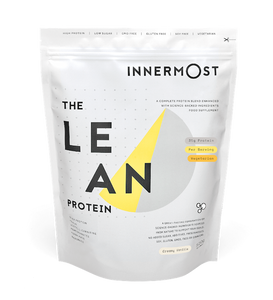
The Lean Protein
Whey protein powder for weight-loss.

CUT THROUGH THE CONFUSION

NUTRITION CONSULTATION

asdf

Insight

Get to know what’s real and what’s a gimmick by taking a look at our Insight articles, and start bossing your health and fitness today.
The Glow Blend: A Confession
I need to tell you something I've never said publicly, and it's not flattering. When our product team first brought me a plan for a collagen supplement, my honest reaction was no. Not "let me think about it." A flat no. And if I'm being fully honest about why, it wasn't the science. It was that collagen felt, in my head, like a beauty category. Something for someone else's brand. Not ours. I built Innermost around performance and evidence. Protein, creatine, mushrooms, electrolytes. Things I could point to a study for and feel comfortable talking about at a dinner table full of people who workout regularly. Collagen sat in a different mental folder. Skincare aisle. Jars with gold lids and brand sponsorship by one of the Kardashians. I'd absorbed a version of what "beauty" meant without ever examining it. The argument in the room So we had the argument internally. A proper one. A few people on the team pushed back hard, and rightly so. One of them put it to me plainly: we started Innermost to follow the evidence wherever it goes, not to follow it everywhere except the places that feel awkward. That line stuck with me. Here's what changed my mind, and it wasn't a feeling. It was the research. What the evidence actually says Collagen is the most abundant protein in your body. It's structural, it's in your skin, your joints, your gut lining, and production declines steadily from your mid-twenties onward. That's not a marketing claim, that's basic physiology. The question was never whether collagen matters. It was whether supplementing it actually does anything, and that's where most of the category falls apart. Most collagen products on the market use whole collagen molecules, which are too large to be absorbed effectively when you drink them. The ones that do use hydrolysed peptides, which are broken down into smaller chains your body can actually take up, still run into a second problem: dose. A lot of labels list collagen content that sits well below the 2 to 10 grams used in the trials that show measurable effects on skin elasticity and hydration. You're paying for a placebo with good branding. The ingredient most brands leave out The third problem is the one that convinced me completely. Vitamin C isn't a nice-to-have alongside collagen. It's a required co-factor for your body to actually synthesise collagen at the cellular level. Without adequate vitamin C, the enzymes responsible for stabilising collagen structure don't function properly. You can take a perfectly dosed hydrolysed peptide and still get a fraction of the benefit if the product doesn't include enough vitamin C alongside it. Most don't. They sell you the raw material and leave out the one thing your body needs to use it. Once I saw the category clearly, laid out like that, the decision stopped being about how I felt and started being about what the evidence supported. That's the whole operating principle of Innermost. I couldn't defend saying no to a legitimate, well-evidenced product category. What we built So we built The Glow Blend properly. Hydrolysed collagen peptides at a dose that reflects the research, alongside vitamin C, hyaluronic acid for hydration, biotin and folic acid for hair and nail health. Nothing in it that doesn't earn its place. What surprised me after launch The part I didn't expect was the response once we launched it. A good number of the messages came from women, as you'd expect, and they were generous and specific about what they'd noticed. But a surprising number came from men. Customers writing in to say they'd felt exactly what I'd felt, that awkward little flinch at "collagen," and had quietly bought it anyway because the ingredient breakdown made sense to them. That response told me more about why this category needed an honest voice in it than any research paper did. I'm not going to pretend I have this fully figured out. I still catch myself, occasionally, hesitating slightly before I mention it in a room. Old habits sit deeper than good evidence sometimes. But I take it, and increasingly a lot of men I respect take it too, quietly, without needing to make a thing of it. If this sounds familiar If any part of this resonated, and you've felt that same small resistance to a category you assumed wasn't for you, hit reply and tell me. I'd genuinely like to know I'm not the only one who had to get over it. And if you know someone, a friend, a partner, who could use this exact reasoning rather than a tesimonial, forward it on. It might do more good coming from someone else's honesty. Read more
The Health Benefits of Camu Camu
Have you heard of camu camu?  In recent years the fruit has started appearing in everything from smoothie powders to daily wellness blends. Yet, outside nutrition circles, this small Amazonian fruit remains relatively unknown. It is best known for containing a high concentration of vitamin C, but that is only part of its nutritional profile. Camu camu also provides polyphenols, carotenoids and other naturally occurring plant compounds that have attracted growing scientific interest. So, what is camu camu, what can it genuinely do for your health and how strong is the research behind its growing reputation? Let’s get into it! What is camu camu? Camu camu, scientifically known as Myrciaria dubia, is a small fruit native to the Amazon rainforest, particularly the flooded river regions of Peru and Brazil. It grows on a shrub and looks a little like a large red or purple cherry when ripe. Fresh camu camu has an intensely sharp, acidic taste. Because of this, it is rarely eaten like an everyday berry. It is more commonly turned into juice, pulp, powder or a concentrated ingredient for use in food supplements. The fruit’s main nutritional claim to fame is its vitamin C content. Camu camu is widely regarded as one of the richest known natural sources of the vitamin, although the precise amount varies considerably. The variety of the plant, growing conditions, ripeness, storage and processing method can all affect the final concentration. Beyond vitamin C, camu camu contains several groups of plant compounds, including polyphenols, flavonoids, anthocyanins and carotenoids. Researchers are interested in how these compounds may work alongside vitamin C, rather than viewing the fruit as a source of isolated ascorbic acid alone. What makes camu camu different from other sources of vitamin C? Vitamin C is found in many everyday foods, including citrus fruits, berries, peppers and leafy vegetables. Camu camu stands out because it can provide a particularly concentrated natural source of the vitamin. A relatively small amount may provide considerably more vitamin C than the same amount of many familiar fruits, although the precise concentration depends on how it has been grown, harvested and processed. Vitamin C source Common format Vitamin C context Other nutritional compounds What to consider Camu camu Powder, pulp, juice or supplement blend Naturally rich, although the amount varies with ripeness and processing Polyphenols, flavonoids, carotenoids and anthocyanins Check the actual vitamin C provided per serving Orange Whole fruit or juice A familiar dietary source with a more moderate concentration Flavonoids, water and fibre when eaten whole Easy to include in the diet, but juice contains less fibre Acerola cherry Powder, juice or extract Another highly concentrated natural source Carotenoids and polyphenols Nutrient levels also vary between formats Isolated vitamin C Tablet, capsule or powder Standardised and straightforward to measure Usually contains few or no whole-fruit compounds Useful for a precise dose, but less nutritionally complex Camu camu also contains plant compounds that would not normally be found in a standard isolated vitamin C supplement. However, that does not automatically mean it produces better results. The most useful comparison is the amount of vitamin C provided per serving and the quality of the wider formulation. What are the health benefits of camu camu? When it comes to the health benefits of camu camu, there is an interesting body of ongoing research. Many of camu camu’s clearest health benefits come from its vitamin C content. Researchers are also studying whether its wider collection of plant compounds may offer additional effects, although much of that evidence is still developing. Supports normal immune function Vitamin C contributes to the normal function of the immune system. It supports several cellular processes involved in the body’s immune response and helps maintain normal immune function during and after intense physical exercise. This does not mean that camu camu can prevent everyday illness by itself. Sleep, nutrition, stress levels and physical activity all influence immune health, but an adequate intake of vitamin C helps the immune system function normally. Supports collagen formation and skin health Collagen is a structural protein found throughout the body, including in the skin, bones, cartilage and blood vessels. The vitamin C found in camu camu contributes to collagen formation for the normal function of the skin. This is one reason camu camu has become a popular ingredient in beauty and wellness formulas. The vitamin C it provides supports the biological processes involved in normal collagen production. Helps protect cells from oxidative stress Oxidative stress occurs when there is an imbalance between free radicals and the body’s ability to manage them. Free radicals are naturally produced during processes such as metabolism and exercise, but they can also be influenced by smoking, pollution and other environmental factors. Vitamin C contributes to the protection of cells from oxidative stress. Camu camu also contains polyphenols and other compounds that have demonstrated antioxidant activity in laboratory studies. To clarify, antioxidants should not be viewed as a way to “cancel out” an unhealthy lifestyle. Their role is part of the body’s wider defence system, which also depends on a varied diet and sufficient recovery. Contributes to energy and reduced tiredness Camu camu is sometimes described as an energy ingredient, although it does not behave like caffeine. This is a result of the vitamin C, which contributes to a normal energy-yielding metabolism and the reduction of tiredness and fatigue. Energy-yielding metabolism is the process through which the body releases and uses energy from food. What does emerging research say about camu camu? While the vitamin C content is a clear driver for the benefits of camu camu, there is an emerging area of research that is starting to look beyond this. Scientists are now looking at whether the fruit’s wider mixture of polyphenols and other plant compounds could influence inflammation, gut bacteria and metabolic health. One small human study compared camu camu juice with tablets containing the same amount of vitamin C. Researchers observed reductions in certain markers of oxidative stress and inflammation in the camu camu group, suggesting that compounds beyond vitamin C may have contributed. However, the study involved only 20 male smokers and lasted seven days, so larger trials are needed. One frequently referenced study found that camu camu extract altered the gut microbiota and limited weight gain in mice consuming a high-fat, high-sugar diet. The animals also showed changes in energy expenditure and markers associated with metabolic health. These results have led to suggestions that camu camu could eventually have a role in research around the relationship between plant compounds and the gut microbiome. Further research is needed however before definitive conclusions can be made. How much camu camu should you take? There is no universally established daily dose of camu camu. Powders, extracts, juices and blended supplements can vary considerably in concentration, so the appropriate serving depends on the individual product. Follow the serving instructions provided by the manufacturer and check how much vitamin C the recommended quantity contains. Remember to account for other supplements you may be using, particularly multivitamins or immune-support products. Is camu camu worth adding to your routine? On balance, camu camu can be a useful addition to your routine, provided your expectations are realistic. Camu camu is a particularly rich source of vitamin C, and vitamin C's contributions to immune function, collagen formation, protection of cells from oxidative stress and normal energy metabolism are among the best-established in nutrition. These are the benefits supported by the strongest and most established evidence. You can find camu camu in our vegan protein powder The Health Protein. It is developed to support everyday health alongside repair and recovery, containing 31g of pea and brown rice protein, together with camu camu, bilberries, acai berries and a blend of mushrooms. The formula provides 250mg of camu camu per serving and can be mixed into a shake, smoothie or porridge. References García-Chacón, J., Marante, F., Boix-Castejón, M., Campanella, O., López-Nicolás, J. (2023). Camu Camu (Myrciaria dubia (Kunth) McVaugh): An Amazonian Fruit with Biofunctional Properties: A Review. ACS Omega. 8(6). Click here. Azevedo, L., Ribeiro, P., Oliveira, J., Correia, M., Ramos, F., Oliveira, E., Barros, F., Stringheta, P. (2019). Camu-camu (Myrciaria dubia) from commercial cultivation has higher levels of bioactive compounds than native cultivation (Amazon Forest) and presents antimutagenic effects in vivo. Journal of the Science of Food and Agriculture. 99(2). Click here. EFSA Panel on Dietetic Products, Nutrition and Allergies (NDA). (2015). Vitamin C and contribution to the normal function of the immune system: Evaluation of a health claim pursuant to Article 14 of Regulation (EC) No 1924/2006. EFSA Journal. 13(11). Click here. EFSA Panel on Dietetic Products, Nutrition and Allergies (NDA). (2010). Scientific opinion on the substantiation of health claims related to vitamin C and reduction of tiredness and fatigue, contribution to normal psychological functions, regeneration of the reduced form of vitamin E, contribution to normal energy-yielding metabolism, maintenance of the normal function of the immune system and protection from oxidative damage. EFSA Journal. 8(10). Click here. Anhê, F., Nachbar, R., Varin, T., Trottier, J., Dudonné, S., Le Barz, M., Feutry, P., Pilon, G., Barbier, O., Desjardins, Y., Roy, D., Marette, A. (2019). Treatment with camu camu (Myrciaria dubia) prevents obesity by altering the gut microbiota and increasing energy expenditure in diet-induced obese mice. Gut. 68(3). Click here.
Read more
Your Summer Survival Kit (From Someone Who Travels A Lot)
I'm putting the finishing touches to this post from an airport, which feels appropriate. By my count, I'll be going through three countries in the next six weeks. Meetings, a trip to see family including my niece and nephew, a supplier visit in Italy that I've been putting off for a year. And every summer the same thing happens. The carefully built routine, the one that took months to lock in, gets thrown into a suitcase and I hope for the best. Most people react to this by either giving up on the routine entirely ("I'll sort it out when I'm back") or overpacking so aggressively that half of it never leaves the bag. I've done both. Neither works. What actually works is deciding, in advance, which two or three things earn a place in my bag and which ones can wait until September. So here's mine. Not a wellness influencer's "what's in my bag" video. An honest list, built over about a decade of getting this wrong first. Why travel breaks routines specifically It's worth being precise about what actually changes when you travel, because it isn't just "less discipline." Three things shift at once. You sweat more and drink less water than usual, because you're distracted or the flight dried you out or the hotel room is warmer than home. You're outdoors more, often somewhere sunnier than wherever you live. And your meals stop being yours. You eat what's available, when it's available, and protein is usually the first thing to slip, because sugar, carbs and fat are what's on offer at 6am airport cafes. None of this is a discipline problem. It's an environment problem. The fix is making sure two or three specific things are in my bag before I leave home, so I’m not relying on willpower to begin with. 1. Electrolytes, non-negotiable Most people remember to pack sunscreen. Almost nobody packs electrolytes, and it's the one that actually catches up with you. Water replaces volume, not what you lose through sweat, which is mostly sodium and potassium and magnesium doing the quiet work of keeping muscles firing and fluid balanced properly. Miss that balance for a few days in the heat and you get the symptoms everyone blames on jet lag: the headache, the flat energy, the slight fog by 4pm that a coffee doesn't fix. It's usually not jet lag. It's electrolytes. I take The Hydrate Blend  for exactly this reason. Six electrolytes, no sugar, no synthetic flavouring, dissolves in a bottle of water in about ten seconds. One sachet on a travel day, first thing in the morning, does more for how I feel by evening than anything else in the bag. 2. Something for the sun you're actually going to get Here's the part most people don't think about until it's too late. UV exposure accelerates collagen breakdown, which is a slightly clinical way of saying that a week of proper sun does more to skin structure than most of the year combined. This isn't about vanity. It's a straightforward mechanism: UV generates free radicals that degrade existing collagen faster than your body can replace it. Sunscreen protects against the burn. It doesn't do anything for the collagen you're losing underneath. I've been taking The Glow Blend through summer for this reason specifically. Hydrolysed collagen peptides paired with vitamin C, which matters because vitamin C is a required co-factor for collagen synthesis and most collagen products leave it out entirely, then wonder why customers don't notice anything. It won't undo a week in the sun. It gives your skin something to rebuild with while it's under more pressure than usual. 3. Protein, especially when the meals aren't yours This is the one I've learned the hard way. When your diet goes inconsistent, protein is usually the first macronutrient to drop, simply because it's the hardest to find on the move. Airport food, hotel breakfasts, whatever's left at a conference buffet by 1pm, none of it is built around protein. And the honest science here is less dramatic than people expect: you don't need to train harder to maintain muscle through a disrupted period, you need to keep protein intake somewhere close to normal. That's the whole trick. I'll say this honestly because I'd rather be straight with you than pretend otherwise: my go-to for this is still The Strong Protein (whey based) and The Health Protein (vegan). They earn their place in my bag because they travel well, mix with nothing but water, and does the one job that actually matters on the road, which is making sure protein doesn't disappear from your day just because your routine has. The actual point None of this is about maintaining perfect discipline on holiday. Nobody does that, and if a brand tells you they do, they're not being honest with you. It's about deciding in advance which three or four things matter enough to bring, so the choice isn't being made for you by whatever's in the hotel minibar. If you've got a system that works for you when you travel, reply and tell me. I read every one of these, and I'm always looking to steal a better idea for my next trip. If this is useful, forward it to whoever in your life is about to live out of a suitcase for the next few weeks. It's the email I wish someone had sent me a decade ago. Read more
GLP1 Foods
Search interest in GLP-1 has followed the medications that made it famous. Mounjaro and Ozempic turned a piece of gut biology most people had never heard of into a household term, and that’s given rise to a big question: if these drugs work by acting on a hormone your body already makes, can you do something similar with food? You can influence your own GLP-1 response. The mechanism is well described, and the foods involved are ordinary ones you can buy in any supermarket. What you can't do is replicate what a weekly injection does, and the gap between the two is larger than most of the content on this subject admits. This guide covers what GLP-1 actually is, how food triggers it, which foods have the strongest evidence behind them, how the way you eat changes the response, and where the "natural Ozempic" claims stop being accurate Key takeaways No food contains GLP-1. It’s simply a hormone your gut releases, and food influences how much of it you release and when. Protein and fermentable fibre are the two most reliable dietary triggers available for GLP-1 release. Fibre works indirectly. Gut bacteria ferment it into short-chain fatty acids, which then stimulate GLP-1 release, so the effect arrives hours after the meal rather than at the table. How you eat matters more than you might realise. The same meal eaten slowly produces a larger hormonal response than the same meal eaten quickly. Food cannot replicate a GLP-1 medication. Your own GLP-1 is broken down within minutes; semaglutide is engineered to last around a week. Most supplements sold as "GLP-1 boosters" are fibre blends or berberine. They may have their place but, like any supplement, should not be relied on as a crutch What GLP-1 Actually Is GLP-1 stands for glucagon-like peptide-1. It is a hormone produced by enteroendocrine cells known as L-cells, which sit in the lining of your gut and are concentrated towards the lower end of the small intestine and into the colon. They release GLP-1 when food arrives.Once in circulation, it does four things: Signals to the appetite centres in your brain that you have eaten Slows the rate at which your stomach empties, so food stays with you longer Prompts your pancreas to release insulin, but only when blood glucose is elevated Suppresses glucagon, the hormone that raises blood sugar You can think of this as your body's own satiety system, and it’s been running quietly in the background after every meal you’ve ever eaten. However, here’s something many people don’t know, and even fewer talk about: Once released, GLP-1 is broken down almost immediately by an enzyme called dipeptidyl peptidase-4, usually shortened to DPP-4. Its half-life in the bloodstream is somewhere in the region of one to two minutes. A large proportion of what your gut releases is degraded before it ever reaches general circulation. That means you shouldn’t see GLP-1 as a level because it isn’t. It’s more of a pulse: a short signal fired around meals and cleared almost as quickly. It’s important to make that distinction, because a lot of people searching for how to raise their GLP-1 levels are imagining something like a vitamin store that can be topped up and kept high. There’s no reservoir here, only a response, and you can shape how large it is. No Food Contains GLP-1 A surprising number of the questions people ask about this assume GLP-1 is something you can eat. Foods high in GLP-1. Foods that contain GLP-1. GLP-1-rich foods. None exist. GLP-1 is a hormone your own body manufactures, not a nutrient. No plant or animal food supplies it, and if you did swallow the hormone directly, your digestive system would break it down like any other protein long before it could do anything useful. That same problem is why this class of medication was injectable for so long, and why the tablet versions have required a great deal of engineering to get around it. The question worth asking is a different one: which foods prompt your gut to release more of its own GLP-1? How Food Triggers a GLP-1 Response Release happens in two waves. The first begins within about ten to fifteen minutes of eating, before most of what you have swallowed has physically reached the L-cells at all. This early phase is driven by nerve signals and other hormones from the upper gut, essentially a heads-up that food is on its way. The second, larger wave follows over the next hour or so, as nutrients make direct contact with the L-cells further down. Three components of a meal drive that second wave, but they don’t work in the same way or to the same degree. Protein Amino acids and small peptides are detected directly by receptors on L-cells, which respond by releasing GLP-1. This is the most immediate and most consistently demonstrated dietary trigger. Whey has been studied more than most, though the effect is not unique to it. Fermentable fibre This one is indirect, and understanding why explains a lot. You can’t digest fibre yourself, so it travels intact to the colon, where your gut bacteria ferment it. That fermentation produces short-chain fatty acids, principally acetate, propionate and butyrate. Propionate in particular binds to a receptor called FFAR2, which is expressed on the surface of L-cells, and that binding stimulates the release of both GLP-1 and PYY, a second appetite-suppressing hormone. Two things follow from that. The fibre effect is delayed, arriving hours after the meal rather than during it. And it depends on your gut bacteria, which means it varies between people and builds over time rather than switching on overnight. Fat Long-chain unsaturated fatty acids also stimulate GLP-1 release. The mechanism is real, but fat brings a lot of calories with it, which limits how useful it is as a deliberate weight loss strategy. The Foods That Increase GLP-1 Protein-rich foods Like so much else in fitness and nutrition, protein is the most dependable lever you have. It also has the advantage of being straightforward. Any complete protein source at a reasonable portion size will produce a response, and there’s no need to chase a specific type. Eggs, fish, chicken, lean red meat, Greek yoghurt, cottage cheese, tofu, tempeh, lentils, beans and a quality protein powder all qualify here. If you’re eating protein at every meal rather than loading it all into dinner, you’re already doing the most useful thing in this article. If hitting your protein goals consistently is proving tough, our guide to natural protein supplementation might help. Strength of evidence: strong and consistent across human trials, though the effect is acute rather than something that accumulates. Fermentable fibre This is where the research gets genuinely interesting, and it’s also where most people in the UK fall short. Average fibre intake in the UK is only around 19g for people aged between 19 and 64, and that’s only around 60% of the recommended 30g per day. It’s also the fermentable fractions that are the ones most likely to be missing.Not all fibre ferments equally well. The types that matter here are: Beta-glucan - oats and barley Inulin and fructans - chicory root, onions, leeks, garlic, asparagus, Jerusalem artichokes Galacto-oligosaccharides - beans, lentils, chickpeas Resistant starch - slightly underripe bananas, and cooked potato, rice or pasta that has been cooled The last one is worth explaining further, because it sounds like folklore and isn't. When cooked starch cools, some of it recrystallises into a form your small intestine can no longer break down, a process called retrogradation. It then reaches the colon intact and becomes food for your bacteria. A potato salad, or rice cooled and used the following day, delivers meaningfully more resistant starch than the same food eaten straight from the pan. Reheating it does not undo the effect. One practical warning: if your current fibre intake is low, increase it gradually. Fermentation produces gas as well as short-chain fatty acids, and going from less than 20g a day to 30 overnight is an unpleasant way to find that out. Strength of evidence: the mechanism is well established in humans, and the clinical trial data is promising but more limited than the enthusiasm around it suggests. More on that below. Unsaturated fats Olive oil, avocado, nuts and oily fish all stimulate GLP-1 release through long-chain fatty acid receptors on the gut lining. The mechanism is sound. The practical value is limited by the fact that fat carries more than twice the calories per gram of protein or carbohydrate (9kcal/g vs 4kcal/g), so deliberately adding fat to trigger a satiety hormone tends to work against the reason most people are interested in the first place. Include these foods because they are good foods. Don’t add extra oil to your dinner in pursuit of a hormone. Strength of evidence: solid for the mechanism, poor as a strategy. Bitter compounds and polyphenols Bitter taste receptors are not confined to your tongue. Versions of them appear throughout the gut, including on L-cells, which has prompted interest in whether bitter foods and certain plant compounds might stimulate GLP-1 release. Green tea, coffee, bitter leaves such as rocket and chicory, and cocoa polyphenols all come up in this context. The honest position is that most of this work has been done in cell cultures and animal models, with a smaller number of human trials showing modest effects. It is a reasonable area of research, but a poor foundation for a plan. Drink your green tea because you like it, not for the effect it might have on your hormones. Strength of evidence: early and mixed. Category Foods How it works Evidence Protein Eggs, fish, poultry, dairy, tofu, pulses, protein powder Amino acids sensed directly by L-cells Strong Fermentable fibre Oats, barley, beans, lentils, chicory, onions, leeks, cooled starches Fermented into short-chain fatty acids, which stimulate release Good mechanism, moderate outcomes Unsaturated fat Olive oil, avocado, nuts, oily fish Fatty acid receptors in the gut lining Sound, but calorie-limited Bitter compounds Green tea, coffee, bitter leaves, cocoa Bitter taste receptors in the gut Early and mixed How you eat matters nearly as much as what Most articles on this subject stop at the shopping list. The way a meal is eaten changes the hormonal response to it, and this part costs nothing. Slow down In a study published in the Journal of Clinical Endocrinology and Metabolism, participants ate an identical meal on two occasions, once over 5 minutes and once over 30. The slower meal produced higher circulating GLP-1 and PYY, and participants reported feeling fuller. The same food was used and the same calories consumed, but the hormonal outcome was different. There is a caveat that most coverage of this study leaves out. When the same research group repeated the design in adults with obesity, the effect was blunted, and in some cases absent altogether. So this is a habit worth building rather than a guaranteed result, and it may do less for the people most interested in it. I will say that in more than a decade of coaching, eating slowly is one of the very few interventions I have never seen anyone regret, and one almost nobody does without being asked. It’s free, it works from your next meal, and it requires nothing you don't already own. Eat protein and vegetables before the carbohydrate Meal sequencing has been shown to improve post-meal glucose control and increase GLP-1 relative to eating the same components in the opposite order. The effect is modest, but the cost is nothing. Eat distinct meals Your L-cells respond to nutrients arriving, which means grazing continuously across the day gives you a series of weak signals rather than a few strong ones. This is a reasonable inference from the mechanism rather than a heavily trialled finding, so treat it as a sensible default rather than a rule. Can Food Replace Mounjaro or Ozempic? No, and it’s worth understanding why that is rather than just taking it as a given.Your own GLP-1 is broken down within a couple of minutes of release. Semaglutide is a modified version of the same molecule, redesigned specifically to resist the enzyme that would otherwise destroy it. Its half-life is around a week. Rather than brief pulses around meals, it produces sustained concentrations far above anything your body generates on its own, for seven days at a stretch. That means the difference between naturally released GLP-1 and semaglutide isn’t one of degree or magnitude. It’s a difference of kind, and it shows up in the outcomes. In the STEP 1 trial, participants on semaglutide lost close to 15% of their body weight over sixty-eight weeks. SURMOUNT-1 reported around a 21% loss over 72 weeks at a 15mg weekly dose of tirzepatide (the highest dose available). Now compare that with the best dietary fibre evidence available. In a 2015 trial published in Gut, researchers at Imperial College London gave 60 overweight adults a supplement designed to deliver propionate directly to the colon, bypassing the variability of fermentation. Acutely, it raised GLP-1 and PYY and reduced how much participants ate. Over twenty-four weeks, it reduced weight gain and limited the accumulation of abdominal and liver fat compared with the control group. That’s a genuine and useful finding, but it’s also a different category of outcome from double-digit weight loss. The same research offers the single most clarifying number in this whole subject. The ten grams of propionate ester used in the trial delivered an amount of colonic propionate that would otherwise require roughly 60g of conventional dietary fibre per day. Remember that the UK average intake is less than 20g. That alone shows the practical ceiling of what food can do here, expressed in terms anyone can check against their own diet. So, the honest summary is this. Eating more protein and more fermentable fibre will make you feel fuller, will improve your glucose response, and is worth doing on its own merits. It won’t produce the effect of a prescription medication, and anyone telling you otherwise is either mistaken or selling something. The tablets don't change that answer Weight-loss pills have now arrived. In June 2026 the MHRA licensed an oral form of semaglutide, the first GLP-1 tablet approved in the UK for weight management, currently available privately while NICE completes its assessment. Others are moving through development behind it. It would be easy to read that as the gap between food and pharmacology closing. Actually, it demonstrates the opposite. Semaglutide is a peptide, and peptides are destroyed in the gut, so the tablet has to be formulated with an absorption enhancer and taken on an empty stomach with a small amount of water. Even then only around one per cent of the dose reaches the bloodstream. That’s why the tablet is dosed at 25mg, while the injection is 2.4mg. The newer non-peptide drugs take a different route to the same problem, abandoning the peptide structure entirely in favour of a small molecule built to survive digestion. Either way, a great deal of pharmaceutical engineering has gone into solving a problem your dinner can’t, which is that your gut destroys this class of molecule on contact. Food works with that system rather than around it. That’s an advantage where safety and cost are concerned, but places a hard limitation on the size of the effect.If you’re already taking a GLP-1 medication, none of this becomes irrelevant. Food and training matter more, not less, and we've covered that separately. The "natural ozempic" claims worth ignoring Oatzempic and eggzempic Blended oats with lime, or a breakfast built entirely around eggs. Both trends do produce fullness, for the entirely unremarkable reason that a low-calorie meal high in fibre or protein is filling. Nothing about either is a GLP-1 phenomenon requiring a new name. Oats are oats and eggs are eggs. Simple as that! Berberine Widely marketed as "nature's Ozempic", which is the most misleading label in this category. Berberine is a plant alkaloid that appears to act largely through AMPK signalling, an entirely different pathway. It is not a GLP-1 receptor agonist and does not behave like one. It also has meaningful interactions with a number of common medications, which is a serious point rather than a footnote, and it should not be started without speaking to a pharmacist or GP. Apple cider vinegar There is some reasonable evidence that vinegar taken with a meal blunts the post-meal glucose rise. That’s a real effect, but not related to GLP-1. The two have been conflated online to the point where the distinction has almost vanished. Having had clients bring each of these to me in turn over the past few years, the pattern is fairly consistent: a food with a modest, genuine property gets attached to a drug name, and the drug name does the work the evidence can’t. What about GLP-1 supplements? A whole category of products has appeared with GLP-1 in their names, or somewhere close to it. Most contain some combination of fermentable fibre, berberine, chromium, green tea extract and bitter plant compounds. None of them contain GLP-1, for the reasons already covered, and none are GLP-1 receptor agonists. Several do contain ingredients with a plausible mechanism behind them, and a fibre supplement that describes itself as a fibre supplement is a perfectly sensible thing to buy. The difficulty is the naming, which borrows credibility from a medication these products have no relationship with. We make supplements, so take this in that spirit. The questions worth asking of anything in this category are the same ones worth asking of ours. Does the label give you named ingredients and their doses, or a proprietary blend? Do those doses resemble what was used in the research being referred to? For fermentable fibre, this tends to mean ten grams a day or more, and that’s going to be tough to fit into a capsule! Finally, is the product described in terms of what it actually contains, or in terms of a prescription drug it isn't? If it’s the fibre you are after, though, the cheapest and best-evidenced version of it is food. The practical version Eat protein at every meal rather than concentrating your daily intake all at once. Increase fermentable fibre gradually, aiming for the 30 grams a day most people in the UK don't reach. Cool your cooked starches when it suits you. Slow down at the table, and put the protein and vegetables in first. That’s a short list, and it’s not a dramatic one. It also happens to be the same advice that improves your glucose control, your gut health and your general diet quality, which is usually the sign that a recommendation is worth following. At Innermost, we take the same view of supplements. Protein is the most useful thing most people can add to their day, which is why our blends are built around a proper dose of it rather than a long ingredients list designed to look impressive. If you are eating less than you would like to and want to make each meal count, that is exactly the gap a good protein blend fills. If you are not sure where to start, book a consultation with one of our nutritionists. They’ll be happy to help you work out what fits your goals. Frequently asked questions Which foods contain GLP-1? None. GLP-1 is a hormone produced by cells in your gut lining, not a nutrient found in food. Foods can trigger its release, but no food supplies the hormone itself. Can you increase GLP-1 naturally? Yes, in the sense that you can produce a larger release after meals by eating more protein and more fermentable fibre, and by eating more slowly. You can’t maintain a permanently elevated level, because the hormone is broken down within minutes. Is there a natural alternative to Mounjaro? No. Mounjaro and similar medications produce sustained hormone activity for around a week per dose, at concentrations far beyond anything achievable through diet. Food can meaningfully improve appetite regulation, which is worthwhile in itself, but it’s not a substitute. Do GLP-1 supplements work? It depends entirely on what’s in them. A well-dosed fermentable fibre supplement has a plausible mechanism behind it. Products relying on berberine or proprietary blends, particularly those marketed with drug comparisons, deserve considerably more scepticism. Does exercise increase GLP-1? There is some evidence of an acute rise after exercise, though findings are inconsistent and the effect appears smaller than the response to a meal. Exercise is worth doing for reasons unrelated to this subject though. Does apple cider vinegar increase GLP-1? The evidence for vinegar relates mainly to post-meal blood glucose rather than GLP-1 specifically. The claim has spread further than the research supports.
Read more
More articles