








icon-account icon-glass

Popular Products

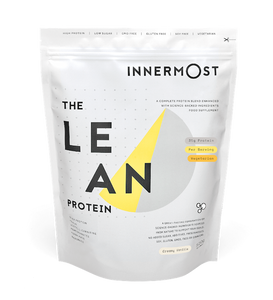
The Lean Protein
Whey protein powder for weight-loss.
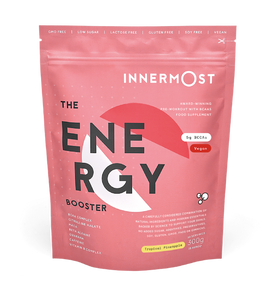
The Energy Booster
Pre/intra-workout powder with BCAAs.

What Is Manifestation And Should You Be Doing It?

30th August 2022

30th August 2022

By Shivraj Bassi

When the world around you is falling apart, people start looking for meaning and support in places they haven’t before. With so many aspects of our lives feeling like they're often beyond our control, it’s no surprise that a spiritual practise called manifestation is becoming popular. 

If you’re a fan of crystals, astrology, angel numbers or any other element of spirituality, it’s likely that you’ve heard of manifestation before. It’s not a new technique - if anything, it’s a very old one - but it’s gained popularity in recent years thanks to a new wave of interest in the practise. If you’ve ever got sucked into TikTok’s for you page, you’ll know that it’s a very popular interest on the social media site, and many celebrities are doing it also. So: should you be manifesting your hopes and dreams?

What is manifestation?

At its very simplest, manifestation is putting your intentions towards something that you would like to happen, which then supposedly makes it happen in real life. Thus, if you think about something in the right way and want it enough, the energy this puts into the universe will make it happen. However, it’s not as easy as this might sound - the universe is not a supermarket, after all. Manifestation is a term for being a creative force in your own life, and being active in making the things happen that you want to happen and creating your life as you want it to be. 

We’re already manifesting things in life all the time. When you say you want a specific dream job and put your energy into working towards getting it, that’s manifestation. Or say you’re desperate to visit a country you’ve always wanted to see, and you work towards earning enough money and creating enough time and space in your life for you to visit. It’s all about working out and knowing the experiences in your life that you’d like to happen, and  making that outcome a reality. 

How to manifest

Before you can start actively manifesting your goals and learning how to manifest, it’s important to be clear about what you want. And we don’t mean a shopping list of being ultra-wealthy, highly successful and model-level attractive (although we wouldn’t say no), but desires that are detailed, specific and more importantly, achievable if you put your mind to it

What you manifest could be as specific as your crush falling in love with you, moving up a level at work or finding your flat of your dreams, or it could be putting the energy out that you want to find a partner but you’re not sure who yet, or you’re hoping to move to a new city but aren’t sure how. Whatever you want, truly explore why you want it and own the knowledge, because this inner resolve is crucial when it comes to manifesting it. The more specific, clear and concise, the better. Rather than simply saying that you want to meet your soulmate and fall in love, think about the qualities you’d like the person to have, what they might look like and what their values are. 

Manifestation techniques

Once you’ve spent some time exploring your desires and working out what you really want to ask you, it’s time to start the process of manifesting. How you do this can vary. The most common methods are through meditation, visualisation, writing it down or having a vision board or a mood board. 

Photo by Gift Habeshaw on Unsplash

If you’re already a meditation guru, try making what you want to achieve your mantra and consider it during your daily meditation time. It’s all about making what you want to manifest the focus of your energy. Writing down your goals is a very helpful tool as it enables you to physically see what you want to achieve. The 369 method is popular on TikTok. This involves writing down what you want three times in the morning, six times in the afternoon, and nine times at night for either 33 or 45 days. Or simply try writing a letter addressed to the universe asking for your deepest desires. However you make your goals known, they should be solid and you should be thinking about them a lot. If this isn’t the case, you won’t be focusing hard enough on making them happen, and the manifestation won’t work. 

It’s not as simple as writing a letter to Santa, because the next step is beginning to work hard towards your goals. Think about it as if you put your intentions out there, and now you have to do the work you ideated to achieve them. For instance if you manifested a job that you love, start updating your LinkedIn, networking and improving your skills to qualify yourself for that dream position. You won’t see any results without action. 

In that sense, manifesting is as much about clarifying the work you need to do within yourself and then doing it, as opposed to waiting for the universe to deliver what you desire on a silver platter. Being the person who does the things they want to do will help you to become the person you want to be, and will get you what you want. It’s all about reframing.  

Need Expert Advice?

Other Insights

The Ingredient We Almost Didn't Put In The Energy Booster
There's a question we ask about every ingredient before it goes into a product. Not "is this trending?" Not "does it look good on the label?" Just: does the evidence actually support putting this in? Most of the time, that question is straightforward. Either the research is there or it isn't. But occasionally you land on an ingredient where the science says yes and something else gives you pause. That's where formulation gets genuinely interesting. Beta alanine was one of those decisions. What Beta Alanine Actually Does Most people who've taken a pre-workout have felt beta alanine without knowing it. It's the ingredient responsible for the tingling sensation you get in your face, your neck, your hands. That feeling has a name: paraesthesia. It's harmless. But it's also the reason we nearly left beta alanine out. Before I get to that, the science. Beta alanine is a non-essential amino acid. On its own, it doesn't do very much. But inside muscle tissue, it binds with another amino acid called histidine to form something called carnosine. And carnosine is where the real work happens. During intense exercise, your muscles produce hydrogen ions as a byproduct of energy production. It's the build-up of those hydrogen ions, not lactic acid as most people think, that causes the burning sensation and the drop-off in performance. Carnosine acts as a buffer. It mops up those hydrogen ions and delays the point at which fatigue kicks in. The research on this is substantial. A 2012 meta-analysis published in the journal Amino Acids, covering over 40 studies, found that beta alanine supplementation consistently improved exercise capacity, particularly in high-intensity efforts lasting between one and four minutes. The effect size was meaningful and reproducible. This wasn't a promising pilot study. It was a decade of accumulated evidence pointing in the same direction. In practical terms: more reps before failure. More output before you hit the wall. Sustained performance over a longer window. So why the hesitation? The decision we almost got wrong The tingling. Not because it's dangerous. It isn't. The paraesthesia from beta alanine is a well-understood pharmacological response and there is no evidence of harm at the doses used in supplementation. But we had a real concern: if someone takes The Workout Blend for the first time and feels an unexpected tingling in their face, and nobody told them it was coming, we've just lost their trust. Possibly permanently. The easy path was to leave it out. Plenty of pre-workout formulas do exactly that, either because they're being cautious or because they want a smoother consumer experience. No ingredient, no explanation required. We talked about it a lot. And the conclusion we kept coming back to was this: removing an ingredient with strong evidence because it might confuse people is not how we want to make formulation decisions. That's the same logic that leads brands to include ingredients with weak evidence because they're more familiar, more comfortable, more sellable. The answer wasn't to remove it. The answer was to be upfront about it. The tingling means the beta alanine is working. It's a real physiological response to a real ingredient doing a real thing. If we believe in the science, we include the ingredient and we explain what's happening. That felt like the right standard to hold ourselves to. What the rest of the market does Most pre-workout formulas fall into one of two categories.The first is the stimulant-heavy formula. Stacked with caffeine at doses that produce a short spike, a noticeable crash, and not much else underneath. These sell well because the immediate sensation of energy feels like evidence that something is working. It often isn't, not in any meaningful physiological sense beyond what caffeine alone would do. The second is the proprietary blend. A long list of ingredients with no disclosed amounts, making it impossible to know whether any of them are present at doses that match the research. Proprietary blends let brands list an ingredient without committing to a dose that would actually work. Both approaches optimise for perception. Neither optimises for performance. What I'd recommend The Energy Booster (soon to be renamed to The Workout Blend) contains beta alanine alongside citrulline malate, which supports nitric oxide production and blood flow during training, BCAAs at a 2:1:1 ratio to safeguard lean muscle, and natural caffeine from guarana for sustained energy without the spike you get from synthetic sources. The formulation is built around what the research supports at doses that match the evidence. If you feel the tingling the first time you take it, that's the beta alanine. It's normal, it fades within 20 minutes or so, and it's a sign the formula is doing what it's supposed to do. Read more
Our Top Tips For Maintaining A Healthy Daily Wellness Routine