








icon-account icon-glass

Popular Products

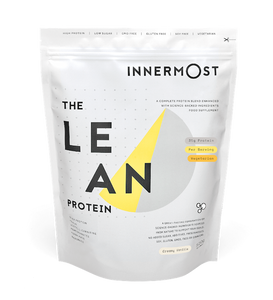
The Lean Protein
Whey protein powder for weight-loss.

5 Healthy Habits To Become More Productive

30th August 2022

30th August 2022

By Shivraj Bassi

You know what makes a healthy habit? Consistency. Sticking with a good habit can be the difference between achieving your goals or falling short.

We've assembled a few ways to make self improvement part of your daily life. While they might only be small changes, building these healthy habits into your life should make a noticeable and positive difference to your productivity, and therefore your mental wellbeing.

Habit 1: Workout in the morning

Starting your day with a workout gives you a feeling of energy and accomplishment throughout our day. Once you've overcome the most difficult part - not hitting the snooze button - it only gets easier from there. While you might find this good habit hard at first, stick with it. It takes around two weeks for our bodies to adapt to getting up early.

Additionally, starting your day with a healthy habit such as a workout means you're more likely to make healthy choices through the rest of your day.

To get those morning exercises in, it’s important to be get a good night’s sleep – check out our top 6 ways to improve your sleep for some tips. If you struggle to make it to the gym in the mornings, you could always opt for a home workout to get that morning exercise in. We’ve got some great insight on morning yoga exercises and the best home workouts you need to try right now.

Habit 2: Good nutrition

Getting high-quality nutrition into your body and sustaining a well-balanced, healthy diet is hugely important. It can help boost concentration and energy levels and ensures your body is working just the way it should be.

Innermost has a tailored range of incredible products such as proteinsboosters and capsules which are crafted with the sole purpose of helping you to achieve specific goals. They can be used as a healthy meal replacement, post-workout nutrition or as a way to get important functional nutrients into your system.

Habit 3: Regular Sleep Cycle

A consistent sleep schedule makes a big difference. Heading to bed at a similar time every evening aligns your body clock and synchronises the time with when your body is naturally inclined towards rest with the time you're climbing into bed, as opposed to the moment you press play on Netflix

Most people need six to eight hours of sleep a night. And try to spend less time swiping on your phone just before bed - the blue light doesn’t do your sleep pattern any favours.

Habit 4: Cook at home

Sometimes you can’t help but eat out. We get it - food is delicious and you want to experience as much of it as possible. But it’s important to remember the value of healthy homemade food. By mastering a few basic kitchen skills, not only can you learn to properly fuel your body but you'll be saving money, impressing your friends when you cook for them and probably snagging mad likes on Instagram. You can get some ideas from the Recipe section of our Insight section.

Habit 5: Sit less

Move more, sit less. Most people spend more than eight hours a day sitting, and this is far from a healthy habit. When you sit down for so long your hip flexors tighten and you start to slump forwards. Getting up and standing for a few moments every hour or two can go a long way in ensuring your body stays supple and limber.
Need Expert Advice?

Other Insights

The Glow Blend: A Confession
I need to tell you something I've never said publicly, and it's not flattering. When our product team first brought me a plan for a collagen supplement, my honest reaction was no. Not "let me think about it." A flat no. And if I'm being fully honest about why, it wasn't the science. It was that collagen felt, in my head, like a beauty category. Something for someone else's brand. Not ours. I built Innermost around performance and evidence. Protein, creatine, mushrooms, electrolytes. Things I could point to a study for and feel comfortable talking about at a dinner table full of people who workout regularly. Collagen sat in a different mental folder. Skincare aisle. Jars with gold lids and brand sponsorship by one of the Kardashians. I'd absorbed a version of what "beauty" meant without ever examining it. The argument in the room So we had the argument internally. A proper one. A few people on the team pushed back hard, and rightly so. One of them put it to me plainly: we started Innermost to follow the evidence wherever it goes, not to follow it everywhere except the places that feel awkward. That line stuck with me. Here's what changed my mind, and it wasn't a feeling. It was the research. What the evidence actually says Collagen is the most abundant protein in your body. It's structural, it's in your skin, your joints, your gut lining, and production declines steadily from your mid-twenties onward. That's not a marketing claim, that's basic physiology. The question was never whether collagen matters. It was whether supplementing it actually does anything, and that's where most of the category falls apart. Most collagen products on the market use whole collagen molecules, which are too large to be absorbed effectively when you drink them. The ones that do use hydrolysed peptides, which are broken down into smaller chains your body can actually take up, still run into a second problem: dose. A lot of labels list collagen content that sits well below the 2 to 10 grams used in the trials that show measurable effects on skin elasticity and hydration. You're paying for a placebo with good branding. The ingredient most brands leave out The third problem is the one that convinced me completely. Vitamin C isn't a nice-to-have alongside collagen. It's a required co-factor for your body to actually synthesise collagen at the cellular level. Without adequate vitamin C, the enzymes responsible for stabilising collagen structure don't function properly. You can take a perfectly dosed hydrolysed peptide and still get a fraction of the benefit if the product doesn't include enough vitamin C alongside it. Most don't. They sell you the raw material and leave out the one thing your body needs to use it. Once I saw the category clearly, laid out like that, the decision stopped being about how I felt and started being about what the evidence supported. That's the whole operating principle of Innermost. I couldn't defend saying no to a legitimate, well-evidenced product category. What we built So we built The Glow Blend properly. Hydrolysed collagen peptides at a dose that reflects the research, alongside vitamin C, hyaluronic acid for hydration, biotin and folic acid for hair and nail health. Nothing in it that doesn't earn its place. What surprised me after launch The part I didn't expect was the response once we launched it. A good number of the messages came from women, as you'd expect, and they were generous and specific about what they'd noticed. But a surprising number came from men. Customers writing in to say they'd felt exactly what I'd felt, that awkward little flinch at "collagen," and had quietly bought it anyway because the ingredient breakdown made sense to them. That response told me more about why this category needed an honest voice in it than any research paper did. I'm not going to pretend I have this fully figured out. I still catch myself, occasionally, hesitating slightly before I mention it in a room. Old habits sit deeper than good evidence sometimes. But I take it, and increasingly a lot of men I respect take it too, quietly, without needing to make a thing of it. If this sounds familiar If any part of this resonated, and you've felt that same small resistance to a category you assumed wasn't for you, hit reply and tell me. I'd genuinely like to know I'm not the only one who had to get over it. And if you know someone, a friend, a partner, who could use this exact reasoning rather than a tesimonial, forward it on. It might do more good coming from someone else's honesty. Read more
Your Summer Survival Kit (From Someone Who Travels A Lot)
I'm putting the finishing touches to this post from an airport, which feels appropriate. By my count, I'll be going through three countries in the next six weeks. Meetings, a trip to see family including my niece and nephew, a supplier visit in Italy that I've been putting off for a year. And every summer the same thing happens. The carefully built routine, the one that took months to lock in, gets thrown into a suitcase and I hope for the best. Most people react to this by either giving up on the routine entirely ("I'll sort it out when I'm back") or overpacking so aggressively that half of it never leaves the bag. I've done both. Neither works. What actually works is deciding, in advance, which two or three things earn a place in my bag and which ones can wait until September. So here's mine. Not a wellness influencer's "what's in my bag" video. An honest list, built over about a decade of getting this wrong first. Why travel breaks routines specifically It's worth being precise about what actually changes when you travel, because it isn't just "less discipline." Three things shift at once. You sweat more and drink less water than usual, because you're distracted or the flight dried you out or the hotel room is warmer than home. You're outdoors more, often somewhere sunnier than wherever you live. And your meals stop being yours. You eat what's available, when it's available, and protein is usually the first thing to slip, because sugar, carbs and fat are what's on offer at 6am airport cafes. None of this is a discipline problem. It's an environment problem. The fix is making sure two or three specific things are in my bag before I leave home, so I’m not relying on willpower to begin with. 1. Electrolytes, non-negotiable Most people remember to pack sunscreen. Almost nobody packs electrolytes, and it's the one that actually catches up with you. Water replaces volume, not what you lose through sweat, which is mostly sodium and potassium and magnesium doing the quiet work of keeping muscles firing and fluid balanced properly. Miss that balance for a few days in the heat and you get the symptoms everyone blames on jet lag: the headache, the flat energy, the slight fog by 4pm that a coffee doesn't fix. It's usually not jet lag. It's electrolytes. I take The Hydrate Blend  for exactly this reason. Six electrolytes, no sugar, no synthetic flavouring, dissolves in a bottle of water in about ten seconds. One sachet on a travel day, first thing in the morning, does more for how I feel by evening than anything else in the bag. 2. Something for the sun you're actually going to get Here's the part most people don't think about until it's too late. UV exposure accelerates collagen breakdown, which is a slightly clinical way of saying that a week of proper sun does more to skin structure than most of the year combined. This isn't about vanity. It's a straightforward mechanism: UV generates free radicals that degrade existing collagen faster than your body can replace it. Sunscreen protects against the burn. It doesn't do anything for the collagen you're losing underneath. I've been taking The Glow Blend through summer for this reason specifically. Hydrolysed collagen peptides paired with vitamin C, which matters because vitamin C is a required co-factor for collagen synthesis and most collagen products leave it out entirely, then wonder why customers don't notice anything. It won't undo a week in the sun. It gives your skin something to rebuild with while it's under more pressure than usual. 3. Protein, especially when the meals aren't yours This is the one I've learned the hard way. When your diet goes inconsistent, protein is usually the first macronutrient to drop, simply because it's the hardest to find on the move. Airport food, hotel breakfasts, whatever's left at a conference buffet by 1pm, none of it is built around protein. And the honest science here is less dramatic than people expect: you don't need to train harder to maintain muscle through a disrupted period, you need to keep protein intake somewhere close to normal. That's the whole trick. I'll say this honestly because I'd rather be straight with you than pretend otherwise: my go-to for this is still The Strong Protein (whey based) and The Health Protein (vegan). They earn their place in my bag because they travel well, mix with nothing but water, and does the one job that actually matters on the road, which is making sure protein doesn't disappear from your day just because your routine has. The actual point None of this is about maintaining perfect discipline on holiday. Nobody does that, and if a brand tells you they do, they're not being honest with you. It's about deciding in advance which three or four things matter enough to bring, so the choice isn't being made for you by whatever's in the hotel minibar. If you've got a system that works for you when you travel, reply and tell me. I read every one of these, and I'm always looking to steal a better idea for my next trip. If this is useful, forward it to whoever in your life is about to live out of a suitcase for the next few weeks. It's the email I wish someone had sent me a decade ago. Read more