








icon-account icon-glass

Popular Products

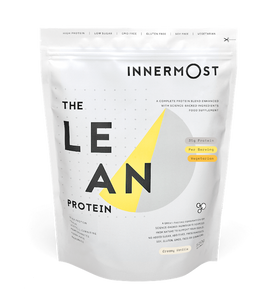
The Lean Protein
Whey protein powder for weight-loss.

Time To Get Back to Work(out)

22nd September 2026

22nd September 2026

By Shivraj Bassi

Your inbox is about to fill up with a very specific kind of email. "Back to training." "Reset your routine." If you've been on a supplement brand's newsletter list for more than a year, you've seen this before. 

September is the industry's second run at January. Slightly quieter, but just as calculated. Gyms fill back up, summer holidays end, and every brand in this category knows there's a window where people are motivated and slightly guilty about the last two months.

So before you see any of it, here's what I think is actually worth paying attention to when you're getting back into training after a break.

Progressive overload is still the name of the game

Your body adapts to load over time. If you're coming back after a few weeks or a couple of months off, the temptation is to jump back in at your old numbers. Don't. The evidence shows that a short break doesn't erase your progress, but going back in too hard, too fast is how people get injured (speaking from experience). Start below where you left off and let the load build over two weeks. It’ll come back faster than it left.

Protein quality matters more than protein hype

Every September, protein marketing gets louder and less precise. Here's the mechanism worth remembering: muscle protein synthesis responds to leucine, and you need roughly 2 to 3 grams of it per meal to properly trigger the response. That means spreading protein across the day, three or four servings of 20 to 40 grams each, does more for you than one enormous shake after training and nothing else. 

Creatine: maintain, don't reload

If you took creatine before your break and stopped, you do not need to reload. That's a hangover from old protocols designed to saturate muscle stores quickly for research purposes, not something you need for a training restart. A standard maintenance dose, 3 to 5 grams a day, gets you back to full saturation within about two to three weeks on its own. No loading phase, no timing games. Just consistency.

Where I'd put my money

For protein, my recommendation is to try The Health Protein or The Fit Protein. Both are plant-based, built on a full amino acid profile rather than a single source, and formulated for exactly the kind of consistent, unglamorous daily use that actually moves the needle. If you prefer whey, The Strong Protein and The Lean Protein are still exactly what they've always been, and there's nothing wrong with that choice either. The key is picking one and being consistent with it.

For the training side specifically, this is where The Power Blend does its job: creatine at a proper maintenance dose as your training volume climbs back up. It's built for exactly the return-to-training window this email is about.

One thing worth saving from this email if nothing else: creatine maintenance dose is 3 to 5 grams a day, no reload needed, and it takes about two to three weeks to fully resaturate. That's genuinely useful whether you buy anything from us or not.

If you've got a return-to-training routine that's worked for you, or a question about any of this, just hit reply.


Product Spotlight

Need Expert Advice?

Other Insights

What Happened To My Training Over Summer (Honestly)
I did not train well this summer. A holiday to spend time with my family, a run of work trips, a couple of injuries I was trying to cope with (left shoulder and right forearm for those who are interested). If you'd asked me in June how consistent I'd be over the summer, I'd have said very. I was wrong. Most people quietly assume the founder of a wellness brand has this figured out. The truth is I run a brand, I try to have a life outside it, and summer is the season where routine goes to die for almost everyone I know. I don't think that's a personal failing. I think it's just what a normal year looks like. What I want to talk about is what actually happens to your body when this happens, because the research here is more reassuring than you might expect. What detraining research actually shows There's a real body of science on this. Strength and cardiovascular fitness don't decline at the same rate, and they don't decline anywhere near as fast as people fear. Cardiovascular fitness is the first thing to soften. Your VO2 max starts drifting down within a couple of weeks of stopping structured training, because your heart and blood vessels adapt to demand quickly in both directions. Strength is a different story. Studies that track people through a few weeks off training consistently find that measurable strength loss is small, often barely noticeable, for the first three to four weeks. The muscle itself takes even longer to shrink in any meaningful way. Several studies looking specifically at detraining periods found that visible loss of muscle protein and structure often doesn't show up until somewhere between five and eight months without any training at all. A summer of patchy sessions is nowhere near that. The reassuring partThe part I find genuinely reassuring is what's called muscle memory, and it's not just a phrase people use to feel better about a break. When you train, your muscle cells add nuclei, essentially more control centres for building protein. Research shows those nuclei stick around for months after you stop training, well past the point where the muscle itself has started to shrink. When you come back, you're not starting from zero. You're reactivating machinery that never actually left. That's a large part of why people who return to training after a long break tend to regain lost strength and size far faster than it took to build in the first place, often within four to eight weeks depending on how long the layoff was. Some of you might remember this happening post-Covid. So if you had a summer like mine, the honest scientific answer is that you probably lost less than it feels like, and you'll get it back faster than you think. What I'm actually doing this month Nothing dramatic. I'm not doing a reset week or a punishing comeback programme. I'm just going back to five structured sessions a week, prioritising the compound lifts I know well, and being honest that the first couple of sessions will feel harder than they did in June.  Don’t forget your proteinThe other thing I'm paying more attention to is protein, simply because it's the one lever that makes the rebuilding phase more efficient. Adequate protein intake supports the muscle protein synthesis that's doing the actual work of restoring what softened over summer. I've been leaning on The Health Protein for this. It's plant-based, built around pea and brown rice protein for a full amino acid profile, with glutamine in there to support recovery. If you'd rather stick with a whey based option, that's a completely reasonable choice too, and The Strong Protein remains built for exactly that. If you had a messy summer, you're not behind. You're just at the start of a normal, unremarkable return to routine, and the research says that's a far shorter road back than most people assume. Forward this to anyonre you know who is dreading their first session back. I'd genuinely like to know what generally works for you post-summer. Structured plan, just showing up once, anything. Reply and tell me. Even if it’s a one-liner, I’d love to hear from you. Read more
What Makes a Healthy Protein Powder?
Protein powder has come a long way from the oversized tubs once reserved for bodybuilders and gym changing rooms. Today, it sits much more comfortably within everyday wellness routines, whether that means a post-workout shake, a quick breakfast smoothie, a protein boost between meetings or something to support recovery after a long day. That shift is a good thing. Protein plays a key role in how your body repairs, maintains muscle, and adapts to exercise. Yet, with so many options available, choosing a healthy protein powder can feel more complicated than it needs to. A healthy protein powder should do more than help you hit a macro target. Some formulas lead with protein content. Others focus on flavour, functional ingredients, plant-based credentials, or weight management. On the surface, they can all look quite similar. Once you look a little closer, the differences become much clearer. So what makes a healthy protein powder? Let’s get into it. What does “healthy protein powder” actually mean? A healthy protein powder should help you support your nutrition in a way that feels simple, useful and sustainable. At its core, that means providing a meaningful amount of protein from a quality source. Protein is made up of amino acids, which the body uses to repair and maintain tissue. For anyone training regularly, eating enough protein is particularly important because exercise increases the demand for repair and recovery. Research from the International Society of Sports Nutrition suggests that people who exercise regularly may benefit from a daily protein intake of around 1.4 to 2.0g per kg of body weight, depending on their training and goals. Protein supplements can be a practical way to help meet that intake, especially when meals are rushed or appetite varies. That said, protein powder works best as part of a wider diet. That’s where the idea of “healthy” becomes more useful. It’s not only about the amount of protein in the scoop, but also about whether the formula supports your body, your goal and the way you actually live day to day. What makes a healthy protein powder? So, what actually makes up a healthy protein powder? Protein source quality The protein source is one of the first things to look at. Different proteins digest at different speeds and provide different amino acid profiles. Some contain all nine essential amino acids, while others work best when blended with complementary sources. Whey protein Whey protein is one of the most widely used options in sports nutrition. It is a complete protein, naturally rich in essential amino acids, and is often used around training because it is convenient and easy to incorporate into a routine. Casein protein Casein is also derived from milk but behaves differently. It digests more slowly, which can make it useful when you want a steadier release of amino acids over a longer period. Plant protein Plant-based proteins can also be effective when formulated properly. Pea protein and brown rice protein, for example, are often combined because their amino acid profiles complement each other. This kind of blending helps create a more complete plant-based protein option. So, rather than asking whether one protein type is always better than another, it helps to ask a more practical question: does this protein source suit your diet, your body and your goal? For some people, that will be whey. For others, it will be plant-based. The important part is choosing a protein powder that suits your body, your diet and your goals. Look beyond the protein number It’s easy to compare protein powders by the number on the label. A higher protein content can be useful, especially for those training hard or trying to increase daily intake. But that number alone does not tell you whether a product is well-formulated. A good protein powder needs balance. The serving should provide enough protein to be worthwhile, but the rest of the formula deserves attention too. For instance: What else has been included? Is there a clear reason for each ingredient? Are there unnecessary fillers or bulking agents? Does it contain a high amount of sugar? Does it taste good enough to use more than once? Match your protein powder to your goal The best protein powder for you depends on what you want it to support. Some are built as basic macro tools. Others are designed to support a more specific outcome, such as strength, lean body composition, recovery or general wellbeing. That distinction matters because people use protein powder for different reasons. This is where goal-led formulation becomes important. Rather than treating protein as a single category, a more considered approach recognises that different people need different things from their supplements. Strength and muscle support If your focus is strength, muscle repair or performance, protein quality is important. This is because protein helps provide the amino acids needed to support repair and adaptation after a strength workout. Over time, this supports strength training progress, particularly when paired with enough energy, recovery and sleep. For a strength-focused protein powder, it makes sense to look for a high-quality complete protein source, along with ingredients that support performance or recovery. This is the thinking behind The Strong Protein. It combines whey protein and casein with ingredients such as creatine monohydrate, magnesium, Montmorency cherries and bilberries to create a formula for people who want their protein powder to support training, not simply increase protein intake. Lean body composition For those focused on body composition, a healthy protein powder can be a useful tool within a balanced diet. Protein supports muscle maintenance, which is particularly important when someone is trying to reduce body fat, manage calorie intake, or train consistently while staying lean. A well-formulated protein powder can also make it easier to add protein to meals or snacks without needing to overcomplicate the rest of the day. The healthiest option here is not necessarily the lowest-calorie product or the one with the most aggressive “diet” messaging. It should provide a strong serving of protein, support satiety, avoid unnecessary fillers, and fit easily into a routine that still prioritises whole foods. The Lean Protein reflects this kind of approach. Alongside protein, it includes ingredients such as inulin, acetyl L-carnitine, pomegranate, yerba mate and bilberries. The result is a formula built around lean body composition, satiety and daily consistency Everyday wellness Not every protein powder needs to be tied to a gym-based goal to be healthy. For many people, a healthy protein powder is simply a way to make everyday nutrition feel more consistent. It might help make breakfast more balanced, support recovery after Pilates or running, or provide a convenient protein boost on days when meals are rushed. A good everyday protein powder should provide a quality protein source, be easy to digest, taste good, and sit comfortably alongside a varied diet. If it is plant-based, it should also be carefully formulated so the protein sources work well together. The Health Protein is designed with this broader approach in mind. It uses a vegan blend of pea and brown rice protein, alongside ingredients such as glutamine, mushrooms and berries. Rather than being purely performance-led, it gives people a simple way to add protein into their day while supporting a more rounded wellness routine. Check what is not in the formula A healthy protein powder should be as much about what has been left out as what has been added. Unnecessary fillers, artificial colours, excessive sugar and vague marketing claims can all make a product feel less trustworthy. That does not mean every ingredient needs to be stripped back to the point where the product becomes joyless. Taste, texture and mixability all matter. But every ingredient should have a reason for being there. Look for transparency in your choice of protein powder brand: Can you understand the active ingredients? Does the product explain what they are there to support? Are the claims realistic? Does the formula match the goal it is being sold for? This is where clean formulation is important. A healthy protein powder should feel premium because it has been formulated with a science-backed approach, not because the packaging says it is. Taste is more important than people think Taste can feel like the less serious part of choosing a protein powder, but in practice, it has a big impact.A protein powder only supports your routine if you actually want to use it. If it tastes chalky, overly sweet or difficult to get through, it is much less likely to become something you use consistently.This matters because consistency is where nutrition starts to make a difference. A good-tasting protein powder is easier to use after training, blend into smoothies, mix into oats or keep on hand for busy days. Functional ingredients can add value Taste should still be the foundation of any healthy protein powder, but the right functional ingredients can give a formula more purpose, especially when it is designed around a specific goal such as strength, recovery, body composition or everyday wellbeing. A longer ingredient list does not automatically mean a better product. Each ingredient should have a clear role. Creatine, for example, makes sense in a strength-focused protein powder. Fibre can support satiety in a lean body composition formula, while magnesium may suit a recovery-led routine. Plant extracts, berries and mushroom ingredients can also fit well within a broader wellness blend when included with purpose.  A healthy protein powder should fit into your lifestyle The most useful supplements are usually the ones that fit neatly into what you are already doing. A healthy protein powder should work around your day. After a workout. In a morning smoothie. Mixed into oats. Taken between meetings. Packed for travel. Used when you know dinner will be later than planned. These moments might sound small, but they are often where consistency is built. Most people are not trying to follow a perfect nutrition plan every day. Work gets busy. Training moves around. Meals vary. Recovery sometimes takes a back seat. A good protein powder gives you a simple way to support your routine when things are not perfectly structured. This is also why it should not feel overly complicated. You shouldn’t need to rebuild your entire diet around it and it should sit alongside real food, supporting the gaps that naturally appear in a busy, active life. What makes Innermost protein powders different? Innermost takes a more considered approach to protein. Rather than creating one generic formula and expecting it to suit everyone, the range is built around different goals. That makes it easier to choose a product based on what you want support with, whether that is strength, lean body composition or everyday wellness. There is also a science backed focus on formulation quality. Our protein sources are chosen with purpose, the active ingredients included for a reason and each product avoids unnecessary fillers and bulking agents. The flavours are designed to feel enjoyable, not like something you tolerate because it happens to be good for you. A healthy protein powder should feel effective, but it should also feel easy to come back to. It should support how you train, recover, work and live. It should make your routine feel more consistent without adding another layer of complexity. That is where Innermost feels different from more traditional protein brands. The products sit closer to modern wellness than old-school gym nutrition, while still being grounded in performance and science. Final thoughts Healthy protein powder comes down to quality, purpose and consistency. The protein source should be strong, the formula should make sense and the ingredients should be clear. The taste should make you want to use it again and most importantly, it should support your wider routine rather than trying to replace it. Used alongside a balanced diet, protein powder can be a simple way to support training, recovery, body composition and everyday wellbeing. For those looking for a more considered option, Innermost’s protein range is built around exactly that approach. Goal-led formulas, clean ingredients, strong taste and science-backed support, designed to fit into real life. Explore Innermost’s protein powders to find the formula that best fits your goals, routine and lifestyle. Read more