










If you’ve spotted bilberries on the ingredients list of one of our protein blends, you might have wondered what they’re doing there. It’s a fair question. While the role and benefits of protein are generally well understood, a small dark berry might need a little more explaining.
Bilberries have been part of European diets for generations. Their deep purple colour comes from anthocyanins, plant compounds that have attracted scientific interest in their potential effects on human health. Studies have explored everything from eye comfort during screen work to how the body responds to carbohydrates, with some encouraging findings.
At Innermost, we’re interested in understanding what makes an ingredient worth including and how the research applies to everyday life. Bilberries give us plenty to explore, although some of their potential benefits are better understood than others.
Here, we’ll take a closer look at the health and nutritional benefits of bilberries, what the research says, and how you can make them part of the way you eat and train.
What are bilberries?
Bilberries are small, dark berries that grow on Vaccinium myrtillus, a low shrub found wild across northern Europe. You’ll find them in Britain too, growing across heathland, moorland and woodland, particularly in the north and west. Depending on where you grew up, you might know them as blaeberries, whinberries or whortleberries.
At first glance, they’re easy to mistake for blueberries. Cut one open, though, and the difference becomes clear: bilberries have red-purple flesh, while cultivated blueberries are usually pale inside. Their flavour tends to be sharper and more intense, making them a good addition to porridge or yoghurt.
Fresh bilberries can be harder to find in shops, but frozen berries offer a convenient way to enjoy them beyond the picking season.
What makes bilberries nutritionally valuable?
Bilberries pack a useful amount of nutrition into a small serving. Finland’s national food composition database puts 100g of fresh bilberries at around 65 calories, with 3.3g of fibre and 1.9mg of vitamin E, which is roughly a sixth of the daily reference amount. They also provide a more modest amount of vitamin C, at about 7mg.
Much of the scientific interest, though, centres on the anthocyanins behind their deep purple colour. Bilberries contain 15 different types. Laboratory studies suggest these compounds can influence inflammatory signalling and help counter oxidative stress, which occurs when reactive molecules build up beyond the body’s ability to manage them.
Only a small proportion of anthocyanins is absorbed intact, while gut bacteria break down much of the rest into smaller compounds that may have effects of their own. Researchers are studying these too, helping us understand how bilberries’ plant compounds behave in the body and what that could mean for our health.
What are the potential health benefits of bilberries?
So far, human research has given us several reasons to add bilberries to our diet. Here’s a closer look at the main findings and what they could mean for you.
Eye health and visual comfort
If your working day involves hours at a screen, this is likely to be the most relatable area of research.
A 2015 trial studied people who regularly used screens and experienced eye fatigue. After eight weeks, those taking 480mg of bilberry extract daily reported greater improvements in several symptoms following screen tasks than those taking a placebo. These included eye heaviness and discomfort. A later study found improvements in a measure of the eye’s focusing-muscle response after 12 weeks of taking a different standardised extract.
Together, these findings suggest concentrated bilberry extract may support visual comfort during screen-heavy days.
Anthocyanins and markers of inflammation
Inflammation is a normal part of how the body responds to injury and training, but when it lingers at a low level over time, it's linked with poorer long-term health.
Researchers have also investigated whether consuming bilberries changes the signals associated with inflammation. In a Norwegian trial, 62 adults with at least one risk factor for cardiovascular disease drank either bilberry juice or water every day for four weeks. The bilberry group saw significant falls in several inflammation markers, including C-reactive protein, or CRP and interleukin-6.
Blood sugar
Another area of interest is how bilberry compounds might influence the body’s response to carbohydrates.
There's early evidence that bilberry extract can soften the rise in blood sugar after a carbohydrate-rich meal. In a small Aberdeen study, eight men with type 2 diabetes or impaired glucose tolerance, managed through diet and lifestyle, took a single capsule of standardised bilberry extract, roughly equivalent to 50g of fresh berries, alongside a carbohydrate drink. Their glucose and insulin responses were significantly lower than with a placebo, most likely because the extract slowed how quickly the carbohydrate was digested and absorbed.
If you manage diabetes or take blood-thinning or other regular medication, speak to your GP or pharmacist before trying a concentrated bilberry extract.
How do bilberries fit into an active lifestyle?
For most people who train, bilberries are at their best as food. A handful stirred through porridge or overnight oats, spooned over Greek yoghurt or blended into a post-workout smoothie adds fibre, colour and a sharp, fruity flavour to meals you're already eating.
Built into a meal with a good source of protein and some slower-digesting carbohydrate, they make an easy breakfast or post-training option. A bowl of porridge made with milk, with a scoop of protein stirred through once it’s off the heat and a handful of bilberries on top, covers all three in about five minutes. The protein supports your muscles, the carbohydrate refuels you, and the berries add fibre, which many adults don't eat enough of.
Bilberries in Innermost’s protein blends
If you’d like to know where bilberries fit into our range, you have a few options. We include them in three protein blends, so you can choose according to your dietary preferences and what you’re working towards.
- The Strong Protein contains 250mg of bilberries and 300mg of Montmorency cherries per serving. They sit alongside whey and casein protein, with added creatine and magnesium.
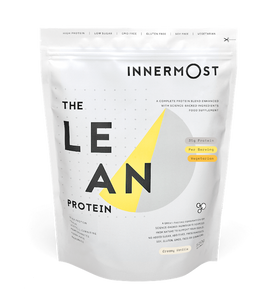
- The Lean Protein contains 200mg of bilberries per serving, alongside pomegranate in a whey-based formula.
- The Health Protein provides 250mg of bilberries within a pea and brown rice protein blend.
The protein in these blends contributes to the growth and maintenance of muscle mass, with bilberries forming part of the wider formulation.
Whether you’re mixing a shake or adding protein powder to breakfast, explore our protein range to find your fit.
References
- Finnish Institute for Health and Welfare. Fineli food composition database: Blueberry, bilberry, Vaccinium myrtillus. Click here.
- Kosehira, M., Machida, N., Kitaichi, N. (2020). A 12-week-long intake of bilberry extract (Vaccinium myrtillus L.) improved objective findings of ciliary muscle contraction of the eye: A randomized, double-blind, placebo-controlled, parallel-group comparison trial. Nutrients. 12(3). Click here.
- Vaneková, Z., Rollinger, J.M. (2022). Bilberries: Curative and miraculous – A review on bioactive constituents and clinical research. Frontiers in Pharmacology. 13. Click here.
- Chu, W.K., Cheung, S.C.M., Lau, R.A.W., Benzie, I.F.F. (2011). Bilberry (Vaccinium myrtillus L.). In: Herbal Medicine: Biomolecular and Clinical Aspects. 2nd edition. Click here.
- Tian, L., Tan, Y., Chen, G., Wang, G., Sun, J., Ou, S., Chen, W., Bai, W. (2019). Metabolism of anthocyanins and consequent effects on the gut microbiota. Critical Reviews in Food Science and Nutrition. 59(6). Click here.
- Ozawa, Y., Kawashima, M., Inoue, S., Inagaki, E., Suzuki, A., Ooe, E., Kobayashi, S., Tsubota, K. (2015). Bilberry extract supplementation for preventing eye fatigue in video display terminal workers. Journal of Nutrition, Health and Aging. 19(5). Click here.
- Karlsen, A., Paur, I., Bøhn, S.K., Sakhi, A.K., Borge, G.I., Serafini, M., Erlund, I., Laake, P., Tonstad, S., Blomhoff, R. (2010). Bilberry juice modulates plasma concentration of NF-κB related inflammatory markers in subjects at increased risk of CVD. European Journal of Nutrition. 49(6). Click here.
- Hoggard, N., Cruickshank, M., Moar, K.M., Bestwick, C., Holst, J.J., Russell, W., Horgan, G.W. (2013). A single supplement of a standardised bilberry (Vaccinium myrtillus L.) extract (36% wet weight anthocyanins) modifies glycaemic response in individuals with type 2 diabetes controlled by diet and lifestyle. Journal of Nutritional Science. 2. Click here.