










I did not train well this summer.
A holiday to spend time with my family, a run of work trips, a couple of injuries I was trying to cope with (left shoulder and right forearm for those who are interested). If you'd asked me in June how consistent I'd be over the summer, I'd have said very. I was wrong.
Most people quietly assume the founder of a wellness brand has this figured out. The truth is I run a brand, I try to have a life outside it, and summer is the season where routine goes to die for almost everyone I know. I don't think that's a personal failing. I think it's just what a normal year looks like.
What I want to talk about is what actually happens to your body when this happens, because the research here is more reassuring than you might expect.
What detraining research actually shows
There's a real body of science on this. Strength and cardiovascular fitness don't decline at the same rate, and they don't decline anywhere near as fast as people fear.
Cardiovascular fitness is the first thing to soften. Your VO2 max starts drifting down within a couple of weeks of stopping structured training, because your heart and blood vessels adapt to demand quickly in both directions.
Strength is a different story. Studies that track people through a few weeks off training consistently find that measurable strength loss is small, often barely noticeable, for the first three to four weeks. The muscle itself takes even longer to shrink in any meaningful way. Several studies looking specifically at detraining periods found that visible loss of muscle protein and structure often doesn't show up until somewhere between five and eight months without any training at all. A summer of patchy sessions is nowhere near that.
The reassuring part
The part I find genuinely reassuring is what's called muscle memory, and it's not just a phrase people use to feel better about a break. When you train, your muscle cells add nuclei, essentially more control centres for building protein. Research shows those nuclei stick around for months after you stop training, well past the point where the muscle itself has started to shrink.
When you come back, you're not starting from zero. You're reactivating machinery that never actually left. That's a large part of why people who return to training after a long break tend to regain lost strength and size far faster than it took to build in the first place, often within four to eight weeks depending on how long the layoff was. Some of you might remember this happening post-Covid.
So if you had a summer like mine, the honest scientific answer is that you probably lost less than it feels like, and you'll get it back faster than you think.
What I'm actually doing this month
Nothing dramatic. I'm not doing a reset week or a punishing comeback programme. I'm just going back to five structured sessions a week, prioritising the compound lifts I know well, and being honest that the first couple of sessions will feel harder than they did in June.
Don’t forget your protein
The other thing I'm paying more attention to is protein, simply because it's the one lever that makes the rebuilding phase more efficient. Adequate protein intake supports the muscle protein synthesis that's doing the actual work of restoring what softened over summer.
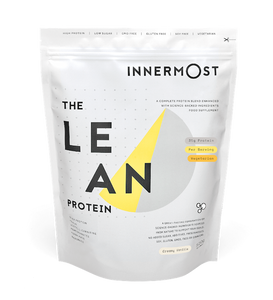
I've been leaning on The Health Protein for this. It's plant-based, built around pea and brown rice protein for a full amino acid profile, with glutamine in there to support recovery. If you'd rather stick with a whey based option, that's a completely reasonable choice too, and The Strong Protein remains built for exactly that.
If you had a messy summer, you're not behind. You're just at the start of a normal, unremarkable return to routine, and the research says that's a far shorter road back than most people assume. Forward this to anyonre you know who is dreading their first session back.
I'd genuinely like to know what generally works for you post-summer. Structured plan, just showing up once, anything. Reply and tell me. Even if it’s a one-liner, I’d love to hear from you.