










Protein powder has come a long way from the oversized tubs once reserved for bodybuilders and gym changing rooms.
Today, it sits much more comfortably within everyday wellness routines, whether that means a post-workout shake, a quick breakfast smoothie, a protein boost between meetings or something to support recovery after a long day.
That shift is a good thing.
Protein plays a key role in how your body repairs, maintains muscle, and adapts to exercise. Yet, with so many options available, choosing a healthy protein powder can feel more complicated than it needs to.
A healthy protein powder should do more than help you hit a macro target. Some formulas lead with protein content. Others focus on flavour, functional ingredients, plant-based credentials, or weight management. On the surface, they can all look quite similar. Once you look a little closer, the differences become much clearer.
So what makes a healthy protein powder?
Let’s get into it.
What does “healthy protein powder” actually mean?
A healthy protein powder should help you support your nutrition in a way that feels simple, useful and sustainable.
At its core, that means providing a meaningful amount of protein from a quality source. Protein is made up of amino acids, which the body uses to repair and maintain tissue. For anyone training regularly, eating enough protein is particularly important because exercise increases the demand for repair and recovery.
Research from the International Society of Sports Nutrition suggests that people who exercise regularly may benefit from a daily protein intake of around 1.4 to 2.0g per kg of body weight, depending on their training and goals. Protein supplements can be a practical way to help meet that intake, especially when meals are rushed or appetite varies.
That said, protein powder works best as part of a wider diet.
That’s where the idea of “healthy” becomes more useful. It’s not only about the amount of protein in the scoop, but also about whether the formula supports your body, your goal and the way you actually live day to day.
What makes a healthy protein powder?
So, what actually makes up a healthy protein powder?
Protein source quality
The protein source is one of the first things to look at.
Different proteins digest at different speeds and provide different amino acid profiles. Some contain all nine essential amino acids, while others work best when blended with complementary sources.
Whey protein
Whey protein is one of the most widely used options in sports nutrition. It is a complete protein, naturally rich in essential amino acids, and is often used around training because it is convenient and easy to incorporate into a routine.
Casein protein
Casein is also derived from milk but behaves differently. It digests more slowly, which can make it useful when you want a steadier release of amino acids over a longer period.
Plant protein
Plant-based proteins can also be effective when formulated properly. Pea protein and brown rice protein, for example, are often combined because their amino acid profiles complement each other. This kind of blending helps create a more complete plant-based protein option.
So, rather than asking whether one protein type is always better than another, it helps to ask a more practical question: does this protein source suit your diet, your body and your goal?
For some people, that will be whey. For others, it will be plant-based. The important part is choosing a protein powder that suits your body, your diet and your goals.
Look beyond the protein number
It’s easy to compare protein powders by the number on the label.
A higher protein content can be useful, especially for those training hard or trying to increase daily intake. But that number alone does not tell you whether a product is well-formulated.
A good protein powder needs balance.
The serving should provide enough protein to be worthwhile, but the rest of the formula deserves attention too. For instance:
- What else has been included?
- Is there a clear reason for each ingredient?
- Are there unnecessary fillers or bulking agents?
- Does it contain a high amount of sugar?
- Does it taste good enough to use more than once?
Match your protein powder to your goal
The best protein powder for you depends on what you want it to support.
Some are built as basic macro tools. Others are designed to support a more specific outcome, such as strength, lean body composition, recovery or general wellbeing. That distinction matters because people use protein powder for different reasons.
This is where goal-led formulation becomes important. Rather than treating protein as a single category, a more considered approach recognises that different people need different things from their supplements.
Strength and muscle support
If your focus is strength, muscle repair or performance, protein quality is important.
This is because protein helps provide the amino acids needed to support repair and adaptation after a strength workout. Over time, this supports strength training progress, particularly when paired with enough energy, recovery and sleep.
For a strength-focused protein powder, it makes sense to look for a high-quality complete protein source, along with ingredients that support performance or recovery.
This is the thinking behind The Strong Protein. It combines whey protein and casein with ingredients such as creatine monohydrate, magnesium, Montmorency cherries and bilberries to create a formula for people who want their protein powder to support training, not simply increase protein intake.
Lean body composition
For those focused on body composition, a healthy protein powder can be a useful tool within a balanced diet.
Protein supports muscle maintenance, which is particularly important when someone is trying to reduce body fat, manage calorie intake, or train consistently while staying lean. A well-formulated protein powder can also make it easier to add protein to meals or snacks without needing to overcomplicate the rest of the day.
The healthiest option here is not necessarily the lowest-calorie product or the one with the most aggressive “diet” messaging. It should provide a strong serving of protein, support satiety, avoid unnecessary fillers, and fit easily into a routine that still prioritises whole foods.
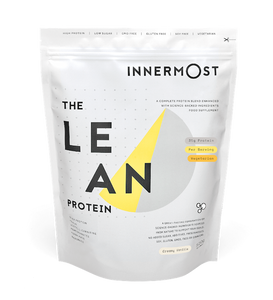
The Lean Protein reflects this kind of approach. Alongside protein, it includes ingredients such as inulin, acetyl L-carnitine, pomegranate, yerba mate and bilberries. The result is a formula built around lean body composition, satiety and daily consistency
Everyday wellness
Not every protein powder needs to be tied to a gym-based goal to be healthy.
For many people, a healthy protein powder is simply a way to make everyday nutrition feel more consistent. It might help make breakfast more balanced, support recovery after Pilates or running, or provide a convenient protein boost on days when meals are rushed.
A good everyday protein powder should provide a quality protein source, be easy to digest, taste good, and sit comfortably alongside a varied diet. If it is plant-based, it should also be carefully formulated so the protein sources work well together.
The Health Protein is designed with this broader approach in mind. It uses a vegan blend of pea and brown rice protein, alongside ingredients such as glutamine, mushrooms and berries. Rather than being purely performance-led, it gives people a simple way to add protein into their day while supporting a more rounded wellness routine.
Check what is not in the formula
A healthy protein powder should be as much about what has been left out as what has been added.
Unnecessary fillers, artificial colours, excessive sugar and vague marketing claims can all make a product feel less trustworthy. That does not mean every ingredient needs to be stripped back to the point where the product becomes joyless. Taste, texture and mixability all matter. But every ingredient should have a reason for being there.
Look for transparency in your choice of protein powder brand:
- Can you understand the active ingredients?
- Does the product explain what they are there to support?
- Are the claims realistic?
- Does the formula match the goal it is being sold for?
This is where clean formulation is important. A healthy protein powder should feel premium because it has been formulated with a science-backed approach, not because the packaging says it is.
Taste is more important than people think
Taste can feel like the less serious part of choosing a protein powder, but in practice, it has a big impact.
A protein powder only supports your routine if you actually want to use it. If it tastes chalky, overly sweet or difficult to get through, it is much less likely to become something you use consistently.
This matters because consistency is where nutrition starts to make a difference. A good-tasting protein powder is easier to use after training, blend into smoothies, mix into oats or keep on hand for busy days.
Functional ingredients can add value
Taste should still be the foundation of any healthy protein powder, but the right functional ingredients can give a formula more purpose, especially when it is designed around a specific goal such as strength, recovery, body composition or everyday wellbeing.
A longer ingredient list does not automatically mean a better product. Each ingredient should have a clear role.
Creatine, for example, makes sense in a strength-focused protein powder. Fibre can support satiety in a lean body composition formula, while magnesium may suit a recovery-led routine. Plant extracts, berries and mushroom ingredients can also fit well within a broader wellness blend when included with purpose.
A healthy protein powder should fit into your lifestyle
The most useful supplements are usually the ones that fit neatly into what you are already doing.
A healthy protein powder should work around your day. After a workout. In a morning smoothie. Mixed into oats. Taken between meetings. Packed for travel. Used when you know dinner will be later than planned.
These moments might sound small, but they are often where consistency is built.
Most people are not trying to follow a perfect nutrition plan every day. Work gets busy. Training moves around. Meals vary. Recovery sometimes takes a back seat. A good protein powder gives you a simple way to support your routine when things are not perfectly structured.
This is also why it should not feel overly complicated. You shouldn’t need to rebuild your entire diet around it and it should sit alongside real food, supporting the gaps that naturally appear in a busy, active life.
What makes Innermost protein powders different?
Innermost takes a more considered approach to protein.
Rather than creating one generic formula and expecting it to suit everyone, the range is built around different goals. That makes it easier to choose a product based on what you want support with, whether that is strength, lean body composition or everyday wellness.
There is also a science backed focus on formulation quality. Our protein sources are chosen with purpose, the active ingredients included for a reason and each product avoids unnecessary fillers and bulking agents. The flavours are designed to feel enjoyable, not like something you tolerate because it happens to be good for you.
A healthy protein powder should feel effective, but it should also feel easy to come back to. It should support how you train, recover, work and live. It should make your routine feel more consistent without adding another layer of complexity.
That is where Innermost feels different from more traditional protein brands. The products sit closer to modern wellness than old-school gym nutrition, while still being grounded in performance and science.
Final thoughts
Healthy protein powder comes down to quality, purpose and consistency.
The protein source should be strong, the formula should make sense and the ingredients should be clear. The taste should make you want to use it again and most importantly, it should support your wider routine rather than trying to replace it.
Used alongside a balanced diet, protein powder can be a simple way to support training, recovery, body composition and everyday wellbeing.
For those looking for a more considered option, Innermost’s protein range is built around exactly that approach. Goal-led formulas, clean ingredients, strong taste and science-backed support, designed to fit into real life. Explore Innermost’s protein powders to find the formula that best fits your goals, routine and lifestyle.