








icon-account icon-glass

Popular Products

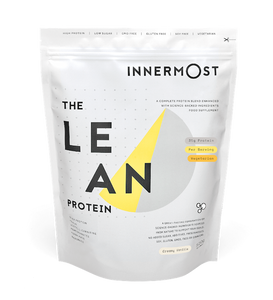
The Lean Protein
Whey protein powder for weight-loss.
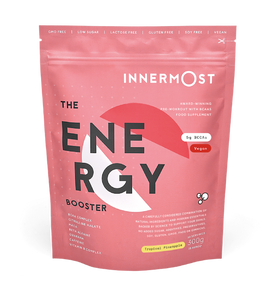
The Energy Booster
Pre/intra-workout powder with BCAAs.

The 6 Best Resistance Band Exercises For Shoulders

10th February 2021

10th February 2021

By Shivraj Bassi

Resistance bands are the ideal low-impact way to exercise. Forget needing to go to a gym, lug around heavy weights or even leave the house - resistance bands are simple, endlessly versatile and even, dare we say, fun to use. 

Made of stretchy rubber and available in an endless series of colours, sizes and permutations, there’s a resistance band for every occasion and exercise under the sun. You can use them no matter your age or fitness level, and they are also be great for using when you’re injured, as the different levels of bands allow you to gradually build up your strength. 

Resistance bands are ideal for building muscle endurance and evening out muscle imbalances, as they train your muscles to last longer under strenuous conditions. They’re also a good way to gently warm up your muscles before hitting the weights. 

This resistance band shoulder workout will stretch, work and strengthen your shoulders, arms and other muscles. As the bands become resistant the more you stretch them, it’s easy to modify how intense a movement is. And as shoulders are prone to injury, these shoulder exercises allow you to slowly build up your stability and rotation to protect your shoulders against pain or overuse. 

Lateral raise 

This resistance band exercise helps to improve shoulder mobility, which is important for staying flexible and ready for any workout. It targets your shoulders and upper back, and your core muscles. 

Place the middle of the band under your feet, and hold each end of the band in each hand with your palms facing inwards. With a slight bend in each elbow, raise your arms out to the side until they’re slightly higher than shoulder height. Pause for a few seconds, then return in a controlled way to the starting position. Repeat 10-15 times. 

Front raise

If you ever suffer with shoulder pain and particularly if you sit at a desk all day, this exercise will help to strengthen those muscles and decrease your shoulder tension. Make sure you’re practising proper posture while doing this, to encourage your body to stay long and supple. 

While standing in the middle of your resistance band, hold each end in each hand and place your palms on your thighs. Slowly and carefully, raise your arms in front of you until they reach shoulder height. Pause for a few seconds before returning your hands to your thighs once more, then repeat 10-15 times. 

Band pull-apart 

Photo by Nigel Msipa on Unsplash

Struggling with your posture? This resistance band shoulder workout will sort you out. It helps to prevent rounded shoulders and improves the range and mobility of your shoulders and upper back. For a more intense exercise, move your hands closer together on the band to increase the resistance. 

With both hands on the band, hold your arms straight out in front of you. With slightly bent elbows and a straight back, pull the band apart as much as you can, drawing your shoulder blades together. Hold this position briefly, then return slowly to where you started from. Repeat 10-15 times. 

Overhead band pull-apart 

To continue to strengthen your shoulders and upper back, this overhead shoulder exercise will do the trick. It also targets your triceps. 

Hold the resistance band in each hand straight above your head. Pulling the band apart, lower your arms to shoulder height while pressing your hands outwards, towards the sides. After holding for a few seconds, return to the centre and repeat 10-15 times.

Reverse fly 

Do you hunch over a laptop all day? Strengthen your shoulders, upper arms and upper back with this resistance band exercise. 

Start by standing in the middle of the band. Hold the left side of the band in your right hand, and vice versa. While hinging forward from your hips and keeping a small bend in your knees, pull the band upwards and outwards until your hands are chest height or higher. Draw your shoulder blades together while you hold this pose before returning to the starting position in a controlled way, and repeating 10-15 times. 

Standing row 

Always wanted the strong shoulders of a rower? This resistance band shoulder workout will strengthen your lats and lower trapezius.

Tie or anchor the middle of your resistance band around a door handle or similar place. Holding an end in each hand, keep your elbows bent and forearms parallel to the floor as you move your arms straight back to the sides of your ribs. Slowly return back to where you started from, theme repeat 10-15 times. 

Need Expert Advice?

Other Insights

The Ingredient We Almost Didn't Put In The Energy Booster
There's a question we ask about every ingredient before it goes into a product. Not "is this trending?" Not "does it look good on the label?" Just: does the evidence actually support putting this in? Most of the time, that question is straightforward. Either the research is there or it isn't. But occasionally you land on an ingredient where the science says yes and something else gives you pause. That's where formulation gets genuinely interesting. Beta alanine was one of those decisions. What Beta Alanine Actually Does Most people who've taken a pre-workout have felt beta alanine without knowing it. It's the ingredient responsible for the tingling sensation you get in your face, your neck, your hands. That feeling has a name: paraesthesia. It's harmless. But it's also the reason we nearly left beta alanine out. Before I get to that, the science. Beta alanine is a non-essential amino acid. On its own, it doesn't do very much. But inside muscle tissue, it binds with another amino acid called histidine to form something called carnosine. And carnosine is where the real work happens. During intense exercise, your muscles produce hydrogen ions as a byproduct of energy production. It's the build-up of those hydrogen ions, not lactic acid as most people think, that causes the burning sensation and the drop-off in performance. Carnosine acts as a buffer. It mops up those hydrogen ions and delays the point at which fatigue kicks in. The research on this is substantial. A 2012 meta-analysis published in the journal Amino Acids, covering over 40 studies, found that beta alanine supplementation consistently improved exercise capacity, particularly in high-intensity efforts lasting between one and four minutes. The effect size was meaningful and reproducible. This wasn't a promising pilot study. It was a decade of accumulated evidence pointing in the same direction. In practical terms: more reps before failure. More output before you hit the wall. Sustained performance over a longer window. So why the hesitation? The decision we almost got wrong The tingling. Not because it's dangerous. It isn't. The paraesthesia from beta alanine is a well-understood pharmacological response and there is no evidence of harm at the doses used in supplementation. But we had a real concern: if someone takes The Workout Blend for the first time and feels an unexpected tingling in their face, and nobody told them it was coming, we've just lost their trust. Possibly permanently. The easy path was to leave it out. Plenty of pre-workout formulas do exactly that, either because they're being cautious or because they want a smoother consumer experience. No ingredient, no explanation required. We talked about it a lot. And the conclusion we kept coming back to was this: removing an ingredient with strong evidence because it might confuse people is not how we want to make formulation decisions. That's the same logic that leads brands to include ingredients with weak evidence because they're more familiar, more comfortable, more sellable. The answer wasn't to remove it. The answer was to be upfront about it. The tingling means the beta alanine is working. It's a real physiological response to a real ingredient doing a real thing. If we believe in the science, we include the ingredient and we explain what's happening. That felt like the right standard to hold ourselves to. What the rest of the market does Most pre-workout formulas fall into one of two categories.The first is the stimulant-heavy formula. Stacked with caffeine at doses that produce a short spike, a noticeable crash, and not much else underneath. These sell well because the immediate sensation of energy feels like evidence that something is working. It often isn't, not in any meaningful physiological sense beyond what caffeine alone would do. The second is the proprietary blend. A long list of ingredients with no disclosed amounts, making it impossible to know whether any of them are present at doses that match the research. Proprietary blends let brands list an ingredient without committing to a dose that would actually work. Both approaches optimise for perception. Neither optimises for performance. What I'd recommend The Energy Booster (soon to be renamed to The Workout Blend) contains beta alanine alongside citrulline malate, which supports nitric oxide production and blood flow during training, BCAAs at a 2:1:1 ratio to safeguard lean muscle, and natural caffeine from guarana for sustained energy without the spike you get from synthetic sources. The formulation is built around what the research supports at doses that match the evidence. If you feel the tingling the first time you take it, that's the beta alanine. It's normal, it fades within 20 minutes or so, and it's a sign the formula is doing what it's supposed to do. Read more
Our Top Tips For Maintaining A Healthy Daily Wellness Routine