








icon-account icon-glass

Popular Products

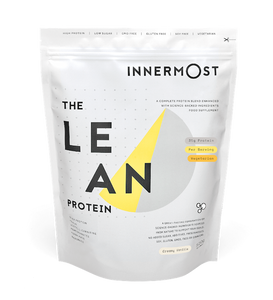
The Lean Protein
Whey protein powder for weight-loss.
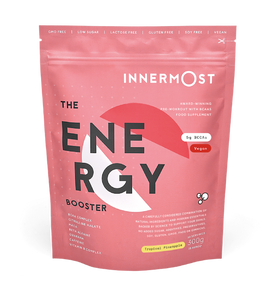
The Energy Booster
Pre/intra-workout powder with BCAAs.

Top 5 Benefits of Mushroom Coffee | Meet The Wellness Blend

19th February 2024

19th February 2024

By Shivraj Bassi

Introducing The Wellness Blend, a revolutionary mushroom-infused coffee blend designed to elevate your daily coffee ritual. This unique concoction combines premium Arabica coffee with a carefully curated selection of adaptogenic mushrooms, creating a powerful blend that not only boosts energy but also enhances overall wellbeing.


Why do you need mushroom coffee? 


In today's fast-paced world, prioritising optimal health can be challenging. But don’t worry, mushroom coffee is here to help with this. With its unique blend of six adaptogenic mushrooms, chaga, reishi, maitake, shiitake, cordyceps and tremella, The Wellness Blend offers a huge range of health benefits. From immune support and stress reduction to improved cognitive function and athletic performance, mushroom coffee provides a holistic approach to wellness.

What makes The Wellness Blend different is its unique ability to provide sustained sustained energy without the typical coffee crash. Thanks to the adaptogenic properties of mushrooms, The Wellness Blend not only provides an energy boost but also helps the body adapt to stress, promoting a more balanced and sustained energy throughout the day. So, whether you need a morning coffee boost or an afternoon pick-me-up, The Wellness Blend can make for a healthier, more practical alternative to your daily coffee.

The benefits of using mushroom coffee blends:

1. Immune Support:

Chaga and reishi, two mushrooms in our blend, are the dynamic duo behind fortifying your immune system. Chaga mushrooms boost the immune system by activating immune cells. They stimulate antibody production and exhibit anti-inflammatory effects, enhancing the body's ability to defend against invaders. Reishi enhances the immune system. Its bioactive compounds, such as beta-glucans and triterpenes, modulate immune responses, promoting defense against pathogens. 

2. Stress Reduction:


Reishi takes the spotlight when it comes to promoting relaxation and stress reduction. Packed with bioactive compounds such as beta-glucans and triterpenes, reishi has been prized for centuries for its adaptogenic properties. By integrating reishi into your routine, The Wellness Blend provides a natural remedy to navigate the demands of modern life, helping you find your balance and calm amidst the chaos.


3. Skin Care

Tremella works to support cognitive function. Known for its natural moisture-retaining properties, Tremella contributes to skin health and hydration. It also contains bioactive compounds believed to support the immune system and beneficially impact cognitive health. By including tremella in The Wellness Blend, we've crafted a unique elixir that not only supports better skin but also nurtures brain health.

4. Heart Health:

Cordyceps, a mushroom known for its incredible health benefits, takes centre stage in promoting cardiovascular health. This mushroom has been renowned for centuries in Eastern medicine for its ability to enhance stamina, endurance, and energy levels. By incorporating Cordyceps into The Wellness Blend, we've harnessed its power to not only improve athletic performance but also to support your cardiovascular system, ensuring your heart stays strong and resilient. 

5. Gut Health:

Certain mushroom varieties, like lion's mane, have been linked to improved gut health, potentially aiding digestion and promoting a healthy microbiome.

Benefits of The Wellness Blend:

The Wellness Blend offers a myriad of benefits. Chaga and Reishi bolster immune function, Cordyceps enhances athletic performance, while Lion's Mane supports cognitive function. Additionally, the adaptogenic properties of these mushrooms help the body adapt to stress, promoting overall resilience and well-being.

Chaga mushrooms are renowned for their immune-boosting properties. Rich in antioxidants, Chaga helps strengthen the body's defense mechanisms, protecting against infections and illnesses. Reishi, often referred to as the "Mushroom of Immortality," is prized for its ability to reduce stress and promote relaxation. Its adaptogenic properties help the body cope with physical and mental stressors, supporting overall well-being.

Cordyceps is another key ingredient in the Wellness Blend, known for its performance-enhancing benefits. This mushroom has long been used in traditional medicine to improve stamina and endurance, making it a popular choice among athletes and fitness enthusiasts. By increasing oxygen utilization and energy production, Cordyceps helps boost athletic performance and recovery.


How much mushroom blend do you need?

The optimal amount of mushroom blend in your coffee depends on personal preference and the specific blend you choose. Mushroom coffee products often come with recommended serving sizes, ensuring you get the right balance of coffee and mushroom goodness. Experimenting with different ratios can help you find the perfect mix that suits your taste buds and health goals.

How can you get started with mushroom coffee?

Ready to experience the benefits of mushroom coffee for yourself? Head to our product page and discover the Wellness Blend today. With its convenient powder form, it's never been easier to incorporate mushroom coffee into your daily routine. Elevate your coffee experience and embrace a healthier, more balanced lifestyle with The Wellness Blend.

Need Expert Advice?

Other Insights

I've Been Taking Creatine Every Day For Six Years
Something happens in March. The people who started strong in January, the ones with the new routine, the new kit, the renewed sense of purpose, are now splitting into two groups. The ones who've lost momentum. And the ones asking sharper questions. Not "what should I take?" but "what actually works?" Creatine keeps coming up. And every time it does, I notice the same pattern: people either swear by it without really understanding why, or they assume it's something bodybuilders use and leave it alone.I've been taking it every single day for six years. So let me tell you what I actually know. Why I started I didn't start taking creatine for the reasons most people assume. I wasn't trying to get bigger. I was training consistently, eating well, and hitting a wall. That frustrating place where effort stops translating into progress. A friend with a sports science background told me creatine was the most researched supplement in existence. More peer-reviewed studies than almost anything else on the market. That got my attention. So I started. And I kept going. What I noticed The first week, nothing dramatic. But over the following three to four weeks, something shifted. I could push a little harder. An extra rep. Slightly more on the bar. Training sessions that didn't end in the usual flat feeling of having nothing left. Those are marginal gains. They don't feel significant in the moment. But they compound. Over months, they're the difference between a plateau and real, measurable progression. The one time I stopped, about two years in, during a stretch of heavy travel where I got lazy about it, I felt the absence more than I expected. Not immediately. But within a few weeks, training felt duller. Less sharp. I put it back in and haven't looked back since. I also noticed something I hadn't anticipated: my thinking felt clearer on the days I trained hard. I assumed it was the exercise. I later learned creatine may have had something to do with that too. What creatine actually does Most people think of creatine as a muscle supplement. That's not quite right. What creatine does is help your body regenerate ATP, adenosine triphosphate, more efficiently. ATP is your cells' primary energy currency. It's what your muscles burn during intense effort. But it's also what your brain runs on. Here's the mechanism: during high-intensity exercise, your body depletes ATP rapidly. Creatine stored in muscle tissue, in the form of phosphocreatine, allows you to replenish that ATP faster. That's why creatine consistently improves performance in short, explosive efforts: weightlifting, sprinting, high-intensity intervals. But the same ATP recycling process happens in the brain. A growing body of research suggests creatine may support cognitive performance, particularly under conditions of stress or sleep deprivation. A 2021 study published in Scientific Reports found meaningful improvements in memory and cognitive function following supplementation. It's not a nootropic in the trending sense of the word. But the evidence is real, and it applies to more people than the gym crowd. The effective dose is well established: 3 to 5 grams per day, taken consistently. No loading phase required. No cycling. Just daily consistency, and that's where most people go wrong. What the industry does instead Creatine monohydrate has been around for decades. That's a problem for brands that need something new to sell. So new formats appear. Creatine HCL. Buffered creatine. Kre-Alkalyn. Creatine ethyl ester. Creatine gummies. Each one marketed as superior: faster absorbing, more bioavailable, easier on the stomach. The evidence doesn't support it. Multiple head-to-head comparisons, including a widely cited review in the Journal of the International Society of Sports Nutrition, found no meaningful performance advantage for alternative creatine forms over monohydrate. In some cases, the alternatives perform worse per gram of active compound. In the case of creatine gummies, several brands including some very large ones have been shown not to contain the creatine concentrations they claim on the label. What you actually want is simple: a clinically relevant dose of creatine monohydrate, taken every day. That's it. What I use The Power Booster is 100% pure creatine monohydrate, nothing added, nothing unnecessary. Five grams per serving, which sits right at the evidence-supported daily dose. It's not complicated because it doesn't need to be. The science on creatine monohydrate is already settled. The job is just to take it consistently. (If you have a friend still on the fence about creatine, forward this their way. It's one of those rare supplements where the evidence is clear enough to just recommend without caveats.) Read more
The Ingredient We Almost Didn't Put In The Energy Booster
There's a question we ask about every ingredient before it goes into a product. Not "is this trending?" Not "does it look good on the label?" Just: does the evidence actually support putting this in? Most of the time, that question is straightforward. Either the research is there or it isn't. But occasionally you land on an ingredient where the science says yes and something else gives you pause. That's where formulation gets genuinely interesting. Beta alanine was one of those decisions. What Beta Alanine Actually Does Most people who've taken a pre-workout have felt beta alanine without knowing it. It's the ingredient responsible for the tingling sensation you get in your face, your neck, your hands. That feeling has a name: paraesthesia. It's harmless. But it's also the reason we nearly left beta alanine out. Before I get to that, the science. Beta alanine is a non-essential amino acid. On its own, it doesn't do very much. But inside muscle tissue, it binds with another amino acid called histidine to form something called carnosine. And carnosine is where the real work happens. During intense exercise, your muscles produce hydrogen ions as a byproduct of energy production. It's the build-up of those hydrogen ions, not lactic acid as most people think, that causes the burning sensation and the drop-off in performance. Carnosine acts as a buffer. It mops up those hydrogen ions and delays the point at which fatigue kicks in. The research on this is substantial. A 2012 meta-analysis published in the journal Amino Acids, covering over 40 studies, found that beta alanine supplementation consistently improved exercise capacity, particularly in high-intensity efforts lasting between one and four minutes. The effect size was meaningful and reproducible. This wasn't a promising pilot study. It was a decade of accumulated evidence pointing in the same direction. In practical terms: more reps before failure. More output before you hit the wall. Sustained performance over a longer window. So why the hesitation? The decision we almost got wrong The tingling. Not because it's dangerous. It isn't. The paraesthesia from beta alanine is a well-understood pharmacological response and there is no evidence of harm at the doses used in supplementation. But we had a real concern: if someone takes The Workout Blend for the first time and feels an unexpected tingling in their face, and nobody told them it was coming, we've just lost their trust. Possibly permanently. The easy path was to leave it out. Plenty of pre-workout formulas do exactly that, either because they're being cautious or because they want a smoother consumer experience. No ingredient, no explanation required. We talked about it a lot. And the conclusion we kept coming back to was this: removing an ingredient with strong evidence because it might confuse people is not how we want to make formulation decisions. That's the same logic that leads brands to include ingredients with weak evidence because they're more familiar, more comfortable, more sellable. The answer wasn't to remove it. The answer was to be upfront about it. The tingling means the beta alanine is working. It's a real physiological response to a real ingredient doing a real thing. If we believe in the science, we include the ingredient and we explain what's happening. That felt like the right standard to hold ourselves to. What the rest of the market does Most pre-workout formulas fall into one of two categories.The first is the stimulant-heavy formula. Stacked with caffeine at doses that produce a short spike, a noticeable crash, and not much else underneath. These sell well because the immediate sensation of energy feels like evidence that something is working. It often isn't, not in any meaningful physiological sense beyond what caffeine alone would do. The second is the proprietary blend. A long list of ingredients with no disclosed amounts, making it impossible to know whether any of them are present at doses that match the research. Proprietary blends let brands list an ingredient without committing to a dose that would actually work. Both approaches optimise for perception. Neither optimises for performance. What I'd recommend The Energy Booster (soon to be renamed to The Workout Blend) contains beta alanine alongside citrulline malate, which supports nitric oxide production and blood flow during training, BCAAs at a 2:1:1 ratio to safeguard lean muscle, and natural caffeine from guarana for sustained energy without the spike you get from synthetic sources. The formulation is built around what the research supports at doses that match the evidence. If you feel the tingling the first time you take it, that's the beta alanine. It's normal, it fades within 20 minutes or so, and it's a sign the formula is doing what it's supposed to do. Read more