








icon-account icon-glass

Popular Products

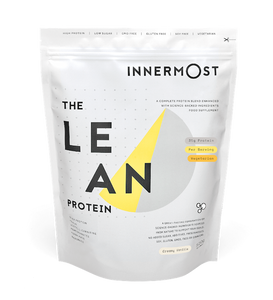
The Lean Protein
Whey protein powder for weight-loss.

Innermost + F45 Wandsworth

22nd October 2017

22nd October 2017

By Shivraj Bassi

We’re pleased to announce our latest partnership with the newly launched F45 in Wandsworth. They’ll be stocking our products with plans to launch a smoothie bar so they can make some amazing functional post-workout smoothies.

F45 Wandsworth

F45 is the most innovative, challenging and systemised team training workout in the world. The concept is simple: their studios all over the world offer a 45 minute High-Intensity, Circuit Training workout class for their studio members. They have developed 27 different 45 minute workouts, with more currently in development. Their studios offer the same class at different times throughout the day. Every day throughout the week offers a different 45 minute workout. The workouts are created by the F45 Athletics and Peak Performance Department from a database of over 3,000 different exercises, so members never get the same workout twice.

The essence of F45 is Functional Training. That’s namely engagement in exercises that mimic or recreate everyday movement. These types of exercises typically involve the use of your full body and multiple muscle groups. This style of training builds and sculpts lean, functional muscle – Lifting, Squatting, Jumping, Twisting, Pulling, Pushing, Punching, Kicking, Rowing, Biking – all of these movements qualify as “Functional”… and all can be found at F45 Training.

Click here to book yourself a class at F45 Wandsworth to get your sweat on. Be sure to tell them that we sent you, and get some Innermost in your life while you're at it.

Need Expert Advice?

Other Insights

What Happened To My Training Over Summer (Honestly)
I did not train well this summer. A holiday to spend time with my family, a run of work trips, a couple of injuries I was trying to cope with (left shoulder and right forearm for those who are interested). If you'd asked me in June how consistent I'd be over the summer, I'd have said very. I was wrong. Most people quietly assume the founder of a wellness brand has this figured out. The truth is I run a brand, I try to have a life outside it, and summer is the season where routine goes to die for almost everyone I know. I don't think that's a personal failing. I think it's just what a normal year looks like. What I want to talk about is what actually happens to your body when this happens, because the research here is more reassuring than you might expect. What detraining research actually shows There's a real body of science on this. Strength and cardiovascular fitness don't decline at the same rate, and they don't decline anywhere near as fast as people fear. Cardiovascular fitness is the first thing to soften. Your VO2 max starts drifting down within a couple of weeks of stopping structured training, because your heart and blood vessels adapt to demand quickly in both directions. Strength is a different story. Studies that track people through a few weeks off training consistently find that measurable strength loss is small, often barely noticeable, for the first three to four weeks. The muscle itself takes even longer to shrink in any meaningful way. Several studies looking specifically at detraining periods found that visible loss of muscle protein and structure often doesn't show up until somewhere between five and eight months without any training at all. A summer of patchy sessions is nowhere near that. The reassuring partThe part I find genuinely reassuring is what's called muscle memory, and it's not just a phrase people use to feel better about a break. When you train, your muscle cells add nuclei, essentially more control centres for building protein. Research shows those nuclei stick around for months after you stop training, well past the point where the muscle itself has started to shrink. When you come back, you're not starting from zero. You're reactivating machinery that never actually left. That's a large part of why people who return to training after a long break tend to regain lost strength and size far faster than it took to build in the first place, often within four to eight weeks depending on how long the layoff was. Some of you might remember this happening post-Covid. So if you had a summer like mine, the honest scientific answer is that you probably lost less than it feels like, and you'll get it back faster than you think. What I'm actually doing this month Nothing dramatic. I'm not doing a reset week or a punishing comeback programme. I'm just going back to five structured sessions a week, prioritising the compound lifts I know well, and being honest that the first couple of sessions will feel harder than they did in June.  Don’t forget your proteinThe other thing I'm paying more attention to is protein, simply because it's the one lever that makes the rebuilding phase more efficient. Adequate protein intake supports the muscle protein synthesis that's doing the actual work of restoring what softened over summer. I've been leaning on The Health Protein for this. It's plant-based, built around pea and brown rice protein for a full amino acid profile, with glutamine in there to support recovery. If you'd rather stick with a whey based option, that's a completely reasonable choice too, and The Strong Protein remains built for exactly that. If you had a messy summer, you're not behind. You're just at the start of a normal, unremarkable return to routine, and the research says that's a far shorter road back than most people assume. Forward this to anyonre you know who is dreading their first session back. I'd genuinely like to know what generally works for you post-summer. Structured plan, just showing up once, anything. Reply and tell me. Even if it’s a one-liner, I’d love to hear from you. Read more
Time To Get Back to Work(out)
Your inbox is about to fill up with a very specific kind of email. "Back to training." "Reset your routine." If you've been on a supplement brand's newsletter list for more than a year, you've seen this before.  September is the industry's second run at January. Slightly quieter, but just as calculated. Gyms fill back up, summer holidays end, and every brand in this category knows there's a window where people are motivated and slightly guilty about the last two months. So before you see any of it, here's what I think is actually worth paying attention to when you're getting back into training after a break. Progressive overload is still the name of the game Your body adapts to load over time. If you're coming back after a few weeks or a couple of months off, the temptation is to jump back in at your old numbers. Don't. The evidence shows that a short break doesn't erase your progress, but going back in too hard, too fast is how people get injured (speaking from experience). Start below where you left off and let the load build over two weeks. It’ll come back faster than it left. Protein quality matters more than protein hype Every September, protein marketing gets louder and less precise. Here's the mechanism worth remembering: muscle protein synthesis responds to leucine, and you need roughly 2 to 3 grams of it per meal to properly trigger the response. That means spreading protein across the day, three or four servings of 20 to 40 grams each, does more for you than one enormous shake after training and nothing else.  Creatine: maintain, don't reload If you took creatine before your break and stopped, you do not need to reload. That's a hangover from old protocols designed to saturate muscle stores quickly for research purposes, not something you need for a training restart. A standard maintenance dose, 3 to 5 grams a day, gets you back to full saturation within about two to three weeks on its own. No loading phase, no timing games. Just consistency. Where I'd put my money For protein, my recommendation is to try The Health Protein or The Fit Protein. Both are plant-based, built on a full amino acid profile rather than a single source, and formulated for exactly the kind of consistent, unglamorous daily use that actually moves the needle. If you prefer whey, The Strong Protein and The Lean Protein are still exactly what they've always been, and there's nothing wrong with that choice either. The key is picking one and being consistent with it. For the training side specifically, this is where The Power Blend does its job: creatine at a proper maintenance dose as your training volume climbs back up. It's built for exactly the return-to-training window this email is about. One thing worth saving from this email if nothing else: creatine maintenance dose is 3 to 5 grams a day, no reload needed, and it takes about two to three weeks to fully resaturate. That's genuinely useful whether you buy anything from us or not. If you've got a return-to-training routine that's worked for you, or a question about any of this, just hit reply. Read more