








icon-account icon-glass

Popular Products

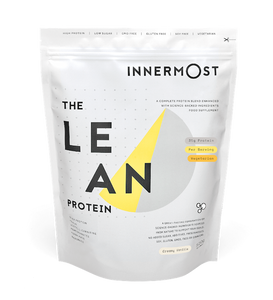
The Lean Protein
Whey protein powder for weight-loss.

Here’s How To Ensure Fresh Breath All Day, Everyday

28th March 2022

28th March 2022

By Beth Shelper

Let’s face it. No one wants bad breath. Besides B-O, having some spinach from lunch stuck in your teeth or walking around with toothpaste on your chin, it’s one of the more awkward and embarrassing things that can happen from time to time when it comes to your overall appearance and health.

The good news is, just like all of the situations we’ve described above, is that bad breath is avoidable. When it comes to tips around how to keep your breath fresh, there are a ton of tricks, products and routines that can help you avoid the issue of bad breath.

From morning breath to long-term halitosis and everything in between, we’ve got the strategies to help you keep that all-important fresh breath all day long.

What causes bad breath?

Bad breath can be as a result of a range of things, and no, having bad breath doesn’t necessarily mean that you have bad hygiene – but we’re sure we didn’t have to tell you that, anyway.

Common causes of bad breath include:

  • Eating spicy or fragrant foods
  • Drinking strong-smelling drinks
  • Problems with your teeth
  • Issues with your gum health
  • A dry mouth
  • Medication
  • Smoking
  • Illness, like tonsillitis
  • Poor dental hygiene

It’s important to note that bad breath is extremely common, and not something to be embarrassed about. A lot of the time when it comes to getting on top of the issue, a quick freshen up is enough to do the trick.

But, whilst the above is true for a large majority of cases, sometimes, when you are experiencing bad breath on a more long-term scale and have good standards of oral hygiene, it might be time to take a closer look at what is going on. If you can relate, you might be suffering from something called halitosis.

What is halitosis?

Halitosis is often referred to as ‘chronic bad breath’ due to the longevity of the problem. It’s a common condition that in most cases is caused by a bacteria build up… and the cause of that bacteria?

Yeah, you guessed it.

Gum disease.

Failing that, other common causes include food build up or plaque.

If this sounds familiar, firstly, know that you’re not alone. Far from it, in fact. There are plenty of ways to get on top of the bad breath problem, so if you’re wondering how to get rid of bad breath (permanently), now would be a good time to get the pen and paper out.

Here's how to get rid of bad breath

Firstly, re-evaluate your oral healthcare routine. Whilst there may not be anything inherently wrong with your teeth-brushing game (hey, twice a day is the recommended go-to, right?), it might not be the frequency at which you brush, but your technique and/or coverage – or, even lack of coverage.

  • Remember to brush your tongue

Make sure you’re brushing for at least two minutes, and not just your teeth. Whilst brushing your teeth is of course necessary, it’s also important to brush your tongue, too. That’s all part of the process.

  • Don’t forget to floss

Next up: floss. It’s inevitable that you’re going to miss an area or two when you’re brushing, particularly just before bed when you’re tired and just want to get the teeth brushing chore over with already.

Make sure you floss once a day – even in those hard to reach spots. Not only is this great for your overall mouth and gum health, but it will make sure that you’re never that colleague to walk back from lunch with that spinach in between your teeth that we mentioned earlier. Yep. It’s happened to us all.

  • Make sure to mouthwash

For the final step in your brushing routine, make sure to finish with a nice healthy swill of mouthwash. Not only will this put the cherry on the top of your routine, but you’ll really feel the difference in terms of that feeling of cleanliness, and you’ll taste it, too.

Aaaah. Minty fresh. Our favourite.

  • Always carry a mint

Whether you’re more of a chewing gum fan or prefer a classic mint imperial, always keeping a minty fresh (and dentist recommended) brand of (sugar free) mint in your pocket, work drawer or bag is a great way to ensure you don’t get caught out in between meals, drinks and snacks.

  • Try The Digest Capsules

Maybe your potentially unhealthy gut is the cause of your breath issues? If so, The Digest Capsules are here to help.

Formulated with probiotics, prebiotics, and a bunch of research-backed, natural ingredients to improve your health from the inside out, the capsules are a great way to integrate a daily


 

Product Spotlight

Need Expert Advice?

Other Insights

What Happened To My Training Over Summer (Honestly)
I did not train well this summer. A holiday to spend time with my family, a run of work trips, a couple of injuries I was trying to cope with (left shoulder and right forearm for those who are interested). If you'd asked me in June how consistent I'd be over the summer, I'd have said very. I was wrong. Most people quietly assume the founder of a wellness brand has this figured out. The truth is I run a brand, I try to have a life outside it, and summer is the season where routine goes to die for almost everyone I know. I don't think that's a personal failing. I think it's just what a normal year looks like. What I want to talk about is what actually happens to your body when this happens, because the research here is more reassuring than you might expect. What detraining research actually shows There's a real body of science on this. Strength and cardiovascular fitness don't decline at the same rate, and they don't decline anywhere near as fast as people fear. Cardiovascular fitness is the first thing to soften. Your VO2 max starts drifting down within a couple of weeks of stopping structured training, because your heart and blood vessels adapt to demand quickly in both directions. Strength is a different story. Studies that track people through a few weeks off training consistently find that measurable strength loss is small, often barely noticeable, for the first three to four weeks. The muscle itself takes even longer to shrink in any meaningful way. Several studies looking specifically at detraining periods found that visible loss of muscle protein and structure often doesn't show up until somewhere between five and eight months without any training at all. A summer of patchy sessions is nowhere near that. The reassuring partThe part I find genuinely reassuring is what's called muscle memory, and it's not just a phrase people use to feel better about a break. When you train, your muscle cells add nuclei, essentially more control centres for building protein. Research shows those nuclei stick around for months after you stop training, well past the point where the muscle itself has started to shrink. When you come back, you're not starting from zero. You're reactivating machinery that never actually left. That's a large part of why people who return to training after a long break tend to regain lost strength and size far faster than it took to build in the first place, often within four to eight weeks depending on how long the layoff was. Some of you might remember this happening post-Covid. So if you had a summer like mine, the honest scientific answer is that you probably lost less than it feels like, and you'll get it back faster than you think. What I'm actually doing this month Nothing dramatic. I'm not doing a reset week or a punishing comeback programme. I'm just going back to five structured sessions a week, prioritising the compound lifts I know well, and being honest that the first couple of sessions will feel harder than they did in June.  Don’t forget your proteinThe other thing I'm paying more attention to is protein, simply because it's the one lever that makes the rebuilding phase more efficient. Adequate protein intake supports the muscle protein synthesis that's doing the actual work of restoring what softened over summer. I've been leaning on The Health Protein for this. It's plant-based, built around pea and brown rice protein for a full amino acid profile, with glutamine in there to support recovery. If you'd rather stick with a whey based option, that's a completely reasonable choice too, and The Strong Protein remains built for exactly that. If you had a messy summer, you're not behind. You're just at the start of a normal, unremarkable return to routine, and the research says that's a far shorter road back than most people assume. Forward this to anyonre you know who is dreading their first session back. I'd genuinely like to know what generally works for you post-summer. Structured plan, just showing up once, anything. Reply and tell me. Even if it’s a one-liner, I’d love to hear from you. Read more
The Glow Blend: A Confession
I need to tell you something I've never said publicly, and it's not flattering. When our product team first brought me a plan for a collagen supplement, my honest reaction was no. Not "let me think about it." A flat no. And if I'm being fully honest about why, it wasn't the science. It was that collagen felt, in my head, like a beauty category. Something for someone else's brand. Not ours. I built Innermost around performance and evidence. Protein, creatine, mushrooms, electrolytes. Things I could point to a study for and feel comfortable talking about at a dinner table full of people who workout regularly. Collagen sat in a different mental folder. Skincare aisle. Jars with gold lids and brand sponsorship by one of the Kardashians. I'd absorbed a version of what "beauty" meant without ever examining it. The argument in the room So we had the argument internally. A proper one. A few people on the team pushed back hard, and rightly so. One of them put it to me plainly: we started Innermost to follow the evidence wherever it goes, not to follow it everywhere except the places that feel awkward. That line stuck with me. Here's what changed my mind, and it wasn't a feeling. It was the research. What the evidence actually says Collagen is the most abundant protein in your body. It's structural, it's in your skin, your joints, your gut lining, and production declines steadily from your mid-twenties onward. That's not a marketing claim, that's basic physiology. The question was never whether collagen matters. It was whether supplementing it actually does anything, and that's where most of the category falls apart. Most collagen products on the market use whole collagen molecules, which are too large to be absorbed effectively when you drink them. The ones that do use hydrolysed peptides, which are broken down into smaller chains your body can actually take up, still run into a second problem: dose. A lot of labels list collagen content that sits well below the 2 to 10 grams used in the trials that show measurable effects on skin elasticity and hydration. You're paying for a placebo with good branding. The ingredient most brands leave out The third problem is the one that convinced me completely. Vitamin C isn't a nice-to-have alongside collagen. It's a required co-factor for your body to actually synthesise collagen at the cellular level. Without adequate vitamin C, the enzymes responsible for stabilising collagen structure don't function properly. You can take a perfectly dosed hydrolysed peptide and still get a fraction of the benefit if the product doesn't include enough vitamin C alongside it. Most don't. They sell you the raw material and leave out the one thing your body needs to use it. Once I saw the category clearly, laid out like that, the decision stopped being about how I felt and started being about what the evidence supported. That's the whole operating principle of Innermost. I couldn't defend saying no to a legitimate, well-evidenced product category. What we built So we built The Glow Blend properly. Hydrolysed collagen peptides at a dose that reflects the research, alongside vitamin C, hyaluronic acid for hydration, biotin and folic acid for hair and nail health. Nothing in it that doesn't earn its place. What surprised me after launch The part I didn't expect was the response once we launched it. A good number of the messages came from women, as you'd expect, and they were generous and specific about what they'd noticed. But a surprising number came from men. Customers writing in to say they'd felt exactly what I'd felt, that awkward little flinch at "collagen," and had quietly bought it anyway because the ingredient breakdown made sense to them. That response told me more about why this category needed an honest voice in it than any research paper did. I'm not going to pretend I have this fully figured out. I still catch myself, occasionally, hesitating slightly before I mention it in a room. Old habits sit deeper than good evidence sometimes. But I take it, and increasingly a lot of men I respect take it too, quietly, without needing to make a thing of it. If this sounds familiar If any part of this resonated, and you've felt that same small resistance to a category you assumed wasn't for you, hit reply and tell me. I'd genuinely like to know I'm not the only one who had to get over it. And if you know someone, a friend, a partner, who could use this exact reasoning rather than a tesimonial, forward it on. It might do more good coming from someone else's honesty. Read more