










Veganism has, for want of a better word, exploded in recent years. Go back to 2014 and just 0.25% of the UK population followed a vegan lifestyle – fast forward to 2025 and that number sits well above 6%.
With so many more people looking for plant-based alternatives for their favourite foods and supplements, you’ll probably have noticed more vegan protein options on the shelves of your favourite stores. But, are they any good? What benefits do they offer? Are they only for vegans? Is plant protein better than whey?
These are all questions we’ll cover in this blog – so let’s get on with it.
What is vegan protein powder?
No prizes for guessing the answer to this one, but a vegan protein powder is a supplement which provides protein derived only from plant-based sources. As such, these are typically free from dairy, lactose and any animal products.
Vegan protein powder can come from a range of different sources – here are some of the most commonly seen ones:
- Pea protein
- Brown rice protein
- Hemp protein
- Pumpkin seed protein
- Chia or flax proteins
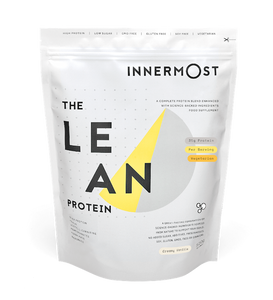
A combination of these – such as Innermost’s The Health Protein or The Fit Protein, which both use a blend of pea and brown rice proteins.

Types of vegan protein and how they stack up
Let’s take a closer look at some of these vegan proteins and the individual benefits each one can offer.
1. Pea protein
Pea protein is a great vegan protein choice, and it’s also one of the most popular. It’s high in BCAAs (especially leucine) which makes it perfect for muscle repair and growth. It also contains all nine essential amino acids (the ones our bodies don’t make naturally, so we need to get them through our diet), making it a complete protein.
Pea protein is easy to digest, offers a nice, creamy texture and has a pretty neutral taste, making it easy to use in a variety of ways.
2. Brown rice protein
Brown rice protein also contains all nine essential amino acids, but with a little more methionine and a little less lysine. As such, this protein is often paired with pea protein (which has a lot more lysine and a bit less methionine) to create a more complete profile. It’s also hypoallergenic, making it a great choice for people with intolerances or allergies.
It’s another very palatable option too, thanks to its light texture and slightly nutty taste.
3. Hemp protein
Another option is hemp protein. It’s yet another plant-based complete protein, but it also benefits from extra nutrients like omega-3s, magnesium and iron. It’s typically a bit lower in protein per gram, but with its higher nutrient and fibre content it can be a great choice for those looking for a more rounded protein option.
Hemp protein is often described as ‘earthy, nutty or grassy’ which many people enjoy but could be a bit much for others.
4. Pumpkin seed protein
Pumpkin protein is a little less protein-dense than some of its plant-based counterparts, but it’s loaded with other micronutrients like iron, magnesium, zinc and vitamin E. It’s also high in fibre which is a great bonus, and its antioxidant content is a boost for overall health.
It has a mild, nutty flavour, so it’s pretty versatile and useable whether you’re having it as a shake, in a smoothie or even mixed into oats or baked goods.
5. Blended plant proteins
With some pretty distinct benefits and advantages for each type of vegan protein, combining two or more is a common move for many supplement providers to get the best of each. We like using pea and brown rice proteins together.
Combining plant-based proteins doesn’t just give you more nutrients, it can also offer better taste and a smoother texture – just what you want for your post-workout shake or daily top-up.
Vegan protein powder benefits
Protein powders across the board offer some significant benefits, but what do vegan proteins specifically offer? Here are some of the key benefits of using vegan protein powders.
Easier on digestion
With no lactose content, plant-based proteins can be a bit more gentle on your digestive system. A lot of vegan protein sources are also naturally high in fibre, making them an ideal addition to your supplement stack.
With this in mind, vegan proteins are often a popular choice for people with sensitive stomachs or gut health issues such as IBS – and for good reason.
Supports muscle growth and repair
Much like animal-based protein powders, such as whey, vegan proteins support muscle growth and repair due to their high protein content. With most containing all nine essential amino acids, they make great partners for strength and endurance training, as well as recovery.
Studies have even suggested there isn’t a notable difference in muscle growth when comparing plant-based and whey proteins – food for thought… 
Anti-inflammatory and nutrient dense
With less processing involved in the production of some plant-based proteins, they retain much of their natural nutritional profile which helps to provide extra nourishment beyond protein itself.
Many vegan proteins contain phytonutrients (natural compounds found in plants) which offer various health benefits, as well as antioxidants, omega-3s and a range of minerals. If you’re looking for a protein supplement which also works to strengthen your wider health and immunity, a plant-based option might be a good choice for you.
Hypoallergenic
Dairy is one of the most common allergens and is a key component of whey protein, which can make it a bit of a stumbling block for many people with allergies or intolerances.
Vegan proteins, on the other hand, are often much lower in allergens or entirely hypoallergenic. Dairy, soy and gluten are typically not found in most plant-based proteins, which can make them a great choice for those with sensitivities or allergies.

Vegan protein vs whey: how do they compare?
Is plant protein better than whey? The answer to that question will depend on what your definition of ‘better’ is. Plant protein offers some distinct advantages, but then so does whey protein. Let’s take a look at how they compare on a few key points.
|
Factor |
Vegan Protein |
Whey Protein |
|
Source |
Plants! |
Dairy |
|
Digestion |
Can be gentler on the stomach (no lactose) |
Can cause bloating in some cases |
|
Allergens |
Usually allergen-free - some are completely hypoallergenic (e.g. brown rice) |
Contains dairy |
|
Amino Acids |
Most common plant-based sources contain all nine essential amino acids, but in lower concentrations |
Naturally complete with high levels of amino acids |
|
Absorption |
Typically a slightly slower rate of absorption |
Absorbed rapidly by the gut for faster impact |
The bottom line? Vegan protein stacks up very well against whey protein and is a great alternative whether you have an intolerance or personal preference.
Is vegan protein powder right for you?
With all of this in mind, it’s time to make the call. Is vegan protein powder right for you or are you best suited sticking to an animal-based protein like whey?
There’s no wrong or right answer, it all depends on your own specific needs and preferences. If you have no allergies, intolerances or diet preferences and are looking to maximise your protein intake for muscle growth, whey might be the way to go for you.
If you suffer from allergies or are sensitive to dairy, are looking for a more rounded nutritional profile or, of course, if you follow a vegan lifestyle, a plant-based protein could be the right choice.
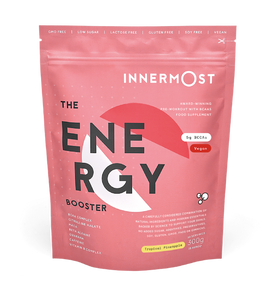
Either way, why not check out our range of vegan supplements to find out more about our plant-based proteins.
References
- Vegan Statistics You Need to Know, The Goodness Project, 2025. Click here.
- How many vegetarians and vegans are in the UK in 2025?, Sophie Barber, Finder, Jan 2025. Click here.
- Teixeira FJ, Matias CN, Faleiro J, Giro R, Pires J, Figueiredo H, Carvalhinho R, Monteiro CP, Reis JF, Valamatos MJ, Teixeira VH, Schoenfeld BJ. A Novel Plant-Based Protein Has Similar Effects Compared to Whey Protein on Body Composition, Strength, Power, and Aerobic Performance in Professional and Semi-Professional Futsal Players. Front Nutr. 2022 Jul 19;9:934438. doi: 10.3389/fnut.2022.934438. PMID: 35938106; PMCID: PMC9355667. Click here.