










Have you heard of camu camu?
In recent years the fruit has started appearing in everything from smoothie powders to daily wellness blends. Yet, outside nutrition circles, this small Amazonian fruit remains relatively unknown.
It is best known for containing a high concentration of vitamin C, but that is only part of its nutritional profile. Camu camu also provides polyphenols, carotenoids and other naturally occurring plant compounds that have attracted growing scientific interest.
So, what is camu camu, what can it genuinely do for your health and how strong is the research behind its growing reputation? Let’s get into it!
What is camu camu?
Camu camu, scientifically known as Myrciaria dubia, is a small fruit native to the Amazon rainforest, particularly the flooded river regions of Peru and Brazil. It grows on a shrub and looks a little like a large red or purple cherry when ripe.
Fresh camu camu has an intensely sharp, acidic taste. Because of this, it is rarely eaten like an everyday berry. It is more commonly turned into juice, pulp, powder or a concentrated ingredient for use in food supplements.
The fruit’s main nutritional claim to fame is its vitamin C content. Camu camu is widely regarded as one of the richest known natural sources of the vitamin, although the precise amount varies considerably. The variety of the plant, growing conditions, ripeness, storage and processing method can all affect the final concentration.
Beyond vitamin C, camu camu contains several groups of plant compounds, including polyphenols, flavonoids, anthocyanins and carotenoids. Researchers are interested in how these compounds may work alongside vitamin C, rather than viewing the fruit as a source of isolated ascorbic acid alone.
What makes camu camu different from other sources of vitamin C?
Vitamin C is found in many everyday foods, including citrus fruits, berries, peppers and leafy vegetables. Camu camu stands out because it can provide a particularly concentrated natural source of the vitamin. A relatively small amount may provide considerably more vitamin C than the same amount of many familiar fruits, although the precise concentration depends on how it has been grown, harvested and processed.
|
Vitamin C source |
Common format |
Vitamin C context |
Other nutritional compounds |
What to consider |
|
Camu camu |
Powder, pulp, juice or supplement blend |
Naturally rich, although the amount varies with ripeness and processing |
Polyphenols, flavonoids, carotenoids and anthocyanins |
Check the actual vitamin C provided per serving |
|
Orange |
Whole fruit or juice |
A familiar dietary source with a more moderate concentration |
Flavonoids, water and fibre when eaten whole |
Easy to include in the diet, but juice contains less fibre |
|
Acerola cherry |
Powder, juice or extract |
Another highly concentrated natural source |
Carotenoids and polyphenols |
Nutrient levels also vary between formats |
|
Isolated vitamin C |
Tablet, capsule or powder |
Standardised and straightforward to measure |
Usually contains few or no whole-fruit compounds |
Useful for a precise dose, but less nutritionally complex |
Camu camu also contains plant compounds that would not normally be found in a standard isolated vitamin C supplement. However, that does not automatically mean it produces better results. The most useful comparison is the amount of vitamin C provided per serving and the quality of the wider formulation.
What are the health benefits of camu camu?
When it comes to the health benefits of camu camu, there is an interesting body of ongoing research. Many of camu camu’s clearest health benefits come from its vitamin C content. Researchers are also studying whether its wider collection of plant compounds may offer additional effects, although much of that evidence is still developing.
Supports normal immune function
Vitamin C contributes to the normal function of the immune system. It supports several cellular processes involved in the body’s immune response and helps maintain normal immune function during and after intense physical exercise.
This does not mean that camu camu can prevent everyday illness by itself. Sleep, nutrition, stress levels and physical activity all influence immune health, but an adequate intake of vitamin C helps the immune system function normally.
Supports collagen formation and skin health
Collagen is a structural protein found throughout the body, including in the skin, bones, cartilage and blood vessels. The vitamin C found in camu camu contributes to collagen formation for the normal function of the skin.
This is one reason camu camu has become a popular ingredient in beauty and wellness formulas. The vitamin C it provides supports the biological processes involved in normal collagen production.
Helps protect cells from oxidative stress
Oxidative stress occurs when there is an imbalance between free radicals and the body’s ability to manage them. Free radicals are naturally produced during processes such as metabolism and exercise, but they can also be influenced by smoking, pollution and other environmental factors.
Vitamin C contributes to the protection of cells from oxidative stress. Camu camu also contains polyphenols and other compounds that have demonstrated antioxidant activity in laboratory studies.
To clarify, antioxidants should not be viewed as a way to “cancel out” an unhealthy lifestyle. Their role is part of the body’s wider defence system, which also depends on a varied diet and sufficient recovery.
Contributes to energy and reduced tiredness
Camu camu is sometimes described as an energy ingredient, although it does not behave like caffeine.
This is a result of the vitamin C, which contributes to a normal energy-yielding metabolism and the reduction of tiredness and fatigue. Energy-yielding metabolism is the process through which the body releases and uses energy from food.
What does emerging research say about camu camu?
While the vitamin C content is a clear driver for the benefits of camu camu, there is an emerging area of research that is starting to look beyond this. Scientists are now looking at whether the fruit’s wider mixture of polyphenols and other plant compounds could influence inflammation, gut bacteria and metabolic health.
One small human study compared camu camu juice with tablets containing the same amount of vitamin C. Researchers observed reductions in certain markers of oxidative stress and inflammation in the camu camu group, suggesting that compounds beyond vitamin C may have contributed. However, the study involved only 20 male smokers and lasted seven days, so larger trials are needed.
One frequently referenced study found that camu camu extract altered the gut microbiota and limited weight gain in mice consuming a high-fat, high-sugar diet. The animals also showed changes in energy expenditure and markers associated with metabolic health.
These results have led to suggestions that camu camu could eventually have a role in research around the relationship between plant compounds and the gut microbiome. Further research is needed however before definitive conclusions can be made.
How much camu camu should you take?
There is no universally established daily dose of camu camu. Powders, extracts, juices and blended supplements can vary considerably in concentration, so the appropriate serving depends on the individual product.
Follow the serving instructions provided by the manufacturer and check how much vitamin C the recommended quantity contains. Remember to account for other supplements you may be using, particularly multivitamins or immune-support products.
Is camu camu worth adding to your routine?
On balance, camu camu can be a useful addition to your routine, provided your expectations are realistic.
Camu camu is a particularly rich source of vitamin C, and vitamin C's contributions to immune function, collagen formation, protection of cells from oxidative stress and normal energy metabolism are among the best-established in nutrition. These are the benefits supported by the strongest and most established evidence.
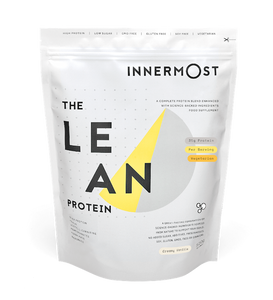
You can find camu camu in our vegan protein powder The Health Protein. It is developed to support everyday health alongside repair and recovery, containing 31g of pea and brown rice protein, together with camu camu, bilberries, acai berries and a blend of mushrooms. The formula provides 250mg of camu camu per serving and can be mixed into a shake, smoothie or porridge.
References
- García-Chacón, J., Marante, F., Boix-Castejón, M., Campanella, O., López-Nicolás, J. (2023). Camu Camu (Myrciaria dubia (Kunth) McVaugh): An Amazonian Fruit with Biofunctional Properties: A Review. ACS Omega. 8(6). Click here.
- Azevedo, L., Ribeiro, P., Oliveira, J., Correia, M., Ramos, F., Oliveira, E., Barros, F., Stringheta, P. (2019). Camu-camu (Myrciaria dubia) from commercial cultivation has higher levels of bioactive compounds than native cultivation (Amazon Forest) and presents antimutagenic effects in vivo. Journal of the Science of Food and Agriculture. 99(2). Click here.
- EFSA Panel on Dietetic Products, Nutrition and Allergies (NDA). (2015). Vitamin C and contribution to the normal function of the immune system: Evaluation of a health claim pursuant to Article 14 of Regulation (EC) No 1924/2006. EFSA Journal. 13(11). Click here.
- EFSA Panel on Dietetic Products, Nutrition and Allergies (NDA). (2010). Scientific opinion on the substantiation of health claims related to vitamin C and reduction of tiredness and fatigue, contribution to normal psychological functions, regeneration of the reduced form of vitamin E, contribution to normal energy-yielding metabolism, maintenance of the normal function of the immune system and protection from oxidative damage. EFSA Journal. 8(10). Click here.
- Anhê, F., Nachbar, R., Varin, T., Trottier, J., Dudonné, S., Le Barz, M., Feutry, P., Pilon, G., Barbier, O., Desjardins, Y., Roy, D., Marette, A. (2019). Treatment with camu camu (Myrciaria dubia) prevents obesity by altering the gut microbiota and increasing energy expenditure in diet-induced obese mice. Gut. 68(3). Click here.