








icon-account icon-glass

Popular Products

The Lean Protein
Whey protein powder for weight-loss.

What Makes a Healthy Protein Powder?

10th June 2026

10th June 2026

By Josh Makin

Protein powder has come a long way from the oversized tubs once reserved for bodybuilders and gym changing rooms.

Today, it sits much more comfortably within everyday wellness routines, whether that means a post-workout shake, a quick breakfast smoothie, a protein boost between meetings or something to support recovery after a long day.

That shift is a good thing.

Protein plays a key role in how your body repairs, maintains muscle, and adapts to exercise. Yet, with so many options available, choosing a healthy protein powder can feel more complicated than it needs to.

A healthy protein powder should do more than help you hit a macro target. Some formulas lead with protein content. Others focus on flavour, functional ingredients, plant-based credentials, or weight management. On the surface, they can all look quite similar. Once you look a little closer, the differences become much clearer.

So what makes a healthy protein powder?

Let’s get into it.

What does “healthy protein powder” actually mean?

A healthy protein powder should help you support your nutrition in a way that feels simple, useful and sustainable.

At its core, that means providing a meaningful amount of protein from a quality source. Protein is made up of amino acids, which the body uses to repair and maintain tissue. For anyone training regularly, eating enough protein is particularly important because exercise increases the demand for repair and recovery.

Research from the International Society of Sports Nutrition suggests that people who exercise regularly may benefit from a daily protein intake of around 1.4 to 2.0g per kg of body weight, depending on their training and goals. Protein supplements can be a practical way to help meet that intake, especially when meals are rushed or appetite varies.

That said, protein powder works best as part of a wider diet.

That’s where the idea of “healthy” becomes more useful. It’s not only about the amount of protein in the scoop, but also about whether the formula supports your body, your goal and the way you actually live day to day.

What makes a healthy protein powder?

So, what actually makes up a healthy protein powder?

Protein source quality

The protein source is one of the first things to look at.

Different proteins digest at different speeds and provide different amino acid profiles. Some contain all nine essential amino acids, while others work best when blended with complementary sources.

Whey protein

Whey protein is one of the most widely used options in sports nutrition. It is a complete protein, naturally rich in essential amino acids, and is often used around training because it is convenient and easy to incorporate into a routine.

Casein protein

Casein is also derived from milk but behaves differently. It digests more slowly, which can make it useful when you want a steadier release of amino acids over a longer period.

Plant protein

Plant-based proteins can also be effective when formulated properly. Pea protein and brown rice protein, for example, are often combined because their amino acid profiles complement each other. This kind of blending helps create a more complete plant-based protein option.

So, rather than asking whether one protein type is always better than another, it helps to ask a more practical question: does this protein source suit your diet, your body and your goal?

For some people, that will be whey. For others, it will be plant-based. The important part is choosing a protein powder that suits your body, your diet and your goals.

Look beyond the protein number

It’s easy to compare protein powders by the number on the label.

A higher protein content can be useful, especially for those training hard or trying to increase daily intake. But that number alone does not tell you whether a product is well-formulated.

A good protein powder needs balance.

The serving should provide enough protein to be worthwhile, but the rest of the formula deserves attention too. For instance:

  • What else has been included?
  • Is there a clear reason for each ingredient?
  • Are there unnecessary fillers or bulking agents?
  • Does it contain a high amount of sugar?
  • Does it taste good enough to use more than once?

Match your protein powder to your goal

The best protein powder for you depends on what you want it to support.

Some are built as basic macro tools. Others are designed to support a more specific outcome, such as strength, lean body composition, recovery or general wellbeing. That distinction matters because people use protein powder for different reasons.

This is where goal-led formulation becomes important. Rather than treating protein as a single category, a more considered approach recognises that different people need different things from their supplements.

Strength and muscle support

If your focus is strength, muscle repair or performance, protein quality is important.

This is because protein helps provide the amino acids needed to support repair and adaptation after a strength workout. Over time, this supports strength training progress, particularly when paired with enough energy, recovery and sleep.

For a strength-focused protein powder, it makes sense to look for a high-quality complete protein source, along with ingredients that support performance or recovery.

This is the thinking behind The Strong Protein. It combines whey protein and casein with ingredients such as creatine monohydrate, magnesium, Montmorency cherries and bilberries to create a formula for people who want their protein powder to support training, not simply increase protein intake.

Lean body composition

For those focused on body composition, a healthy protein powder can be a useful tool within a balanced diet.

Protein supports muscle maintenance, which is particularly important when someone is trying to reduce body fat, manage calorie intake, or train consistently while staying lean. A well-formulated protein powder can also make it easier to add protein to meals or snacks without needing to overcomplicate the rest of the day.

The healthiest option here is not necessarily the lowest-calorie product or the one with the most aggressive “diet” messaging. It should provide a strong serving of protein, support satiety, avoid unnecessary fillers, and fit easily into a routine that still prioritises whole foods.

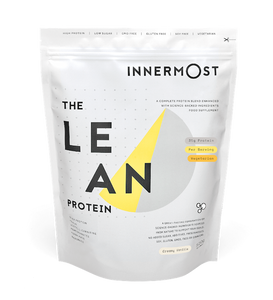
The Lean Protein reflects this kind of approach. Alongside protein, it includes ingredients such as inulin, acetyl L-carnitine, pomegranate, yerba mate and bilberries. The result is a formula built around lean body composition, satiety and daily consistency

Everyday wellness

Not every protein powder needs to be tied to a gym-based goal to be healthy.

For many people, a healthy protein powder is simply a way to make everyday nutrition feel more consistent. It might help make breakfast more balanced, support recovery after Pilates or running, or provide a convenient protein boost on days when meals are rushed.

A good everyday protein powder should provide a quality protein source, be easy to digest, taste good, and sit comfortably alongside a varied diet. If it is plant-based, it should also be carefully formulated so the protein sources work well together.

The Health Protein is designed with this broader approach in mind. It uses a vegan blend of pea and brown rice protein, alongside ingredients such as glutamine, mushrooms and berries. Rather than being purely performance-led, it gives people a simple way to add protein into their day while supporting a more rounded wellness routine.

Check what is not in the formula

A healthy protein powder should be as much about what has been left out as what has been added.

Unnecessary fillers, artificial colours, excessive sugar and vague marketing claims can all make a product feel less trustworthy. That does not mean every ingredient needs to be stripped back to the point where the product becomes joyless. Taste, texture and mixability all matter. But every ingredient should have a reason for being there.

Look for transparency in your choice of protein powder brand:

  • Can you understand the active ingredients?
  • Does the product explain what they are there to support?
  • Are the claims realistic?
  • Does the formula match the goal it is being sold for?

This is where clean formulation is important. A healthy protein powder should feel premium because it has been formulated with a science-backed approach, not because the packaging says it is.

Taste is more important than people think

Taste can feel like the less serious part of choosing a protein powder, but in practice, it has a big impact.

A protein powder only supports your routine if you actually want to use it. If it tastes chalky, overly sweet or difficult to get through, it is much less likely to become something you use consistently.

This matters because consistency is where nutrition starts to make a difference. A good-tasting protein powder is easier to use after training, blend into smoothies, mix into oats or keep on hand for busy days.

Functional ingredients can add value

Taste should still be the foundation of any healthy protein powder, but the right functional ingredients can give a formula more purpose, especially when it is designed around a specific goal such as strength, recovery, body composition or everyday wellbeing.

A longer ingredient list does not automatically mean a better product. Each ingredient should have a clear role.

Creatine, for example, makes sense in a strength-focused protein powder. Fibre can support satiety in a lean body composition formula, while magnesium may suit a recovery-led routine. Plant extracts, berries and mushroom ingredients can also fit well within a broader wellness blend when included with purpose.

 A healthy protein powder should fit into your lifestyle

The most useful supplements are usually the ones that fit neatly into what you are already doing.

A healthy protein powder should work around your day. After a workout. In a morning smoothie. Mixed into oats. Taken between meetings. Packed for travel. Used when you know dinner will be later than planned.

These moments might sound small, but they are often where consistency is built.

Most people are not trying to follow a perfect nutrition plan every day. Work gets busy. Training moves around. Meals vary. Recovery sometimes takes a back seat. A good protein powder gives you a simple way to support your routine when things are not perfectly structured.

This is also why it should not feel overly complicated. You shouldn’t need to rebuild your entire diet around it and it should sit alongside real food, supporting the gaps that naturally appear in a busy, active life.

What makes Innermost protein powders different?

Innermost takes a more considered approach to protein.

Rather than creating one generic formula and expecting it to suit everyone, the range is built around different goals. That makes it easier to choose a product based on what you want support with, whether that is strength, lean body composition or everyday wellness.

There is also a science backed focus on formulation quality. Our protein sources are chosen with purpose, the active ingredients included for a reason and each product avoids unnecessary fillers and bulking agents. The flavours are designed to feel enjoyable, not like something you tolerate because it happens to be good for you.

A healthy protein powder should feel effective, but it should also feel easy to come back to. It should support how you train, recover, work and live. It should make your routine feel more consistent without adding another layer of complexity.

That is where Innermost feels different from more traditional protein brands. The products sit closer to modern wellness than old-school gym nutrition, while still being grounded in performance and science.

Final thoughts

Healthy protein powder comes down to quality, purpose and consistency.

The protein source should be strong, the formula should make sense and the ingredients should be clear. The taste should make you want to use it again and most importantly, it should support your wider routine rather than trying to replace it.

Used alongside a balanced diet, protein powder can be a simple way to support training, recovery, body composition and everyday wellbeing.

For those looking for a more considered option, Innermost’s protein range is built around exactly that approach. Goal-led formulas, clean ingredients, strong taste and science-backed support, designed to fit into real life. Explore Innermost’s protein powders to find the formula that best fits your goals, routine and lifestyle.


Product Spotlight

Need Expert Advice?

Other Insights

The Glow Blend: A Confession
I need to tell you something I've never said publicly, and it's not flattering. When our product team first brought me a plan for a collagen supplement, my honest reaction was no. Not "let me think about it." A flat no. And if I'm being fully honest about why, it wasn't the science. It was that collagen felt, in my head, like a beauty category. Something for someone else's brand. Not ours. I built Innermost around performance and evidence. Protein, creatine, mushrooms, electrolytes. Things I could point to a study for and feel comfortable talking about at a dinner table full of people who workout regularly. Collagen sat in a different mental folder. Skincare aisle. Jars with gold lids and brand sponsorship by one of the Kardashians. I'd absorbed a version of what "beauty" meant without ever examining it. The argument in the room So we had the argument internally. A proper one. A few people on the team pushed back hard, and rightly so. One of them put it to me plainly: we started Innermost to follow the evidence wherever it goes, not to follow it everywhere except the places that feel awkward. That line stuck with me. Here's what changed my mind, and it wasn't a feeling. It was the research. What the evidence actually says Collagen is the most abundant protein in your body. It's structural, it's in your skin, your joints, your gut lining, and production declines steadily from your mid-twenties onward. That's not a marketing claim, that's basic physiology. The question was never whether collagen matters. It was whether supplementing it actually does anything, and that's where most of the category falls apart. Most collagen products on the market use whole collagen molecules, which are too large to be absorbed effectively when you drink them. The ones that do use hydrolysed peptides, which are broken down into smaller chains your body can actually take up, still run into a second problem: dose. A lot of labels list collagen content that sits well below the 2 to 10 grams used in the trials that show measurable effects on skin elasticity and hydration. You're paying for a placebo with good branding. The ingredient most brands leave out The third problem is the one that convinced me completely. Vitamin C isn't a nice-to-have alongside collagen. It's a required co-factor for your body to actually synthesise collagen at the cellular level. Without adequate vitamin C, the enzymes responsible for stabilising collagen structure don't function properly. You can take a perfectly dosed hydrolysed peptide and still get a fraction of the benefit if the product doesn't include enough vitamin C alongside it. Most don't. They sell you the raw material and leave out the one thing your body needs to use it. Once I saw the category clearly, laid out like that, the decision stopped being about how I felt and started being about what the evidence supported. That's the whole operating principle of Innermost. I couldn't defend saying no to a legitimate, well-evidenced product category. What we built So we built The Glow Blend properly. Hydrolysed collagen peptides at a dose that reflects the research, alongside vitamin C, hyaluronic acid for hydration, biotin and folic acid for hair and nail health. Nothing in it that doesn't earn its place. What surprised me after launch The part I didn't expect was the response once we launched it. A good number of the messages came from women, as you'd expect, and they were generous and specific about what they'd noticed. But a surprising number came from men. Customers writing in to say they'd felt exactly what I'd felt, that awkward little flinch at "collagen," and had quietly bought it anyway because the ingredient breakdown made sense to them. That response told me more about why this category needed an honest voice in it than any research paper did. I'm not going to pretend I have this fully figured out. I still catch myself, occasionally, hesitating slightly before I mention it in a room. Old habits sit deeper than good evidence sometimes. But I take it, and increasingly a lot of men I respect take it too, quietly, without needing to make a thing of it. If this sounds familiar If any part of this resonated, and you've felt that same small resistance to a category you assumed wasn't for you, hit reply and tell me. I'd genuinely like to know I'm not the only one who had to get over it. And if you know someone, a friend, a partner, who could use this exact reasoning rather than a tesimonial, forward it on. It might do more good coming from someone else's honesty. Read more
Marine Collagen Supplements: Benefits, Uses and What the Research Says
In the past few years, collagen has gone from a niche beauty buzzword to one of the most searched-for supplements available. Walk down any health aisle and you'll find it in powders, capsules, sachets and even coffee blends.  Marine collagen has become a particular favourite, often praised for its hydrolysed peptide format and its links to healthier-looking skin. But how much of that holds up once you look at the science? And is a marine collagen supplement worth adding to your routine? This guide covers what marine collagen is, the benefits, how it works, and what the research shows. No miracle promises. Just a clear, honest look at where collagen fits into your modern wellness routine. Let’s get into it! Key takeaways Marine collagen is a hydrolysed protein sourced from fish skin and scales, made up almost entirely of Type I collagen - the type most abundant in human skin. The strongest evidence supports gradual improvements in skin hydration and elasticity with daily marine collagen use over roughly 8 to 12 weeks. Evidence for hair, nails and joint support is more limited, so these benefits should be seen as promising but less established than the skin-related research. Marine collagen peptides are broken into smaller fragments, which research suggests are well absorbed into the body. Neither marine nor bovine collagen is automatically better; the right choice depends on your goals, diet and product quality. What is marine collagen? Marine collagen is simply collagen that is sourced from fish - usually the skin and scales that would otherwise be discarded. You can get some collagen from marine foods, although it is usually most concentrated in the skin, bones and connective tissues rather than the fillet itself. Foods that provide marine collagen include: Fish with the skin on, such as salmon, cod and haddock Fish skin, where eaten as part of a dish Small fish eaten with bones, such as sardines or anchovies Fish bone broth or fish stock Shellfish and seafood (though these are more useful for supporting nutrients than collagen itself) Most of the marine collagen supplements you find will be hydrolysed, meaning the long collagen chains have been broken down into smaller chains of amino acids called peptides. These smaller peptides are easier to dissolve, easier to mix into drinks, and easier for the body to digest than whole collagen you find in foods. Collagen is one of the most abundant proteins in your body. It aids in the structure of your skin, bones, tendons, ligaments and cartilage, and it is a big part of what keeps skin looking firm and springy. There are several types of collagen, but the body leans most heavily on Types I and III. Type I collagen is the most abundant type. It is found in skin, bones, tendons and ligaments. Type II collagen is mainly found in cartilage, which is why it is often discussed in relation to joint health. Type III collagen is found in skin, muscles and blood vessels. It often works alongside Type I collagen. Type IV collagen helps form part of the deeper structural layers of the skin. Type V collagen is found in areas such as the skin, hair and some connective tissues. Marine collagen is made up almost entirely of Type I, which happens to be the most common type found in skin. That overlap is a large part of why marine collagen is discussed in relation to skin health and nutrition. How do marine collagen supplements work? Before we jump into the potential benefits and what the research says, it’s useful to understand exactly how marine collagen supplements work when consumed. One common misunderstanding is that these supplements travel through the body and arrive in the skin as ready-made collagen. That’s not quite how it works. Hydrolysed marine collagen has already been broken down during processing into smaller collagen peptides. When you consume it, your digestive system breaks those peptides down further into amino acids and smaller fragments, including glycine, proline and hydroxyproline. Research suggests some collagen-derived peptides can be absorbed into the bloodstream, where they may travel to the skin and other connective tissues. From there, they are thought to support collagen-related processes in two main ways: by providing amino acids the body can use as raw materials, and by acting as signals that may encourage cells such as fibroblasts to produce more collagen. Marine collagen may work through two main mechanisms They top up the raw materials your body draws on to build its own collagen. Certain peptides act as a kind of signal, prompting the cells in your skin known as fibroblasts to step up their natural production. If you’re looking to increase your marine collagen intake, it’s also worth considering the role of vitamin C. Vitamin C contributes to normal collagen formation, which is why a collagen-supportive diet should include vitamin C-rich foods or, where appropriate, a well-formulated supplement. The benefits of marine collagen While it’s true that marine collagen works best alongside a well-balanced routine, (including enough protein, key micronutrients, good hydration, and sleep) it often gets linked to a long list of benefits, with some better supported by research than others. Here's what each one means for you, and how well the science supports it. Improved skin hydration and elasticity The promise of smoother, plumper-looking skin is one of the main reasons people turn to marine collagen in the first place. As the body’s natural collagen production declines with age, skin can gradually appear less firm, which is why collagen is so often discussed in relation to skin ageing and overall skin quality. The scientific research reinforces this benefit, particularly around gradual improvements in skin hydration and elasticity with consistent daily use. Several clinical trials have looked at oral collagen peptides and skin health, with a 2023 systematic review of 26 randomised controlled trials finding that hydrolysed collagen supplementation was associated with improvements in both areas.  Many of these collagen studies also assess results over several weeks, suggesting that 8 to 12 weeks is a sensible timeframe to keep in mind when judging whether marine collagen is making a noticeable difference to your skin. Hair and nail support The promise of stronger nails that split and chip less, and hair that feels healthier and more resilient, is a big part of marine collagen's appeal and a common reason people add it to their diet. The honest picture here is that the science of this benefit is less established.  Hair and nails are made mostly of keratin rather than collagen, so the link is more indirect. Some small studies suggest collagen peptides may help with nail strength, although they do not claim to prove that marine collagen is a guaranteed solution for hair growth or brittle nails. Some marine collagen formulas also include biotin, which has authorised EFSA health claims for contributing to the maintenance of normal hair and normal skin. That makes it a useful supporting ingredient in beauty-focused supplements, but marine collagen should not be treated as a guaranteed solution for hair growth or nail strength. Improved joints and connective tissue If you run, lift or train regularly, joint comfort may be one of the marine collagen benefits that matters most to you. Collagen is found in cartilage, tendons, ligaments and other connective tissues, which is why it is often discussed in relation to active lifestyles and long-term mobility. The research into marine collagen for joints is less developed than the research around skin, but there are some relevant findings. In a 2018 double-blind, placebo-controlled trial, a daily supplement containing hydrolysed fish collagen, vitamins and other active ingredients was associated with improvements in joint wellbeing over 90 days. The results should be interpreted carefully because the formula contained more than marine collagen alone, but they do support the wider interest in marine collagen as part of a balanced diet, sensible training plan and consistent recovery routine. Marine collagen vs bovine collagen Marine and bovine collagen are two of the most common forms of collagen supplements that you will hear about: Marine collagen is sourced from fish, usually the skin and scales Bovine collagen comes from cattle, most often the hide. Both are commonly hydrolysed into collagen peptides, which means they have been broken down into smaller fragments that are easier for the body to digest and use. The main difference is usually the collagen profile. Marine collagen is typically rich in Type I collagen, the type most strongly associated with skin, bones and connective tissue. Bovine collagen usually contains both Type I and Type III collagen, giving it a slightly broader collagen profile. That does not make one automatically better than the other. Marine collagen may be more appealing if your focus is skin support or you prefer a fish-derived source, while bovine collagen may suit those looking for a wider mix of collagen types. In both cases, the quality of the supplement matters more than the source alone. Look for hydrolysed peptides, a clear dose, transparent sourcing and a format you can use consistently. Feature Marine collagen Bovine collagen Source Fish or other marine sources, often skin, scales or bones Cattle, usually hides or bones Common collagen types Mainly Type I collagen Type I and Type III collagen Often chosen for Skin hydration, elasticity and beauty-focused routines General collagen support, including skin and connective tissue Digestibility Usually hydrolysed into collagen peptides for easier digestion and mixing Also commonly hydrolysed into collagen peptides Taste and texture Can have a mild marine taste if not well formulated Usually more neutral, though this depends on the product Dietary considerations Not suitable for fish allergies, vegans or vegetarians Not suitable for people avoiding beef, vegans or vegetarians Main thing to check Source, collagen dose, peptide format and taste Source, collagen dose, peptide format and quality Is marine collagen worth taking?  For most people interested in skin health, marine collagen is a reasonable, low-risk supplement to try, as long as your expectations are realistic. The evidence for gradual gains in skin hydration and elasticity is reasonably solid. The case for hair, nails and joints is softer, but it's building. It also works best as one piece of a bigger picture and should be consumed alongside a protein-rich, varied diet, decent sleep, sun protection and staying hydrated. If you do give it a go, choose a hydrolysed product with a sensible dose and supporting nutrients like vitamin C, commit to a consistent 8 to 12 weeks, and judge the results for yourself. Whatever source you land on, quality and consistency are what turn a supplement from a hopeful purchase into a habit worth keeping. That is the standard we hold every formula to at Innermost: science over hype, quality ingredients and nothing you do not need. Whether you are looking at collagen, protein or everyday wellness support, the same rule applies: choose what fits your body, your goals and the routine you can actually stick to. If you're not sure where to start, our free nutritionist consultation can help you work out what actually fits your goals. Frequently asked questions  Is marine collagen better than bovine collagen?  Neither is outright better. Marine is primarily Type I and may appeal to those looking for a fish-derived source, while bovine offers Types I and III and is often cheaper. Can vegans take marine collagen?  Marine collagen comes from fish, so it isn't suitable for vegans or vegetarians. Vegan "collagen support" products work differently, supplying nutrients such as vitamin C that contribute to normal collagen formation rather than collagen itself. Does marine collagen taste fishy?  A good-quality hydrolysed marine collagen should be virtually flavourless. A noticeable fishy taste is usually a sign of a lower-quality product. How much Marine Collagen should I take? Most research points to an effective daily intake of somewhere between 2.5g and 15g of collagen peptides, with many of the skin studies sitting in the middle of that range. References Czajka, A., Kania, E., Genovese, L., Corbo, A., Merone, G., Luci, C., Sibilla, S., Siciliano, C. (2018). Daily oral supplementation with collagen peptides combined with vitamins and other bioactive compounds improves skin elasticity and has a beneficial effect on joint and general wellbeing. Nutr Res. 57. Click here. Farooq, S., Ahmad, M., Zheng, S., Ali, U., Li, Y., Shixiu, C., Zhang, H. (2024). A review on marine collagen: sources, extraction methods, colloids properties, and food applications. Collagen Leather. 6(11). Click here. Myung, S., Kim, J., Lee, Y., Choi, Y. (2025). Effects of collagen supplements on skin aging. Am J Med. Click here. Pu, S., Huang, Y., Pu, C., Kang, Y., Hoang, K., Chen, K., Chen, C. (2023). Effects of oral collagen for skin anti-aging: a systematic review and meta-analysis. Nutrients. 15(9). Click here Evans, M., Lewis, E., Zakaria, N., Pelipyagina, T., Guthrie, N. (2021). A randomized, triple-blind, placebo-controlled, parallel study to evaluate the efficacy of a freshwater marine collagen on skin wrinkles and elasticity. J Cosmet Dermatol. 20(3), 825–834. Click here. Hexsel, D., Zague, V., Schunck, M., Siega, C., Camozzato, F., Oesser, S. (2017). Oral supplementation with specific bioactive collagen peptides improves nail growth and reduces symptoms of brittle nails. J Cosmet Dermatol. 16(4), 520–526. Click here. EFSA Panel on Dietetic Products, Nutrition and Allergies (NDA). (2010). Scientific Opinion on the substantiation of health claims related to biotin. EFSA Journal. 8(10), 1728. Click here. Read more