








icon-account icon-glass

Popular Products

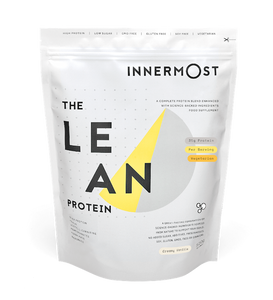
The Lean Protein
Whey protein powder for weight-loss.
The Energy Booster
Pre/intra-workout powder with BCAAs.

The Protein Mistake That's Holding Back Your Results

2nd July 2026

2nd July 2026

By Shivraj Bassi

I've written at length about creatine. I've written about collagen, electrolytes, the GLP-1 moment, even the science of sleep. But I've never written a personal email about protein.

That's a strange omission for someone who built a brand that makes some pretty ground-breaking protein powders. So let me explain why, and then actually say the thing I've been avoiding.

Protein is the most foundational supplement in the Innermost range. It's also the hardest subject for me to write about personally, because there's nothing surprising about it. Creatine had a story. Collagen had a story. Protein is well... protein. Everyone knows you should eat more of it.

The mechanism is not a secret. Muscle protein synthesis, leucine threshold, net nitrogen balance. If you've been in the fitness space for more than a couple of years, you've read this before.

And I think that's the problem. The familiarity makes people stop paying attention.

Here's what I actually think about protein, after a decade of working in this space.

Most people in their thirties and forties are under-consuming protein and don't know it. Not by a small amount. The gap between what most people eat and what the research supports for muscle maintenance and body composition outcomes is significant.

Studies looking at optimal intake for adults prioritising body composition consistently point to between 1.6 and 2.2 grams per kilogram of bodyweight per day. Most people are eating somewhere between 0.8 and 1.2.

The difference is not cosmetic. Adequate protein intake directly affects your ability to preserve muscle tissue during a caloric deficit. It supports recovery between sessions. It has a measurable effect on satiety, which means it influences total caloric intake downstream, not just at the point you consume it.

There's a subtler point too, and this is the one I've come to think matters most: protein is the nutrient where consistency compounds most directly. The benefits of creatine saturate over time in a relatively predictable way. Collagen has a timeline that research measures in months. But protein's effect on body composition is essentially continuous. Every day you hit your target, you preserve something. Every day you don't, you lose a small amount of ground.

Over a summer, that adds up.

This is what I've observed personally, and it's backed by the research on muscle protein turnover. The people who maintain their body composition through summer are not, in my experience, the people who train harder during that period. Most of them train less. Their routines are disrupted. They're travelling. Their eating is less structured. The people who come back in September looking broadly the same as they left in June are the ones who kept their protein intake consistent. That's it. That's the variable.

Why I take The Lean Protein

I’ve been taking The Lean Protein the past few months for a straightforward reason: the protein-to-calorie ratio.

Much like our other protein blends, each serving delivers over 30 grams of protein. The calorie count is low relative to that protein yield. When my training is consistent and my eating is structured, I don't think about this very much. But in the periods when those things are less reliable, that ratio becomes the thing that holds the rest together.

The formula also includes acetyl-L-carnitine, inulin, pomegranate extract, and yerba mate. These aren't afterthoughts. Acetyl-L-carnitine has a research base in fat metabolism. Inulin supports satiety and gut function. The pomegranate extract is included for its antioxidant contribution to recovery. This means that the formula does more work per serving than a standard whey and just what I need going into summer.

The thing the industry gets wrong about protein

Most protein marketing leads with taste and price per gram. Both matter. But neither tells you whether the formula will support body composition outcomes over time. The two questions I'd ask before buying any protein powder are: what is the actual protein-to-calorie ratio, and what is the leucine content per serving. 

Leucine is the branched-chain amino acid most directly linked to triggering muscle protein synthesis, and there is a threshold dose, roughly 2.5 to 3 grams per serving, below which the anabolic response is blunted. Many protein powders do not disclose this. They just list total protein and move on.

The Lean Protein does not have this problem. The formula is transparent. The dose is evidence-based.

One thing I'd ask you to consider: if you've never actually checked whether you're hitting your protein targets, try tracking it for three days. Most people find the gap is larger than they expected. If you're not sure which Innermost product fits your specific goal, the quiz on our site is a good place to start.

Find the right protein for your goal


Product Spotlight

Need Expert Advice?

Other Insights

I've Been Taking The Glow Blend For Six Months. Here's What Happened
There's an uncomfortable truth about founders who sell supplements: most of us are too invested in our own products to give you an honest account of what they actually do. I want to try something different with this email. I’ve been taking The Glow Blend every day for six months. What follows is a genuine account of what I expected, what I noticed, what I wasn't sure about, and what I didn't notice at all. I'm telling you this partly because I think you deserve that level of honesty from the person who formulated the product, and partly because the honest account is actually more useful than a testimonial. What the evidence says before I get into my own experience Collagen is the most abundant protein in your body. It gives skin its structure and elasticity. From your mid-twenties, your body produces less of it each year. By the time most people start thinking about skin supplementation, they've already lost a meaningful amount. Hydrolysed collagen peptides, which is what's in The Glow Blend, are different from the collagen your body produces. They're pre-broken into smaller chains, which makes them bioavailable in a way whole collagen protein is not. When you consume them, they circulate in the bloodstream, where studies suggest they signal fibroblasts to produce more collagen. The mechanism is real. The research is there. The timeline The strongest evidence on collagen supplementation shows meaningful changes in skin elasticity and hydration typically at 6-8 weeks minimum, with more substantial effects at 10-12 weeks and beyond. Studies on nail growth and hair strength follow a similar curve. This is not a two-week product. Anyone selling you collagen on a 30-day challenge framework has either not read the research or has chosen to ignore it. Vitamin C as a co-factorVitamin C is not optional in this equation. It's essential for collagen synthesis at a cellular level. Without adequate vitamin C, your body cannot complete the process of building new collagen fibres regardless of how much collagen you're consuming. This is why The Glow Blend includes it, and why most budget collagen products either leave it out or include a token dose that doesn't meet the threshold. The Glow Blend also contains hyaluronic acid, which is a glycosaminoglycan that attracts and holds water within the skin. Biotin (B7) supports keratin production, which is the structural protein in hair and nails. Folic acid (B9) plays a role in cell regeneration. Each of these is in the formulation for a specific, evidence-based reason.  What I noticed and what I didn't I started in December. Six months ago. I'll be honest: December is a difficult month to start an experiment. My diet was inconsistent, my sleep was disrupted, and my skin was already taking a beating from dry air and a bit too much running around. I didn't expect to notice much quickly, and I didn't. By week six, my skin felt more comfortable. Not dramatically different. More comfortable is the right word. Less tight in the morning. Less reactive to changes in temperature. I noticed it most on long-haul flights, where my skin used to feel genuinely awful after landing and increasingly didn't.By month three, I think that my nails were growing a little faster mainly because I was cutting them more often. Whether that's the biotin, the collagen peptides, or the combination, I can't tell you, and the research doesn't give a clean answer either. I keep my nails short anyway, so my nails weren't the thing I was watching most closely (or noticed for that matter). What I was watching was my hair. I'm older now than when I launched Innermost, and density is something I'm acutely aware of. The Glow Blend contains biotin and folate, both of which support hair health, so this is where my attention went. Over these six months: a bit thicker, a bit more resilient. I keep my hair short, so I'm not pointing to length. It's the feel and the density. I'm not going to dress that up into something it isn't. I'll just say it's been one of the more encouraging parts of the experience, and at this stage that counts for a lot.Skin texture improved. This one is harder to quantify because it's subjective. But my skin looks better now than it did in December. Some of that is the improvement in light. Some of it is that I'm trying to sleep better. But I've taken enough data points over six months to think the supplement is contributing something real. Where most products fall short The collagen category is full of underdosed products. The research on skin elasticity uses doses of 2.5g to 10g of collagen peptides per serving. A significant proportion of products on the market deliver less than 1g under the assumption that customers won't check. The Glow Blend delivers 5g of hydrolysed collagen peptides per sachet, alongside the vitamin C that makes the process work. That's where the formulation sits relative to the evidence. It's not arbitrary. My honest recommendation If you're thinking about trying The Glow Blend, I'd say this: give it twelve weeks before you draw any conclusions. The evidence doesn't support a shorter timeline and neither does my personal experience. Take it consistently. The days you forget are the days the benefit doesn't accumulate. Read more
Magnesium for Sleep: Here's What You Need to Know
  Sleep is one of the most important parts of the day. Feeling well, training well and moving through the day with enough energy to actually enjoy it, all rely on a good night’s sleep. Yet for many of us, it is also one of the first things to suffer when life gets busy. Late nights. Early starts. Stress. Screens. Training sessions squeezed into already full days. A mind that seems to become suddenly very active the moment your head hits the pillow. It is no surprise, then, that magnesium has become one of the most talked-about supplements for sleep. It is often linked with relaxation, recovery and the ability to switch off at night. But as with most things in wellness, the real answer is a little more nuanced than “take this and sleep better”. So, does research suggest that magnesium helps with sleep? And how do you know whether it is right for you? Let’s take a closer look. Key takeaways Magnesium supports several normal processes linked with rest, including muscle function, nervous system function and energy metabolism. Magnesium may help some people sleep better, particularly where poor sleep is connected to stress, low magnesium intake, muscle tension or poor recovery. Food should always be the foundation, but magnesium supplements can help support a consistent intake when busy lifestyles, training and irregular meals get in the way. Magnesium works best as part of a broader evening routine, alongside sensible caffeine timing, reduced evening stimulation, good nutrition and proper recovery. What is magnesium and why is it linked to sleep Magnesium is an essential mineral found in food, water and supplements that is involved in over 300 bodily processes. It acts as a mandatory helper molecule (coenzyme) for your cells. Some of the key biological functions of magnesium include: Supports energy production by helping the body convert food into usable cellular energy. Contributes to normal muscle function, including the balance between muscle contraction and relaxation. Supports normal nervous system function by helping regulate nerve signalling and neurotransmitter activity. Contributes to normal bone structure, with a significant proportion of the body’s magnesium stored in bone. Supports normal glucose metabolism, with magnesium involved in blood glucose control and insulin-related processes. While by no means an exhaustive list, this gives a wider sense of how widely it is used throughout the body. Magnesium’s connection with sleep comes from the way it supports systems involved in relaxation and recovery. As highlighted, magnesium helps regulate nerve signalling and muscle contraction, which is one reason it is often associated with calmness, reduced tension and post-training recovery. It is also commonly discussed in relation to GABA (or gamma-aminobutyric acid), a neurotransmitter involved in calming nervous system activity. While the relationship between magnesium and sleep is still being studied, the general theory is that healthy magnesium levels may help the body and brain shift away from a heightened, alert state and towards a more relaxed one. This matters because good sleep rarely begins the moment you get into bed. It starts earlier, as your body and mind begin to downshift. For active, busy people, this can be one of the hardest parts of the day. If your evening routine looks like finishing work, replying to messages, doing a late workout, eating quickly and then expecting your brain to instantly power down, you are asking a lot from your body. Magnesium may support the relaxation side of that process, but it works best when the rest of your routine is helping too. Does magnesium help you sleep? Magnesium may help some people sleep better, but it is not a guaranteed solution for everyone. Its value sits more in supporting the body’s normal relaxation and recovery processes than acting like a direct sleep aid. A 2021 systematic review and meta-analysis published in BMC Complementary Medicine and Therapies looked at oral magnesium supplementation for insomnia in older adults. It found that magnesium may help reduce the time it takes to fall asleep. While the results were promising, the sample size was limited. Magnesium is most likely to be helpful when poor sleep is linked to factors such as low magnesium intake, stress, muscle tension, a busy nervous system or poor recovery. Someone who trains several times a week, works long days and struggles to wind down at night may find it more beneficial for sleep specifically than someone whose sleep issue is caused by an untreated medical condition, severe anxiety, chronic insomnia or an inconsistent sleep schedule. It is also worth remembering that “better sleep” can mean different things to different people. Some people want to fall asleep faster. Others wake up during the night. Some sleep for eight hours but still wake feeling flat.  Magnesium is usually discussed in relation to relaxation and sleep onset, rather than acting as a powerful sleep aid that forces deeper or longer sleep. A helpful way to think about it is this: magnesium supports the conditions that may make good sleep more likely. It does not replace the foundations of sleep itself (many of which we have discussed before). Can You Get Magnesium from Food? Yes, and this is a good place to start. Magnesium is found in a range of everyday foods, including: leafy green vegetables, nuts, seeds, legumes, wholegrains and dark chocolate. Pumpkin seeds, almonds, spinach, black beans and wholegrain products are all useful sources. Food Why it helps Pumpkin seeds Naturally rich in magnesium and easy to add to meals or snacks Almonds and cashews Useful sources of magnesium, healthy fats and plant-based protein Spinach and leafy greens Provide magnesium alongside fibre and other micronutrients Black beans and lentils Support magnesium intake while also adding fibre and slow-release carbohydrates Wholegrains A practical everyday source of magnesium and sustained energy Dark chocolate Contains magnesium, although best enjoyed as part of a balanced diet   A food-first approach also supports the bigger picture. Your body does not experience nutrients in isolation. A diet rich in magnesium-containing foods is often also higher in fibre, plant compounds and other micronutrients that support overall wellbeing. That said, busy lives do not always make consistent nutrition easy. Active people may also pay closer attention to magnesium because of its role in muscle function, energy metabolism and recovery. If you train regularly, sweat heavily, experience muscle tension or find yourself relying on convenience meals during busy weeks, your magnesium intake may be worth looking at. This is where effective supplementation can help, especially when it forms part of a wider routine rather than replacing a balanced diet. Where magnesium supplements can help Food should always be the foundation, but supplements can make magnesium intake easier to manage when life is busy. Rather than trying to rebuild your diet overnight, the right supplement can help you add consistent support around the routines you already have: morning training, post-workout recovery, evening wind-downs, or busy workdays where meals are not always as balanced as you would like. With Innermost, magnesium is included as part of wider, goal-led formulations rather than as a standalone quick fix. The Fit Protein contains 250mg of magnesium per serving, alongside vegan protein, maca, rhodiola root, cocomineral and Pink Himalayan sea salt, making it well suited to active lifestyles where performance, energy and recovery all matter. The Strong Protein contains 200mg of magnesium per serving, alongside protein, casein, creatine monohydrate, Montmorency cherries and bilberries. This makes magnesium part of a broader strength and recovery blend, supporting people who train regularly and want their nutrition to work harder around their goals. For evening recovery, The Recover Capsules are another good supplementation option, with magnesium included as part of a wider recovery-focused formula. This makes them a natural fit for people who want to support recovery at the end of the day, particularly when sleep, training and overall performance are closely connected. When should you take magnesium for sleep? Magnesium works best when it becomes part of a routine you can actually stick to. Because magnesium supports relaxation and recovery rather than acting as a sedative, timing does not need to be overly complicated. The most effective approach is usually the one you can repeat consistently. For many people, magnesium fits naturally into the evening. That might mean taking it with dinner, after training, or as part of a wider wind-down routine before bed. The aim is not to wait until you feel wired and then expect magnesium to force sleep. It is to give your body steady support at the point in the day when you want to start slowing down. This is particularly relevant if your days are busy or training-focused. When your body has been under physical or mental demand, sleep is part of the recovery process. Magnesium can support that bigger picture by contributing to normal muscle function, nervous system function and energy metabolism. Final thoughts: magnesium, sleep and recovery Magnesium has earned its place in the sleep conversation, but it deserves to be understood properly. It is an essential mineral with important roles in muscle function, nervous system function and recovery. For some people, particularly those who are active, stressed, low in magnesium-rich foods or struggling to wind down at night, supplementation may be a useful addition to an evening routine. The key is to keep expectations realistic. Magnesium is not a shortcut to perfect sleep. It is a supportive tool that works best alongside consistent habits: sensible caffeine timing, less evening stimulation, good nutrition, proper recovery and a calm bedtime routine. For Innermost, the bigger point is that form matters, but formulation matters too. Magnesium works best when it fits into a wider routine. That might mean supporting your intake through a recovery-focused product, taking supplements with food, and using them consistently rather than expecting an instant effect. References  Magnesium. National Institute for Health Professionals. Click here. Jewett, E., Sharma, S (2023). Physiology, GABA. National Library of Medicine. Click here. Mah, J., Pitre, T (2021).Oral magnesium supplementation for insomnia in older adults: a Systematic Review & Meta-Analysis. BMC Complementary Medicine and Therapies. Click here. Read more