








icon-account icon-glass

Popular Products

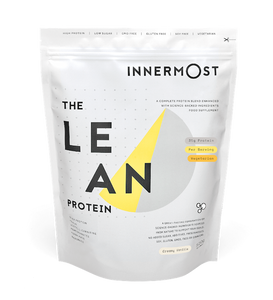
The Lean Protein
Whey protein powder for weight-loss.

Improve Your Strength With These Key Tips for Beginners

11th June 2021

11th June 2021

By Catherine Hargreaves

Strength training is a hugely important part of any workout plan. As well as improving your strength levels, having a higher muscle mass means your body will burn more calories, and it will make cardio and other workouts feel like a dream. If you're working towards a fitness goal like lifting more weights or losing weight, it sounds like this could be a good way to go, right?

If you're looking for strength tips for beginners, or just some advice on how to get stronger, you're in the right place. Here's our guide to strength training for beginners (and some general gym tips for beginners, too!) 

Slow and steady wins the race 

If you're new to weight training, keep things chill. It's really important not to overwork yourself, as this will lead to injury and put you out of the game for a while - or even do some long lasting, nasty damage. A huge no no. 

One of the biggest training tips for beginners we urge is that you should only use enough weight that enables you to complete 10 to 12 reps (and two or three sets) per exercise. You want to feel challenged but still in control.

Move the amount of weight you use up gradually when you feel ready, and avoid picking up those heavy weights before you're completely ready. As we said, you don't want to get an injury that slows down your progress.

Spend the first couple of weeks learning how to do each exercise properly, rather than worrying about how much you're lifting.

Have a plan

Here at Innermost, we're big believers in having a plan. Whether you write a to-do list or have it all in your head, make sure you decide what you're going to do during your workout before you begin, to ensure that you remain focused and driven during the session.

Firstly, pick the muscle group you want to work on, and then plan which exercises you're going to do and for how long (and at what weight if necessary). Keep your workout full of compound exercises for a well-rounded session that works a variety of muscle groups at once.

Don't feel the need to splash out

If you're just getting started with strength training, you'll find that you won't need big weight equipment systems or a hefty gym membership to get a good workout. What's more - you can do these at home, too! 

Bodyweight workouts can be a great place to start, and this is another one of our key training tips for beginners. The best part about bodyweight workouts is that they are completely free. Plus -you'll be surprised at how hard you'll work just using the weight of your own body. 

Warm up

Start your workout with 10 minutes of light cardio, and ensure you have stretched the muscles you are going to be working on. Supplement your diet with creatine to support power and endurance during high intensity workouts. Check out Innermost's The Power Booster, which will help to increase your power, strength and speed at the gym. Perfect for high-intensity training, it will take your workout to the next level.

Mix it up

As well as making sure to exercise all areas of your body (not necessarily all in the same workout!), keep things fresh with different exercises, to ensure that your muscles don't get used to the same old moves. Constant change will mean that your muscles continue to develop and feel challenged.

Don't neglect your form

If you're not sure how to properly execute a move, it's crucial that you ask someone. The last thing you want to do is injure yourself because you're too embarrassed to ask if you're using the right form for a certain type of exercise. 

Feed your gains

Be sure to aid muscle recovery and development with a diet rich in protein, which is vital for building muscle. Check out The Strong Protein for a tasty protein kick combined with added functional ingredients designed to enhance strength and support healthy muscle recovery.

So now you're set. Get out there and smash your first strength workout. Don't forget to keep us updated with your progress on Instagram by tagging us at @liveinnermost in your workout pics!

And then remember to relax

So you've conquered your first strength workout. Well done!

You may be feeling a little deflated, though if it doesn't it feel great. Don't worry, this is perfectly normal. Now you need to give your body some time to recover before launching back in.

Use a foam roller after every workout to prevent painful, tight muscles the next day, and ensure you're working different parts of your body on different days to give yourself a chance to heal. 

It's also crucial to make sure that you're supplementing your diet with the nutrients that your body needs to repair and develop. Get yourself covered with The Recover Capsules, nootropics that contain research-backed which support your recovery process, reduce inflammation, and regulate hormone activity.

Summary

Whether you're set on improving your leg strength, upper body strength or want to learn how to get stronger arms, our tips above will help you well on your way to getting there. If you're looking for some targeted training tips for beginners when it comes to to weight lifting, check out our dedicated guide. 

PS: If your fitness goal is to increase your strength, have you considered The Strong Protein? Born from the knowledge that just protein alone won't give you muscles, The Strong Protein supplement combines inflammation-fighting ingredients, Creatine, Magnesium and delicious Montmorency Cherries and bilberries to get a burst of flavour whilst upping your muscle growth, too. 

Product Spotlight

Need Expert Advice?

Other Insights

What Happened To My Training Over Summer (Honestly)
I did not train well this summer. A holiday to spend time with my family, a run of work trips, a couple of injuries I was trying to cope with (left shoulder and right forearm for those who are interested). If you'd asked me in June how consistent I'd be over the summer, I'd have said very. I was wrong. Most people quietly assume the founder of a wellness brand has this figured out. The truth is I run a brand, I try to have a life outside it, and summer is the season where routine goes to die for almost everyone I know. I don't think that's a personal failing. I think it's just what a normal year looks like. What I want to talk about is what actually happens to your body when this happens, because the research here is more reassuring than you might expect. What detraining research actually shows There's a real body of science on this. Strength and cardiovascular fitness don't decline at the same rate, and they don't decline anywhere near as fast as people fear. Cardiovascular fitness is the first thing to soften. Your VO2 max starts drifting down within a couple of weeks of stopping structured training, because your heart and blood vessels adapt to demand quickly in both directions. Strength is a different story. Studies that track people through a few weeks off training consistently find that measurable strength loss is small, often barely noticeable, for the first three to four weeks. The muscle itself takes even longer to shrink in any meaningful way. Several studies looking specifically at detraining periods found that visible loss of muscle protein and structure often doesn't show up until somewhere between five and eight months without any training at all. A summer of patchy sessions is nowhere near that. The reassuring partThe part I find genuinely reassuring is what's called muscle memory, and it's not just a phrase people use to feel better about a break. When you train, your muscle cells add nuclei, essentially more control centres for building protein. Research shows those nuclei stick around for months after you stop training, well past the point where the muscle itself has started to shrink. When you come back, you're not starting from zero. You're reactivating machinery that never actually left. That's a large part of why people who return to training after a long break tend to regain lost strength and size far faster than it took to build in the first place, often within four to eight weeks depending on how long the layoff was. Some of you might remember this happening post-Covid. So if you had a summer like mine, the honest scientific answer is that you probably lost less than it feels like, and you'll get it back faster than you think. What I'm actually doing this month Nothing dramatic. I'm not doing a reset week or a punishing comeback programme. I'm just going back to five structured sessions a week, prioritising the compound lifts I know well, and being honest that the first couple of sessions will feel harder than they did in June.  Don’t forget your proteinThe other thing I'm paying more attention to is protein, simply because it's the one lever that makes the rebuilding phase more efficient. Adequate protein intake supports the muscle protein synthesis that's doing the actual work of restoring what softened over summer. I've been leaning on The Health Protein for this. It's plant-based, built around pea and brown rice protein for a full amino acid profile, with glutamine in there to support recovery. If you'd rather stick with a whey based option, that's a completely reasonable choice too, and The Strong Protein remains built for exactly that. If you had a messy summer, you're not behind. You're just at the start of a normal, unremarkable return to routine, and the research says that's a far shorter road back than most people assume. Forward this to anyonre you know who is dreading their first session back. I'd genuinely like to know what generally works for you post-summer. Structured plan, just showing up once, anything. Reply and tell me. Even if it’s a one-liner, I’d love to hear from you. Read more
The Glow Blend: A Confession
I need to tell you something I've never said publicly, and it's not flattering. When our product team first brought me a plan for a collagen supplement, my honest reaction was no. Not "let me think about it." A flat no. And if I'm being fully honest about why, it wasn't the science. It was that collagen felt, in my head, like a beauty category. Something for someone else's brand. Not ours. I built Innermost around performance and evidence. Protein, creatine, mushrooms, electrolytes. Things I could point to a study for and feel comfortable talking about at a dinner table full of people who workout regularly. Collagen sat in a different mental folder. Skincare aisle. Jars with gold lids and brand sponsorship by one of the Kardashians. I'd absorbed a version of what "beauty" meant without ever examining it. The argument in the room So we had the argument internally. A proper one. A few people on the team pushed back hard, and rightly so. One of them put it to me plainly: we started Innermost to follow the evidence wherever it goes, not to follow it everywhere except the places that feel awkward. That line stuck with me. Here's what changed my mind, and it wasn't a feeling. It was the research. What the evidence actually says Collagen is the most abundant protein in your body. It's structural, it's in your skin, your joints, your gut lining, and production declines steadily from your mid-twenties onward. That's not a marketing claim, that's basic physiology. The question was never whether collagen matters. It was whether supplementing it actually does anything, and that's where most of the category falls apart. Most collagen products on the market use whole collagen molecules, which are too large to be absorbed effectively when you drink them. The ones that do use hydrolysed peptides, which are broken down into smaller chains your body can actually take up, still run into a second problem: dose. A lot of labels list collagen content that sits well below the 2 to 10 grams used in the trials that show measurable effects on skin elasticity and hydration. You're paying for a placebo with good branding. The ingredient most brands leave out The third problem is the one that convinced me completely. Vitamin C isn't a nice-to-have alongside collagen. It's a required co-factor for your body to actually synthesise collagen at the cellular level. Without adequate vitamin C, the enzymes responsible for stabilising collagen structure don't function properly. You can take a perfectly dosed hydrolysed peptide and still get a fraction of the benefit if the product doesn't include enough vitamin C alongside it. Most don't. They sell you the raw material and leave out the one thing your body needs to use it. Once I saw the category clearly, laid out like that, the decision stopped being about how I felt and started being about what the evidence supported. That's the whole operating principle of Innermost. I couldn't defend saying no to a legitimate, well-evidenced product category. What we built So we built The Glow Blend properly. Hydrolysed collagen peptides at a dose that reflects the research, alongside vitamin C, hyaluronic acid for hydration, biotin and folic acid for hair and nail health. Nothing in it that doesn't earn its place. What surprised me after launch The part I didn't expect was the response once we launched it. A good number of the messages came from women, as you'd expect, and they were generous and specific about what they'd noticed. But a surprising number came from men. Customers writing in to say they'd felt exactly what I'd felt, that awkward little flinch at "collagen," and had quietly bought it anyway because the ingredient breakdown made sense to them. That response told me more about why this category needed an honest voice in it than any research paper did. I'm not going to pretend I have this fully figured out. I still catch myself, occasionally, hesitating slightly before I mention it in a room. Old habits sit deeper than good evidence sometimes. But I take it, and increasingly a lot of men I respect take it too, quietly, without needing to make a thing of it. If this sounds familiar If any part of this resonated, and you've felt that same small resistance to a category you assumed wasn't for you, hit reply and tell me. I'd genuinely like to know I'm not the only one who had to get over it. And if you know someone, a friend, a partner, who could use this exact reasoning rather than a tesimonial, forward it on. It might do more good coming from someone else's honesty. Read more