








icon-account icon-glass

Popular Products

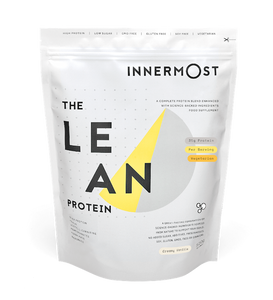
The Lean Protein
Whey protein powder for weight-loss.
The Energy Booster
Pre/intra-workout powder with BCAAs.

Innermost Recommends: June 2020

30th June 2020

30th June 2020

By Robyn Schaffer

This month, Team Innermost have been spending a lot of time absorbing what's been going on in the world. Our theme for June was Representation, in celebration of the #BlackLivesMatter movement and LGBT Pride Month, and since championing diversity, inclusivity and tolerance is one of our key tenets, it was important to us to educate ourselves through reading, watching and more. We love sharing our finds with the Innermost community, so without further ado here’s what we got up to in June.


Reading...


Girl, Woman, Other by Bernadine Evaristo

“I read this Booker Prize-winning novel for a Zoom book club with friends. Evaristo has the most unique and captivating writing style, and here she gives her readers an incredibly detailed insight into what it’s like to be a black woman in Britain. Not to be missed.” - Robyn

Hood Feminism: Notes From The Women That A Movement Forgot by Mikki Kendall 

“This book explores the intersections of race, class, sexual orientation and disability with gender, with stories of women too often marginalised by mainstream, largely ‘white’ feminist discourse.” - Caitlin

“I Will Not Be Erased”: Our stories about growing up as people of colour by gal-dem 

“A great book of anecdotes from different authors talking about their personal experiences of growing up in the UK. Although it tackles difficult subjects like prejudice and racism, it does so in a joyous and inspiring way.” - Cassandra

How to Be an Antiracist by Ibram X. Kendi

“Kendi explains the distinction between being 'not racist' and being 'anti-racist', and how the former assumes mere neutrality in a movement that we must all be active, rather than passive, in engaging with.” - Catherine

Biased: Uncovering the Hidden Prejudice That Shapes What We See, Think, and Do by Jennifer Eberhardt

“Eberhardt digs into areas of mindset, customs and attitudes to understand racial inequalities and inherent bias. The book encourages changing the conversation around race and embracing a degree of discomfort in order to understand how race works in reality.” - Shiv

Watching…


Queer Eye Season 5 

“The latest season of the Netflix hit show came out just in time for the celebration of Pride Month. I love watching the Fab 5 forge genuine connections with the people they’re helping and it’s amazing to see how much they can transform someone’s life in the space of a few short days. It’s ultimate feel-good watching.” - Robyn

Dear White People

A satire of race relations and black identity at a fictional, predominantly white, Ivy League school in the US. Funny, thought provoking, and provocative! Definitely worth a watch.- Caitlin

Insecure

One of my all time favourite shows due to it's rawness, relatability and humour. Despite having to wait two years for the latest season it's soooo worth it.- Cassandra

Mubi

“I’ve fallen in love with this subscription service which features a dynamic, highly-curated database of independent and cult films which might otherwise have fallen under your radar. A great way to expand your horizons and find new gems.” - Catherine

13th 

“This Netflix documentary explores the intersection between race, justice, and mass incarceration in the United States. It’s titled after the Thirteenth Amendment to the United States Constitution, adopted in 1865, which abolished slavery throughout the United States and ended involuntary servitude, except as a punishment for conviction. Truly eye-opening.” Shiv

Doing...


Hiking

“Think more Beverly Hills than Bear Grylls. Then think north west England. Listening to podcasts whilst wandering across the rambling countryside has been a godsend in lockdown. Would recommend an evening stroll to every man and his dog for a bit of headspace.” - Caitlin

Online yoga classes

“I was supposed to be going to India this summer for a two-week yoga retreat, but it’s unfortunately been cancelled because of coronavirus. Instead, I’ve been doing daily classes at home - @bohobeautifullife has a huge range of amazing classes on YouTube, while @larugayoga on Instagram is my ultimate yogi inspiration.” - Robyn

Slacklining

“Learning a new hobby that has got me outdoors and away from screens has been so much fun, and a great way of staying active. Regarding the activity itself, slacklining is amazing not only for toning but also for keeping your mind in check (it’s often touted as ‘moving meditation’)!” - Catherine

Foraging

“I've recently discovered that foraging is one of the best things I can do to reduce anxiety. After all, it prompts us to not only get out in nature, but to pick, smell and taste it!” - Cassandra

 

Need Expert Advice?

Other Insights

Why Natural Protein Supplementation Matters
Walk into any health shop, or scroll any supplement site, and you often find that protein powders start to blur into one. Almost all of them make the same promises on the front: ‘high in protein’, ‘no added sugar’, ‘no additional additives’. The wording is so similar that telling a genuinely good product from a synthetically produced product is harder than it should be. Read past the figure on the front however and you'll usually find a protein that contains artificial sweeteners, synthetic flavourings and colours, and even fillers or bulking agents just to name a few. The reason they tend to do this is that costs of production are much cheaper as a result of the lower quality ingredients. A naturally formulated protein supplement works the other way around. The protein comes from a quality source, the flavour and sweetness come from ingredients you'd recognise rather than ones built in a lab, and anything that doesn't need to be there is left out. This piece is about that difference: what natural really means for a protein supplement, why it matters, and how to spot it for yourself. What "natural" actually means in protein supplements "Natural" is one of the most used and least understood words in wellness, printed on plenty of labels with very little behind it. There's no strict, regulated definition for it, so a brand can reach for the word fairly freely. This is why it pays to know what you're actually looking for. Used honestly, natural points to ingredients that come from recognisable sources and are processed as lightly as the format allows. For protein, that usually means a base derived from food such as: Whey Pea Hemp Brown rice Other plant-based proteins Just as telling is what gets left out, and how openly the packaging accounts for what stays in. A natural protein supplement has little to hide, so the label tends to be short and the reasoning easy to follow. The real test is whether the formula makes sense as a whole. Can you understand what's in it? Does each ingredient have a clear purpose? And does the brand explain the benefit plainly, rather than hiding behind vague wellness language? Why ingredient quality matters in protein supplements When people compare protein powders, the first thing they often look at is the amount of protein per serving. It matters, but this number doesn’t tell you everything about a supplement’s quality. A synthetically formulated powder may contain just as much protein per serving as a natural alternative, but it may also include more artificial additives that are bad for your health.  This is especially important as supplementation is usually taken regularly as part of a daily routine. If something becomes part of your breakfast, post-workout routine or afternoon shake, the quality of the overall formula may influence how well it fits into your daily routine. Natural protein powders are often separated by a few key criteria: Ingredient sourcing: Whey is highly bioavailable and naturally rich in essential amino acids that support muscle repair. A good plant-based blend can also be effective when it is built to provide a strong amino acid profile. What surrounds the protein: Sweeteners, thickeners and flavourings affect taste, texture and how a shake feels once you have taken it. Some formulas rely heavily on artificial sweeteners, gums or thickeners, which may contribute to bloating or digestive discomfort. Digestibility: A protein you absorb and tolerate comfortably is more useful than a bigger number on the label that does not sit well with your body. Purpose: A formula built around a specific goal, such as strength, performance, energy or satiety, is more useful than a generic powder with no clear reason behind the ingredients. The benefits of natural protein supplementation The real value of natural supplementation becomes clearer when you look beyond protein content alone. Below are some of the key benefits of choosing natural protein supplements over more artificial or heavily processed alternatives. Supporting strength and lean muscle Building strength and lean muscle is one of the main reasons people turn to natural protein supplements.  A good one supports muscle repair after training and helps maintain muscle over the longer term. That's especially useful if you train regularly and eat well but can't always put together a high-protein meal straight after a session. Helping with recovery after exercise After a workout, your body needs nutrients to repair and adapt, and protein is central to that process, particularly if you train several times a week. A natural protein supplement offers a convenient way to support recovery without making nutrition feel complicated, whether mixed into a shake, smoothie or simple post-workout snack. Supporting satiety and body composition goals Protein keeps you feeling fuller for longer, which makes balanced eating easier to stick to.  For anyone working towards fat loss, lean muscle or general body composition, natural protein supplementation helps steady your daily nutrition alongside whole foods, movement and rest, without relying on the added sugar that some cheaper formulas contain. Making daily nutrition easier Even with good intentions, it is not always easy to get enough protein through meals alone. Busy days, training schedules and travel can all make consistency harder.  A natural protein gives you a simple, repeatable way to keep your intake up on the days that get away from you, using ingredients you can actually recognise. Natural supplementation doesn't have to taste bland There's a common assumption that natural supplements have to taste bland, chalky or unpleasant. Plenty of people have met exactly that: a protein that sounds healthy on paper but turns out too earthy, too sweet or too gritty to enjoy. It gets used for a few days, then pushed to the back of the cupboard. The problem there is usually the formulation, not the missing additives. Chalky, overly sweet shakes come from corners being cut. Getting flavour and texture right without falling back on heavy sweeteners is genuinely hard, which is a good sign a brand has done the work. Taste matters for a practical reason as much as an enjoyable one. A protein you look forward to is one you'll keep using, and consistency is what actually delivers results. The best-formulated supplement on the shelf does nothing while it sits unopened. The innermost approach to natural protein Everything above is the standard we at Innermost hold ourselves to. Our proteins are built on clean and naturally-derived ingredients, formulated with the backing of nutritional science rather than guesswork. We leave out the fillers, bulking agents and needless extras that have no business being in a quality protein, and we're open about what goes in and why. We also happen to think clean and natural should taste good, because a protein you enjoy is a protein you'll actually use.  Explore our protein powders to find the formula that best fits your goals, routine and lifestyle. References Morton, W., Murphy, T., et al (2018). A systematic review, meta-analysis and meta-regression of the effect of protein supplementation on resistance training-induced gains in muscle mass and strength in healthy adults. Br J Sports Med. 52(6). Click here. Jäger, R., Kerksick, C., et al (2017). International Society of Sports Nutrition Position Stand: protein and exercise. J Int Soc Sports Nutr. Click here. Seijo, M., Naclerio, F. (2019). Whey Protein Supplementation and Muscle Mass: Current Perspectives. Click here. Read more
The Protein Mistake That's Holding Back Your Results
I've written at length about creatine. I've written about collagen, electrolytes, the GLP-1 moment, even the science of sleep. But I've never written a personal email about protein. That's a strange omission for someone who built a brand that makes some pretty ground-breaking protein powders. So let me explain why, and then actually say the thing I've been avoiding. Protein is the most foundational supplement in the Innermost range. It's also the hardest subject for me to write about personally, because there's nothing surprising about it. Creatine had a story. Collagen had a story. Protein is well... protein. Everyone knows you should eat more of it. The mechanism is not a secret. Muscle protein synthesis, leucine threshold, net nitrogen balance. If you've been in the fitness space for more than a couple of years, you've read this before. And I think that's the problem. The familiarity makes people stop paying attention. Here's what I actually think about protein, after a decade of working in this space. Most people in their thirties and forties are under-consuming protein and don't know it. Not by a small amount. The gap between what most people eat and what the research supports for muscle maintenance and body composition outcomes is significant. Studies looking at optimal intake for adults prioritising body composition consistently point to between 1.6 and 2.2 grams per kilogram of bodyweight per day. Most people are eating somewhere between 0.8 and 1.2. The difference is not cosmetic. Adequate protein intake directly affects your ability to preserve muscle tissue during a caloric deficit. It supports recovery between sessions. It has a measurable effect on satiety, which means it influences total caloric intake downstream, not just at the point you consume it. There's a subtler point too, and this is the one I've come to think matters most: protein is the nutrient where consistency compounds most directly. The benefits of creatine saturate over time in a relatively predictable way. Collagen has a timeline that research measures in months. But protein's effect on body composition is essentially continuous. Every day you hit your target, you preserve something. Every day you don't, you lose a small amount of ground. Over a summer, that adds up. This is what I've observed personally, and it's backed by the research on muscle protein turnover. The people who maintain their body composition through summer are not, in my experience, the people who train harder during that period. Most of them train less. Their routines are disrupted. They're travelling. Their eating is less structured. The people who come back in September looking broadly the same as they left in June are the ones who kept their protein intake consistent. That's it. That's the variable. Why I take The Lean Protein I’ve been taking The Lean Protein the past few months for a straightforward reason: the protein-to-calorie ratio. Much like our other protein blends, each serving delivers over 30 grams of protein. The calorie count is low relative to that protein yield. When my training is consistent and my eating is structured, I don't think about this very much. But in the periods when those things are less reliable, that ratio becomes the thing that holds the rest together. The formula also includes acetyl-L-carnitine, inulin, pomegranate extract, and yerba mate. These aren't afterthoughts. Acetyl-L-carnitine has a research base in fat metabolism. Inulin supports satiety and gut function. The pomegranate extract is included for its antioxidant contribution to recovery. This means that the formula does more work per serving than a standard whey and just what I need going into summer. The thing the industry gets wrong about protein Most protein marketing leads with taste and price per gram. Both matter. But neither tells you whether the formula will support body composition outcomes over time. The two questions I'd ask before buying any protein powder are: what is the actual protein-to-calorie ratio, and what is the leucine content per serving.  Leucine is the branched-chain amino acid most directly linked to triggering muscle protein synthesis, and there is a threshold dose, roughly 2.5 to 3 grams per serving, below which the anabolic response is blunted. Many protein powders do not disclose this. They just list total protein and move on. The Lean Protein does not have this problem. The formula is transparent. The dose is evidence-based. One thing I'd ask you to consider: if you've never actually checked whether you're hitting your protein targets, try tracking it for three days. Most people find the gap is larger than they expected. If you're not sure which Innermost product fits your specific goal, the quiz on our site is a good place to start. Find the right protein for your goal   Read more