








icon-account icon-glass

Popular Products

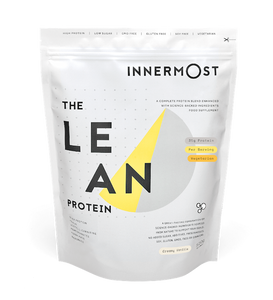
The Lean Protein
Whey protein powder for weight-loss.

7 Self-Help Books To Make You The Best Version Of Yourself

4th August 2020

4th August 2020

By Robyn Schaffer

WHY IT MATTERS

Because being open to change can help us grow and develop.

We don’t know about you guys, but we’ve had a lot of time to think over the past few months. And with more time to spare, comes more opportunities to learn, grow, and better ourselves. Whether you want to run faster, lift heavier, eat better, or be more productive, there’s always room for self-improvement in our lives. However, there’s also been lots of noise online and on social media lately, pressuring people to hit certain targets and come out the other side of the pandemic with certain changes in place and targets reached. 

But here at Innermost, we know it’s all about doing you, assessing your individual needs and goals, and blocking out the unnecessary background noise. So with that in mind, we’ve compiled a list of seven of our favourite self-help books if you're looking for practical, helpful advice on self-improvement. Whether it’s for boosting cognitive performance, decluttering and organising your life, or finding a better approach to attaining happiness, there’s something for everyone. But remember - it's all about taking one small step at a time. Let’s get started.

Year of Yes: How to Dance It Out, Stand In the Sun and Be Your Own Person - Shonda Rhimes

From the award-winning creator of Grey’s Anatomy and Scandal, this book by Shonda Rhimes is all about the life-changing power of just saying yes. Too often we say no to things - big or small - out of fear, laziness or apprehension, without knowing that this very attitude itself can be the thing that holds us back and prevents us from growing. A self-confessed introvert, Rhimes uses anecdotes from her own life and experiences as a high-flying producer in Hollywood, being invited to parties, events and media appearances, to demonstrate how continually saying no to opportunities can only serve to stunt your growth, even if you feel safer in the short-term. We recommend this self-help book if you’ve got big ambitions, but want to make more moves outside of your comfort zone.


Outer Order, Inner Calm: Declutter & Organize to Make More Room for Happiness - Gretchen Rubin

In this much-loved self-help book, Gretchen Rubin, bestselling author of The Four Tendencies and The Happiness Project, provides an eye-opening insight into how our inner and outer environments are inextricably linked. When our surroundings and possessions are in order, we’re more likely to feel calm and in order on the inside, allowing us to lead happier, healthier, more productive lives. Rubin gives more than 100 practical ideas and tips for getting started with decluttering and organising your life, so whether it’s your desk, your wardrobe, or your kitchen that’s overflowing with unnecessary mess, you’ll be equipped with a range of tools to turn your life around one step at a time. Clear space, clear mind.


The Subtle Art Of Not Giving A F*ck - Mark Manson

You’ve probably seen this one plastered all over the internet or perched on every trendy bookstore bookshelf thanks to its eye-catching name and bold cover. But this self-help book’s about more than just the shock factor. As a former dating coach, Mark Manson has been helping people with their emotional and relationship problems for over 10 years, and this groundbreaking self-help guide is no exception, quickly becoming a cult classic across the globe. This book is all about refuting the idea of ‘just being positive’, something we’re all used to hearing, and instead learning to face up to and deal with all life’s cr*p. Manson argues that once we learn to embrace our faults, fears and anxieties, we can begin to lead a truly more fulfilled life. We love this one for its honest, amusing approach, while still providing practical, helpful tips.

The Life-Changing Magic of Tidying Up: The Japanese Art of Decluttering and Organizing  - Marie Kondo

Like Gretchen Rubin, Marie Kondo is another huge advocate for the ‘clear space, clear mind’ philosophy. Despite gaining mainstream notoriety for her Netflix series Tidying Up With Marie Kondo, Kondo has written four self-help books about the importance of organizing which have sold millions of copies worldwide. This book in particular promises to simplify your approach to decluttering and organizing your home so that you never have to worry about it again, and instead you can focus on living your best life with a clear, calm mind in full tact. Kondo’s approach breaks things down category by category, and forces you to ask yourself which possessions in your life truly “spark joy” and which are just contributing to the meaningless, stress-inducing clutter.

Thinking, Fast and Slow - Daniel Kahneman

In this self-help classic, Daniel Kahneman helps us break down the way we think in order for us to better understand how the human brain makes decisions. Kahneman divides the process into two systems: System 1 and System 2. System 1 is fast, intuitive and emotion-driven, while System 2 is slower, more careful and more logical. By breaking things down in this way, Kahneman enables us to see how we can’t always trust our own intuition, and how we can benefit from slowing down our thinking. With both practical tips and insights, and advice on how to prevent ourselves from falling into common mental traps, this book can totally transform the way you think about thinking.

Happy: finding joy in every day and letting go of perfect - Fearne Cotton 

TV presenter and Radio 1 host turned podcaster and author Fearne Cotton wrote this self-help book as “a way to release what’s going on inside your head and to keep heading towards the good stuff. The simple stuff. The stuff that’s going to really hit up that happiness on a deep and nourishing level”. Drawing upon her own experiences with the ups and downs of mental health, Fearne presents readers with real, practical ways of finding joy and happiness in each and every day. The unique thing about this book is the workbook-like elements; with written exercises and visualisations, this one’s all about being interactive in order to help you start making those small changes straight away.


To learn more about Fearne’s Happy Place podcast, read about it in our round-up of top health and wellbeing podcasts here.

Change Your Life in Seven Days: The World’s Leading Hypnotist Shows You How - Paul McKenna 

Brought to you by the number one hypnotherapist in the world, Paul McKenna, this simple self-help book gives you a seven-day plan to help you change your life forever. McKenna explains how success and happiness are not merely things that happen to some people and not to others, but instead that they are products of specific ways of thinking and acting in our everyday lives. Whether it’s boosting your self-confidence, controlling your emotions, or just becoming a healthier and happier person, this book has key strategies and techniques that can be employed straight away, so you can begin to think in the same way as any super-achiever out there.
Need Expert Advice?

Other Insights

The Glow Blend: A Confession
I need to tell you something I've never said publicly, and it's not flattering. When our product team first brought me a plan for a collagen supplement, my honest reaction was no. Not "let me think about it." A flat no. And if I'm being fully honest about why, it wasn't the science. It was that collagen felt, in my head, like a beauty category. Something for someone else's brand. Not ours. I built Innermost around performance and evidence. Protein, creatine, mushrooms, electrolytes. Things I could point to a study for and feel comfortable talking about at a dinner table full of people who workout regularly. Collagen sat in a different mental folder. Skincare aisle. Jars with gold lids and brand sponsorship by one of the Kardashians. I'd absorbed a version of what "beauty" meant without ever examining it. The argument in the room So we had the argument internally. A proper one. A few people on the team pushed back hard, and rightly so. One of them put it to me plainly: we started Innermost to follow the evidence wherever it goes, not to follow it everywhere except the places that feel awkward. That line stuck with me. Here's what changed my mind, and it wasn't a feeling. It was the research. What the evidence actually says Collagen is the most abundant protein in your body. It's structural, it's in your skin, your joints, your gut lining, and production declines steadily from your mid-twenties onward. That's not a marketing claim, that's basic physiology. The question was never whether collagen matters. It was whether supplementing it actually does anything, and that's where most of the category falls apart. Most collagen products on the market use whole collagen molecules, which are too large to be absorbed effectively when you drink them. The ones that do use hydrolysed peptides, which are broken down into smaller chains your body can actually take up, still run into a second problem: dose. A lot of labels list collagen content that sits well below the 2 to 10 grams used in the trials that show measurable effects on skin elasticity and hydration. You're paying for a placebo with good branding. The ingredient most brands leave out The third problem is the one that convinced me completely. Vitamin C isn't a nice-to-have alongside collagen. It's a required co-factor for your body to actually synthesise collagen at the cellular level. Without adequate vitamin C, the enzymes responsible for stabilising collagen structure don't function properly. You can take a perfectly dosed hydrolysed peptide and still get a fraction of the benefit if the product doesn't include enough vitamin C alongside it. Most don't. They sell you the raw material and leave out the one thing your body needs to use it. Once I saw the category clearly, laid out like that, the decision stopped being about how I felt and started being about what the evidence supported. That's the whole operating principle of Innermost. I couldn't defend saying no to a legitimate, well-evidenced product category. What we built So we built The Glow Blend properly. Hydrolysed collagen peptides at a dose that reflects the research, alongside vitamin C, hyaluronic acid for hydration, biotin and folic acid for hair and nail health. Nothing in it that doesn't earn its place. What surprised me after launch The part I didn't expect was the response once we launched it. A good number of the messages came from women, as you'd expect, and they were generous and specific about what they'd noticed. But a surprising number came from men. Customers writing in to say they'd felt exactly what I'd felt, that awkward little flinch at "collagen," and had quietly bought it anyway because the ingredient breakdown made sense to them. That response told me more about why this category needed an honest voice in it than any research paper did. I'm not going to pretend I have this fully figured out. I still catch myself, occasionally, hesitating slightly before I mention it in a room. Old habits sit deeper than good evidence sometimes. But I take it, and increasingly a lot of men I respect take it too, quietly, without needing to make a thing of it. If this sounds familiar If any part of this resonated, and you've felt that same small resistance to a category you assumed wasn't for you, hit reply and tell me. I'd genuinely like to know I'm not the only one who had to get over it. And if you know someone, a friend, a partner, who could use this exact reasoning rather than a tesimonial, forward it on. It might do more good coming from someone else's honesty. Read more
Your Summer Survival Kit (From Someone Who Travels A Lot)
I'm putting the finishing touches to this post from an airport, which feels appropriate. By my count, I'll be going through three countries in the next six weeks. Meetings, a trip to see family including my niece and nephew, a supplier visit in Italy that I've been putting off for a year. And every summer the same thing happens. The carefully built routine, the one that took months to lock in, gets thrown into a suitcase and I hope for the best. Most people react to this by either giving up on the routine entirely ("I'll sort it out when I'm back") or overpacking so aggressively that half of it never leaves the bag. I've done both. Neither works. What actually works is deciding, in advance, which two or three things earn a place in my bag and which ones can wait until September. So here's mine. Not a wellness influencer's "what's in my bag" video. An honest list, built over about a decade of getting this wrong first. Why travel breaks routines specifically It's worth being precise about what actually changes when you travel, because it isn't just "less discipline." Three things shift at once. You sweat more and drink less water than usual, because you're distracted or the flight dried you out or the hotel room is warmer than home. You're outdoors more, often somewhere sunnier than wherever you live. And your meals stop being yours. You eat what's available, when it's available, and protein is usually the first thing to slip, because sugar, carbs and fat are what's on offer at 6am airport cafes. None of this is a discipline problem. It's an environment problem. The fix is making sure two or three specific things are in my bag before I leave home, so I’m not relying on willpower to begin with. 1. Electrolytes, non-negotiable Most people remember to pack sunscreen. Almost nobody packs electrolytes, and it's the one that actually catches up with you. Water replaces volume, not what you lose through sweat, which is mostly sodium and potassium and magnesium doing the quiet work of keeping muscles firing and fluid balanced properly. Miss that balance for a few days in the heat and you get the symptoms everyone blames on jet lag: the headache, the flat energy, the slight fog by 4pm that a coffee doesn't fix. It's usually not jet lag. It's electrolytes. I take The Hydrate Blend  for exactly this reason. Six electrolytes, no sugar, no synthetic flavouring, dissolves in a bottle of water in about ten seconds. One sachet on a travel day, first thing in the morning, does more for how I feel by evening than anything else in the bag. 2. Something for the sun you're actually going to get Here's the part most people don't think about until it's too late. UV exposure accelerates collagen breakdown, which is a slightly clinical way of saying that a week of proper sun does more to skin structure than most of the year combined. This isn't about vanity. It's a straightforward mechanism: UV generates free radicals that degrade existing collagen faster than your body can replace it. Sunscreen protects against the burn. It doesn't do anything for the collagen you're losing underneath. I've been taking The Glow Blend through summer for this reason specifically. Hydrolysed collagen peptides paired with vitamin C, which matters because vitamin C is a required co-factor for collagen synthesis and most collagen products leave it out entirely, then wonder why customers don't notice anything. It won't undo a week in the sun. It gives your skin something to rebuild with while it's under more pressure than usual. 3. Protein, especially when the meals aren't yours This is the one I've learned the hard way. When your diet goes inconsistent, protein is usually the first macronutrient to drop, simply because it's the hardest to find on the move. Airport food, hotel breakfasts, whatever's left at a conference buffet by 1pm, none of it is built around protein. And the honest science here is less dramatic than people expect: you don't need to train harder to maintain muscle through a disrupted period, you need to keep protein intake somewhere close to normal. That's the whole trick. I'll say this honestly because I'd rather be straight with you than pretend otherwise: my go-to for this is still The Strong Protein (whey based) and The Health Protein (vegan). They earn their place in my bag because they travel well, mix with nothing but water, and does the one job that actually matters on the road, which is making sure protein doesn't disappear from your day just because your routine has. The actual point None of this is about maintaining perfect discipline on holiday. Nobody does that, and if a brand tells you they do, they're not being honest with you. It's about deciding in advance which three or four things matter enough to bring, so the choice isn't being made for you by whatever's in the hotel minibar. If you've got a system that works for you when you travel, reply and tell me. I read every one of these, and I'm always looking to steal a better idea for my next trip. If this is useful, forward it to whoever in your life is about to live out of a suitcase for the next few weeks. It's the email I wish someone had sent me a decade ago. Read more