









There’s no official GLP-1 diet. What changes once you start a medication like Mounjaro or Wegovy is your relationship with food. Their job is to reduce your appetite and therefore your calorie intake, and it’s that deficit that causes weight loss. When your hunger is reduced that means your portions shrink, and a full plate can start to feel like hard work. How you eat, train and live around that change is what determines your end result, how you feel along the way and how much of it lasts.
In ten years of coaching, nothing has changed the questions clients bring me as quickly as these medications. A few years ago it was how to break a plateau or add a bit of muscle. Now, more often than not, it’s what to eat when you’re never hungry, why training suddenly feels so hard, and what happens when you stop taking weight loss medication.
Most people start treatment with a prescription and a patient leaflet, and not much else. A 2025 joint advisory from four leading US nutrition and obesity organisations noted that most people prescribed these medicines receive little nutritional or behavioural support. This guide is an attempt to help fill that gap.
It covers what GLP-1 medications do, how to eat and train while taking one, the side effects that food and habits can help with, the risks worth planning for, and what the research shows happens when you stop. Remember though: this should sit alongside your prescriber’s advice, not replace it.
Key takeaways
- Put protein first. Guidance for people on GLP-1 medications suggests 1.2–1.6g per kilogram of body weight a day during weight loss, or around 80–120g for most adults, spread across three or four meals.
- Strength training is the clearest signal your body gets to keep muscle while weight comes off.
- Eating less means getting less of everything. Don’t neglect fibre, fluid and micronutrients because your calories are lower.
- Most digestive side effects are mild, settle with time and respond well to smaller, slower meals.
- Weight tends to return after stopping. The habits and muscle you build during treatment are the part you keep.
- Supplements can fill specific gaps in a smaller diet. None of them change how the medication works.
What GLP-1 medications do (and what they don’t)
GLP-1 medications are prescription medicines that mimic glucagon-like peptide-1, a hormone your gut releases after you eat. They act on the appetite centres in the brain, slow the rate at which the stomach empties and help regulate blood sugar. For most people, this means they feel full sooner, think about food less and eat considerably less, without the constant tug of hunger that can make extended dieting so hard.
In the UK, the main medicines used for weight management are semaglutide, sold as Wegovy, and tirzepatide, sold as Mounjaro, which also acts on a second hormone pathway called GIP. In June 2026 the MHRA approved the first GLP-1 tablet for weight loss, an oral form of semaglutide. All are prescription-only, and all are licensed for use alongside a reduced-calorie diet and increased physical activity rather than instead of them. In plain English, think of them as a support mechanism for healthier habits rather than a replacement for them.
If you’d like to understand the hormone your body makes itself, and why food can’t replicate what these medicines do, we’ve covered that in our guide to how to increase GLP-1 naturally.
The medication changes how much you eat. What you eat, how you train and how you live decide what that weight loss is made of, how well you feel during it, and how much of it stays after treatment. That’s what the rest of this guide is about.
Why what you lose matters as much as how much
Weight loss on these medicines can be substantial. The question that gets less attention is what that weight is made of.
Body composition scans from the major trials give a useful picture. In a substudy of STEP 1, the landmark semaglutide trial, roughly 39% of the weight participants lost registered as lean mass on DEXA scans. In the equivalent analysis of SURMOUNT-1, the tirzepatide trial, the figure was closer to 25%.
However, those numbers don’t mean anything without context. “Lean mass” on a DEXA scan means everything that isn’t fat or bone, so it includes water, stored carbohydrate and organs as well as muscle. The liver, which often shrinks as excess fat clears from it, is counted too. Not all of that lean mass loss is muscle, and because fat fell faster than lean tissue in both trials, lean mass made up a larger share of participants’ bodies by the end.
Some muscle loss does happen, though, and it’s important to understand what that might mean for you. Muscle keeps you strong and mobile, plays a large part in how the body handles blood sugar, and gets harder to rebuild with age. The people who should pay closest attention are older adults, anyone starting with relatively little muscle, and anyone losing weight very quickly while eating little protein and doing no resistance training.
The two biggest levers you can use to minimise protein and strength training, are entirely within your control. We go into the muscle side in depth in our guide to maximising muscle mass on a GLP-1.
How to eat on a GLP-1
Build each meal around a source of protein, add vegetables, pulses or wholegrains for fibre, keep portions small and eat slowly, and drink steadily between meals rather than with them. That’s the short answer to what to eat on Mounjaro or any other GLP-1 medication. The sections below explain each part in more detail.
How much should you eat?
There’s no single calorie target that suits everyone on a GLP-1, and it’s worth being wary of anyone who offers you one without knowing your history. Remember that your target calorie intake is unique to you and should consider your starting weight, level of activity and personal goals. If in doubt, it’s worth using an online calculator for a starting point and then going from there.
What changes on these medicines is the direction of the risk. For most people trying to lose weight, the challenge is eating less. On a GLP-1, the medication does much of that for you, and the more common problem becomes eating too little to meet your protein needs, fuel your training and get enough vitamins and minerals.
NICE treats diets of 800 calories a day or fewer as very-low-calorie diets that need clinical supervision. If you find you’re regularly eating at or near that level simply because you aren’t hungry, mention it to your prescriber or ask about a referral to a dietitian. Eating a little more of the right foods will usually serve you better than eating as little as possible.
Make protein the first thing on the plate
Protein contributes to the growth and maintenance of muscle mass, and it’s the nutrient most likely to fall short when your appetite drops.
The 2025 joint advisory suggests 1.2–1.6g of protein per kilogram of body weight a day during active weight loss, compared with the standard reference of 0.8g/kg. It also acknowledges an awkward detail. For people with a higher body weight, it isn’t clear whether that figure should be calculated from total weight or from something closer to lean mass, and working from total weight can produce targets that are hard to reach. As a practical alternative, the advisory suggests an absolute target of around 80–120g a day, which is a sensible range for most adults to aim for.
How you spread it matters as much as the total. Three or four meals spread evenly throughout the day, with around 25–40g of protein each, is easier to manage on a small appetite, and supports muscle protein synthesis more consistently than leaving most of it until dinner. With clients on a GLP-1, protein is the first thing I look at, and it’s almost always lower than they think. A few habits make a real difference:
- Eat the protein on your plate first, before your appetite runs out.
- Choose dense sources such as Greek yoghurt, cottage cheese, eggs, fish, chicken, tofu, and lentils.
- Build protein into snacks rather than relying on main meals alone.
-
On days when solid food feels like hard work, a protein shake is often easier to finish than a meal.
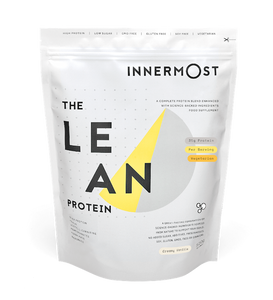
That’s where a good protein powder earns its place. The Strong Protein provides 34g of protein per serving from whey and casein, The Lean Protein provides 31g at under 150 calories, and The Health Protein is a vegan blend of pea and brown rice protein. A shake won’t replace a balanced diet, but it can close a gap that food alone often can’t when you’re barely hungry at all. For more on what makes a good protein source, see our guide to whey protein.
Fibre, and why you probably need more of it
Constipation is one of the most common side effects of GLP-1 medications, and fibre is one of the most useful ways to manage it. The difficulty is that most of us were short of fibre before treatment began. Adults in the UK average 16.4g a day, according to the latest National Diet and Nutrition Survey, against a recommendation of 30g. Only around 4% of adults reach that target.
Eating less food usually means eating less fibre, so it pays to be deliberate:
- Choose wholegrain versions of bread, pasta and rice.
- Add beans, lentils or chickpeas to soups, stews and salads.
- Keep the skins on potatoes and fruit where you can.
- Snack on fruit, nuts and seeds.
Increase fibre gradually and drink more as you do. Fibre draws water into the gut, and a sudden jump without extra fluid can make constipation worse. Very bulky, high-fibre meals can also add to that early feeling of fullness, so spread fibre across the day rather than loading a single meal.
If food alone isn’t enough, a plain fibre supplement such as psyllium husk can help. Check with your pharmacist first, because fibre supplements can affect how some medicines are absorbed and may need to be taken at a different time of day. Our guide to the benefits of a high-fibre diet has more ideas.
Micronutrients: eating less means less of everything
When you eat significantly less, you take in fewer vitamins and minerals along with fewer calories. A 2026 review in the journal Nutrients described this as a form of hidden malnutrition, where weight comes down but nutrient intake can fall with it. The authors are clear that direct evidence of widespread deficiency on GLP-1 medications is still limited, so this is a risk to manage rather than a certainty.
The joint advisory lists iron, calcium, magnesium, zinc and vitamins A, D, E, K, B1, B12 and C as nutrients to watch. In practice:
- Prioritise nutrient-dense foods: oily fish, eggs, dairy or fortified alternatives, leafy greens, pulses, nuts and seeds.
- Consider a good quality A to Z multivitamin and mineral as a safety net, which the advisory also suggests.
- Follow the NHS advice that everyone in the UK should consider supplementing with 10 micrograms of vitamin D a day during autumn and winter.
- If you’re on treatment long term, ask your prescriber whether routine blood tests make sense for you.
The Recover Capsules provide vitamin D, which contributes to the maintenance of normal muscle function, alongside magnesium and zinc. They’re a convenient way to cover vitamin D through the darker months, particularly if you’re also training regularly.
Hydration and electrolytes
There’s no specific water target for people on GLP-1 medications. The NHS general guide is 6 to 8 cups or glasses of fluid a day, with more in hot weather, when exercising and when you’re unwell. On a GLP-1, there are good reasons to aim for the upper end.
Thirst can quieten along with appetite. Eating less also means taking in less water, because food normally supplies a meaningful share of daily fluid. Vomiting or diarrhoea, particularly in the early weeks, add to the losses, and the MHRA notes that dehydration linked to these side effects can occasionally be severe enough to need hospital treatment.
The simplest check is the colour of your urine: clear, pale yellow suggests you’re drinking enough. Sip steadily through the day rather than drinking large volumes with meals, which can add to the feeling of fullness.
If you’ve been unwell or are sweating heavily during training, replacing electrolytes as well as water can help. The Hydrate Blend contains six electrolytes and no sugar, including magnesium, which contributes to electrolyte balance.
Building meals that sit well
How you eat affects how you feel on a GLP-1 almost as much as what you eat. Because the stomach empties more slowly, large or rich meals tend to sit heavily. A few simple changes help most people:
- Eat smaller portions and stop at the first sign of fullness, rather than finishing the plate.
- Slow down. Fullness signals take time to register, and of all the habits I suggest to clients, eating more slowly is the one nobody has ever regretted.
- Go easy on fried, greasy, and very sugary foods, which commonly make nausea worse.
- Avoid lying down straight after eating, and leave a gap between your last meal and bed.
When you’re not sure where to start, this simple plate template helps:
|
Part of the plate |
What to include |
Why it matters |
|
Protein (eat it first) |
Fish, chicken, eggs, Greek yoghurt, tofu, lentils |
Protects muscle; the nutrient most likely to fall short |
|
Vegetables and fibre |
Leafy greens, beans, wholegrains, fruit |
Supports regular digestion and nutrient intake |
|
A modest carbohydrate |
Oats, wholegrain rice, potatoes with skins |
Fuel for training and daily activity |
|
A little fat |
Olive oil, avocado, nuts, seeds |
Flavour and fat-soluble vitamins, in small amounts |
Managing common side effects through food and habits
Most side effects of GLP-1 medications are digestive. The MHRA describes most as mild to moderate in severity or short in duration, and many people find they’re most noticeable in the first few weeks and for a while after each dose increase, before settling as the body adjusts. If side effects don’t ease or are affecting your daily life, speak to your prescriber or pharmacist, and don’t stop or change your medication without their advice.
|
Side effect |
What tends to help |
When to get advice |
|
Nausea |
Smaller, slower meals; bland foods on difficult days; avoiding greasy food |
Persistent vomiting, or you can’t keep fluids down |
|
Constipation |
More fluid, a gradual increase in fibre, daily movement |
No improvement after a few days, or severe pain |
|
Diarrhoea |
Replacing fluid and electrolytes; smaller meals |
Lasting more than a few days, or signs of dehydration such as dizziness or dark urine |
|
Reflux and indigestion |
Smaller portions; not eating late or lying down after meals |
Symptoms that persist |
Does a GLP-1 make you tired?
Tiredness is listed by the NHS as a common side effect of both semaglutide and tirzepatide, and it’s often worst early on and after dose increases.
Some of it may come from the medication itself, but the most common contributors are things you can act on. A sudden, large drop in food intake, too little protein, not drinking enough and poor sleep can all leave you feeling flat. Before assuming it’s something you just have to live with, check whether you’re eating regular meals, even small ones, with protein at each; whether you’re drinking enough through the day; and how well you’re sleeping.
Gentle activity often helps more than rest. If tiredness doesn’t lift as your dose settles, or it’s affecting your daily life, talk to your prescriber.
Can a GLP-1 cause hair loss?
Hair loss is also listed by the NHS as a common side effect of both medicines. It’s usually down to a temporary condition called telogen effluvium, where a physical stress pushes more hair follicles into their resting phase at once. Rapid weight loss is a recognised trigger, as is a sustained low intake of protein, iron or calories.
The shedding typically appears a couple of months after the trigger and usually settles once weight stabilises. The most useful things you can do are to avoid crashing your nutrient intakes, keep protein at the levels outlined above, and include iron-rich foods such as red meat, pulses and leafy greens. If hair loss is patchy, continues for a long time or worries you, see your GP.
When to get help urgently
Contact NHS 111 or your GP urgently if you have:
- Severe stomach pain that won’t go away, which may spread to your back (a possible sign of pancreatitis)
- Pain in the upper right of your tummy, a high temperature, or yellowing of the skin or whites of the eyes (possible gallbladder problems)
- Sudden changes to your vision
- Signs of severe dehydration, or you can’t keep fluids down
In an emergency, call 999.
How to train on a GLP-1
If you add one thing to your routine alongside the medication, make it strength training. It gives your body a clear reason to hold on to muscle while weight comes off, which cardio alone doesn’t do to the same extent.
I’ve watched a lot of people lose a lot of weight over the years, with and without medication. The ones who come out the other side strongest, and who tend to feel best about the result, are almost always the ones who kept lifting throughout. Not heavily, and not every day. Consistently.
The UK Chief Medical Officers recommend muscle-strengthening activity on at least two days a week, plus 150 minutes of moderate activity such as brisk walking. The 2025 joint advisory goes further for people on GLP-1 medications, suggesting strength training at least three times a week.
You don’t need a complicated programme:
Build sessions around compound movements: squats or leg presses, hinges such as deadlifts or hip thrusts, and pushing and pulling exercises.
Aim to do a little more over time, whether that’s slightly more weight, an extra rep or better control. Progressive overload is still key!
Start where you are. Two short sessions you’ll keep doing beat an ambitious plan you can’t maintain.
Keep walking. Daily movement helps with constipation and energy as well as overall activity.
Fuelling that activity is the part people forget. Training on very little food can leave you light-headed and flat, and a small snack containing protein an hour or two beforehand often helps.
Creatine is one of the most researched supplements for anyone doing strength training. In adults performing high-intensity exercise, creatine increases physical performance in successive bursts of short-term, high-intensity exercise, with the benefit seen at 3g a day. The Power Booster provides 5g of pure creatine monohydrate per serving, and there’s 3g in every serving of The Strong Protein. If you have a kidney condition, check with your prescriber before starting creatine.
For a full training playbook, read our guide to maximising muscle mass on a GLP-1, or start with our beginner’s guide to weight lifting.
Alcohol, sleep and social eating
Can you drink alcohol on a GLP-1?
There’s no outright ban, but the NHS advises that it’s best not to drink alcohol while taking semaglutide or tirzepatide, because it can make nausea and vomiting worse. The joint advisory adds that alcohol can worsen reflux and recommends keeping it to a minimum.
There are other reasons for caution too. Many people find alcohol hits harder when they’re eating much less. It adds calories without any protein, and it’s dehydrating at a time when side effects may already be costing you fluid.
If you do choose to drink, ensure it’s in moderation, have it with food, alternate with water, and avoid the days when side effects are usually at their strongest, such as just after a dose increase. If you have diabetes and take other medicines that lower blood sugar, ask your prescriber specifically about alcohol and the risk of low blood sugar.
Sleep, stress and social eating
Sleep affects appetite, food choices and how well you recover from training. Short or broken sleep makes healthy eating and exercise harder to sustain, with or without medication. Our guide to magnesium for sleep covers some of the basics.
Eating out can feel awkward when you’re full after a few mouthfuls. Ordering a starter as a main, eating the protein first and leaving what you don’t want are all fine. Nobody else is keeping score.
It’s also worth keeping an eye on your relationship with food. Very low appetite can make it easy to skip meals entirely, and for some people that can quickly spiral into unhealthy habits. If eating has started to feel difficult to manage, talk to your GP.
If your weight loss slows down
Almost everyone on a GLP-1 hits a stretch where the scale stops moving. It’s normal, and it rarely means something has gone wrong.
Weight loss is never a straight line. Early losses include a fair amount of water, which flatters the first few weeks, and your energy needs fall as you get lighter. If you’ve started strength training, holding on to or building muscle can also mask fat loss on the scale. A tape measure around the waist and the fit of your clothes are useful second opinions here, but it’s how you look in the mirror that should matter most.
When a client tells me the scale has stalled, I ask them to write down everything they eat and drink, as well as their training and sleep, for three days before we change anything. That usually provides the answer and it’s commonly one of these:
Liquid calories from milky coffees, juices, smoothies and alcohol
Frequent grazing on small, high-calorie snacks
Decreased protein intake
Less or worse-quality sleep and increased stress levels
Activity that has dropped off as energy has dipped
Under-eating can backfire as well, leaving you too tired to train and more likely to lose muscle. If your weight has stalled for several weeks despite these checks, raise it with your prescriber. Decisions about your dose are for them to make with you, so don’t change it yourself.
The risks you should be aware of, and how to reduce them
GLP-1 medications are effective and well tolerated by most people. Like any medicine they carry risks, and most of the ones worth knowing about can be reduced with a little planning.
|
Risk |
Why it happens |
What reduces it |
|
Muscle and strength loss |
A large calorie deficit, low protein and no resistance training |
Meeting your protein target and strength training at least two or three times a week |
|
Low protein intake |
Appetite suppression makes protein-rich meals harder to finish |
Protein-first meals and protein-rich snacks or shakes |
|
Micronutrient shortfalls |
A smaller, often less varied diet |
Nutrient-dense foods, a multivitamin, and vitamin D in autumn and winter |
|
Dehydration |
Lower thirst, less water from food and fluid lost to side effects |
Steady fluid intake and electrolytes during sickness or diarrhoea |
|
Pregnancy while on treatment |
GLP-1 medicines should not be taken in pregnancy, and Mounjaro may make the contraceptive pill less effective |
Effective contraception throughout. With Mounjaro and the pill, the MHRA advises adding a barrier method such as condoms for four weeks after starting and after each dose increase or switching to a non-oral method. Stop treatment before trying to conceive at least two months beforehand for semaglutide and at least one month for tirzepatide |
|
Fake or unregulated products |
Medicines sold through social media, beauty salons or unregulated websites |
Only use a medicine prescribed by a healthcare professional and supplied by a registered pharmacy |
|
Interactions with supplements |
Some supplements and herbal products interact with medicines |
Tell your prescriber or pharmacist about everything you take |
None of this is a reason to avoid treatment if it’s right for you. It’s a reason to start with a plan.
What happens when you stop taking a GLP-1?
This is the conversation I have with clients most often now, and there’s no real way to soften this, so I’ll just state it bluntly: the weight tends to come back.
A 2026 systematic review and meta-analysis in The BMJ, led by researchers at the University of Oxford, pooled 37 studies involving more than 9,000 adults. After stopping weight-management medicines, people regained an average of around 0.4kg a month. At that rate they were projected to return to their starting weight within about 1.7 years, and improvements in markers such as blood pressure, cholesterol and blood sugar were projected to reverse within about 1.4 years. Weight also returned faster than it did after people finished diet and exercise programmes.
There is one finding that deserves an honest mention. In that analysis, behavioural support during treatment was linked to greater weight loss but didn’t slow the rate of regain afterwards. So no particular diet or training plan can promise to hold everything in place. Appetite does return when the medication stops, though, and the habits and muscle you’ve built are what you’ll have to meet it with. The clients I worry about least at this point are the ones for whom the gym and a protein-first plate already feel normal, because there’s nothing new to start when the injections stop.
How to keep weight off after stopping weight loss treatment
- Keep strength training. The muscle you’ve built and the habit of training are two of the most valuable things to carry forward.
- Keep protein at the centre of your meals. It’s among the most satiating nutrients, which matters more once appetite returns.
- Expect hunger to come back, and plan regular meals for it rather than reacting to it.
- Weigh yourself regularly, so small changes are noticed early.
- Ask your prescriber what follow-up support is available.
How to come off a GLP-1
Don’t stop suddenly without speaking to your prescriber first. Both the NHS and the MHRA advise discussing any change with your doctor, and for people with type 2 diabetes, stopping can affect blood sugar. Your prescriber may recommend reducing the dose gradually.
Where supplements fit, and where they don’t
Supplements can’t change how a GLP-1 medication works, and they shouldn’t be marketed as if they can. What they can do is fill specific gaps that a much smaller diet leaves behind. This is the same list I’d give a client, in roughly the order I’d give it.
Useful when they fill a real gap:
- Protein powder, when food alone can’t get you to your daily target
- Creatine, if you’re doing regular strength training
- Vitamin D in autumn and winter, in line with NHS advice for everyone
- Electrolytes, during bouts of sickness, diarrhoea or heavy sweating
- A standard multivitamin and mineral, if your diet has become small or repetitive
Situational:
- A plain fibre supplement, if food isn’t enough, taken with plenty of water and after checking the timing with your pharmacist
Best avoided:
- Anything marketed as a “GLP-1 booster” or “natural Ozempic”, or berberine sold as an alternative to medication. None of these work like a GLP-1 medicine, and some, berberine included, can interact with other medicines. We explain why in our guide to how to increase GLP-1 naturally.
Whatever you take, tell your prescriber or pharmacist so they have the full picture.
What a day of eating can look like
Here’s one example of a small-appetite day built around protein. It’s a guide rather than a meal plan, and portions will vary with your size, activity and appetite.
|
Meal |
Example |
Approx. protein |
|
Breakfast |
200g Greek yoghurt with berries and a tablespoon of mixed seeds |
22g |
|
Lunch |
Two-egg omelette with spinach and a slice of wholegrain toast |
16g |
|
Snack |
Protein shake made with water or milk |
31–34g |
|
Dinner |
100g salmon with roasted vegetables and a few new potatoes |
22g |
|
Evening (optional) |
150g cottage cheese |
16g |
|
Total |
|
Around 105–110g |
The bottom line
A GLP-1 medication changes how much you want to eat. It doesn’t decide what your weight loss is made of, how you feel along the way or what happens once you stop. Those parts come down to the protein on your plate, the strength training you do, the fluid you drink and the habits you build.
Start with the basics: make protein the core part of every meal, get your strength training in at least twice a week, keep your hydration steady and ensure you get enough fibre. Use supplements to fill genuine gaps rather than as shortcuts, and keep your prescriber in the loop on anything that affects your treatment.
If getting enough protein is the hardest part, The Strong Protein, The Lean Protein and The Health Protein each make a high-quality serving easy to manage on a small appetite, and protein contributes to the maintenance of muscle mass. If you’d like help working out what fits your goals, book a free consultation with one of our nutritionists.
This article is for general information and isn’t medical advice. It doesn’t replace the guidance of the doctor, pharmacist or prescriber responsible for your treatment.
Frequently asked questions
What should you eat on a GLP-1 like Mounjaro?
A good GLP-1 diet is built around protein at every meal, plenty of fibre from vegetables, pulses and wholegrains, and small portions eaten slowly. Go easy on greasy, fried and very sugary foods, which tend to worsen nausea, and drink steadily between meals. Most adults should aim for around 80–120g of protein a day.
Can you drink alcohol on Mounjaro?
You can, but the NHS advises it’s best not to. Drinking alcohol while taking tirzepatide (Mounjaro) or semaglutide can make nausea and vomiting worse. If you do drink, keep it small, have it with food, alternate with water and avoid the days just after a dose increase.
Does Mounjaro make you tired?
Tiredness is a common side effect of tirzepatide and is usually worst early on and after dose increases. Eating too little, low protein intake, dehydration and poor sleep often contribute. Regular small meals with protein and steady hydration can help. If it doesn’t ease, speak to your prescriber.
Can Mounjaro cause hair loss?
Yes. Hair loss is listed by the NHS as a common side effect. It’s usually temporary shedding linked to rapid weight loss or a low intake of protein, iron or calories, and tends to settle as weight stabilises. Keep protein and iron intake adequate, and see your GP if the loss is patchy or ongoing.
How much protein do you need on Mounjaro?
Guidance for people taking GLP-1 medications suggests 1.2–1.6g of protein per kilogram of body weight a day during weight loss, or roughly 80–120g a day for most adults. Spread it across three or four meals of around 25–40g each, and eat the protein first while your appetite lasts.
How much water should you drink on Mounjaro?
There’s no medicine-specific target. The NHS recommends 6 to 8 cups or glasses of fluid a day for most people, with more in hot weather, during exercise and when you’re unwell with sickness or diarrhoea. Clear, pale yellow urine is a good sign you’re drinking enough.
How do you keep weight off after stopping Mounjaro?
Research shows weight tends to return after stopping weight-loss medicines, and the habits you build during treatment are your main defence against this. Keep strength training, keep protein at the centre of your meals, plan for your appetite returning and weigh yourself regularly. Always agree a plan to stop with your prescriber rather than stopping suddenly.
References
- Mozaffarian, D., Agarwal, M., Aggarwal, M., Alexander, L., Apovian, C., Bindlish, S., et al. (2025). Nutritional priorities to support GLP-1 therapy for obesity: a joint Advisory from the American College of Lifestyle Medicine, the American Society for Nutrition, the Obesity Medicine Association, and The Obesity Society. American Journal of Clinical Nutrition. 122(1), 344–367. Click here.
- West, S., et al. (2026). Weight regain after cessation of medication for weight management: systematic review and meta-analysis. BMJ. 392, e085304. Click here.
- Wilding, J., Batterham, R., Calanna, S., Davies, M., Van Gaal, L., Lingvay, I., et al. (2021). Once-weekly semaglutide in adults with overweight or obesity. New England Journal of Medicine. 384(11), 989–1002. Click here.
- Look, M., et al. (2025). Body composition changes during weight reduction with tirzepatide in the SURMOUNT-1 study of adults with obesity or overweight. Diabetes, Obesity and Metabolism. Click here.
- Hidden malnutrition in the GLP-1 era: micronutrient status, protein adequacy, and lean mass as emerging nutritional considerations. A narrative review. (2026). Nutrients. 18(17), 2757. Click here.
- Medicines and Healthcare products Regulatory Agency (2026). GLP-1 medicines for weight loss and diabetes: what you need to know. Click here.
- Medicines and Healthcare products Regulatory Agency (2026). First GLP-1 tablet for weight loss approved in the UK. Click here.
- NHS (2026). Semaglutide: a medicine to manage type 2 diabetes or treat obesity. Click here.
- NHS. Tirzepatide: a medicine to manage type 2 diabetes and treat obesity. Click here.
- NHS. Water, drinks and your health. Click here.
- NHS. Vitamin D. Click here.
- Office for Health Improvement and Disparities. National Diet and Nutrition Survey 2019 to 2023 report. Click here.
- UK Chief Medical Officers (2019). UK Chief Medical Officers’ Physical Activity Guidelines. Click here.
- National Institute for Health and Care Excellence (2025). Overweight and obesity management (NG246). Click here.