








icon-account icon-glass

Popular Products

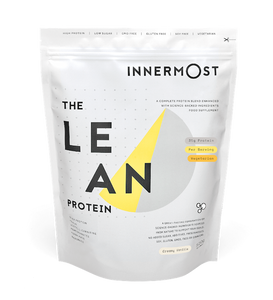
The Lean Protein
Whey protein powder for weight-loss.
The Energy Booster
Pre/intra-workout powder with BCAAs.

3 Things You Should Consider Before Signing Up To A Half Marathon

21st April 2022

21st April 2022

By Beth Shelper

With race season fast approaching, we’re sure that many of you are considering signing up to a half marathon, or maybe even you’ve started your training for an upcoming race.

If either of these are true, you’ve probably got a lot of questions circling around your head that range from logistical points such as “how far is a half marathon?” to wondering what to wear for a half marathon, wanting to explore certain training strategies and necessary dietary and supplementation strategies too... we recommend The Energy Booster for that one. 

So, first off – if you’re considering running a half marathon this upcoming race season, congratulations! That’s great news, and something you should absolutely be proud of.

Here at Innermost, we’re all about setting challenging fitness goals for yourself to maximise your performance and improve your fitness, and love to champion our community for doing so. But one thing is for sure, you should be under no illusion that a half marathon (or any distance race) can be a pretty challenging feat, and it’s always important to be prepared.

Innermost's top half marathon tips 

To help you on your way to feeling ready and raring to go for that upcoming half marathon – perhaps you’re running in the Great Manchester Run, the Great Scottish Run or even the famous Robin Hood Half Marathon, we’ve got our top things to consider before signing up.

Firstly, though, let’s get some of the basics out of the way, shall we? As they always say, fail to prepare, prepare to fail! That’s exactly what we’re here to avoid.

How far is a half marathon?

When considering signing up for a half marathon, it’s of course pretty handy to know how far that means you’ll need to run. Whilst it may seem obvious to some, no one can deny that it’s a pretty important bit of information.

In miles, we’re talking 13.1, which translates to around 21 kilometres. For some, it’s easier to think of a half marathon as two 10k races, so if that helps – definitely use this technique as a guide!

How long does it take to run a half marathon?

This question, on the other hand, isn’t as straight forward. Your half marathon time will depend on a number of factors, including the below:

  • Your race experience
  • Your current injuries – if any
  • Race day weather
  • Your age
  • Any unexpected on-the-day occurrences

How to decide what to wear for a half marathon

When it comes to deciding what to wear for a half marathon, this largely depends on the weather. And if you’re running your half marathon in the United Kingdom, as we all know, it can be pretty hard to predict this… to say the least.

It’s important to remember that you’ll get warmer as the race goes on, so make sure whatever you wear is lightweight and loose. Remember to apply sunscreen before the race and reapply if you can, especially in hot weather.

For race days that are cold and rainy, a lightweight waterproof jacket is the perfect addition to your sportswear, with mid-lightweight leggings to ensure that you’re not too cold.

Our top things to consider before signing up to a half marathon

Now we’ve established the basics, let’s get into our top three things to consider before signing up to a half marathon. Preparation is key, so make sure you’ve thought about these before you commit!

  1. What training and experience do you have?

Whilst you may be able to run a half marathon comfortably on a warm, sunny afternoon with no company and in an empty park or familiar woodland, the race becomes a different challenge on a day with potentially unpredictable weather, thousands of other competitors, and potentially the pressure of family and friends watching, too.

Before signing up to a half marathon, consider your experience and make sure you have your pre-race routine and prep down to a T. Test out a variety of race wear, distances and even playlists to ensure that when it gets to the day, you know exactly how you race best so that you feel as comfortable as possible.

  1. Do you want to run the half marathon alone, or with a friend?

The answer to this question boils down to one thing: your pace. If you want to race with a friend, colleague or family member, make sure that you work out what their general pace is beforehand. You don’t want to run into some awkward mid-race situations where you either have to slow yourself down, or are struggling to keep up.

Another thing to consider in terms of running with company is whether you feel that you would benefit from the motivation or not. Whilst some people find company is a great way to motivate yourself to keep going during those particularly tough miles, others prefer to fully get ‘into the zone’ when running, and would find this a distraction.

Either way, think ahead and plan accordingly so that you know your game plan ahead of the day.

  1. Do you want to run for leisure, or for charity?

Finally, running a half marathon is a great thing to do, and many people pair this physical challenge with a passion or cause of theirs that they feel particularly strongly about.

Many half marathon runners set up fundraising pages in the run up to a half marathon to raise awareness and money about a cause or organisation, and it’s a really admirable way to both challenge yourself and do some good and give back to worthy causes.

Great charities that many individuals often run for include:

But of course, the number of worthy causes and charities are endless, and would be thrilled to receive donations of any size. 

Summary

We hope that these tips and tricks are useful in your preparation for your upcoming half marathon, and wish you the best of luck. Remember to train well, stay hydrated and never forget the importance of nutrition. That's the key.

We'd love to see you in action, so remember to tag us in your pictures on social media over at @liveinnermost. Good luck, Innermosters!
Product Spotlight

Need Expert Advice?

Other Insights

Why Building Muscle After 30 Matters
I’ve been lifting weights for a long time. My mum first dropped me off at a gym when I was 15. Back then, I was the classic kid who grew up on 90s action movies convinced that if I trained hard enough, I’d eventually look like I was forged in an action film. And in those early years, it honestly felt that simple. I’d look at a dumbbell, and my muscles would grow. Zero science. Zero strategy. Just enthusiasm, youth, and a metabolism that cooperated. Now I’m older. I still lift four times a week, but I approach it differently. These days it takes more intention, better programming, more attention to recovery but the upside is, the results feel more meaningful. And thankfully, muscle memory is very real. When you’ve put in the work for decades, your body remembers how to be strong. I share this because many of you reading this are in the same boat. The early gains aren’t as easy. Life is busier. The goal shifts from “look good for summer” to “stay strong, capable, and healthy for life.” And that’s what this month’s email is really about. Let’s get into it. Muscle is more than something you see.  It’s something that keeps you alive and well Most people still see muscle as something cosmetic, something you train for appearance. But modern research has reframed muscle as one of the most important organs in the body. Muscle is metabolically active.It produces signalling molecules called myokines that influence: Blood sugar regulation Inflammation Immune function Brain health and cognition Mental wellbeing Longevity This is why people with higher muscle mass and strength have dramatically better long-term health outcomes. It’s not “gym bro science”. It’s peer-reviewed, clinical, replicated research. Muscle isn’t just strength.It’s metabolic armour. The decline starts earlier than people realise. Around the age of 30, muscle begins declining. Slowly at first, then more noticeably each decade. By 60, the acceleration is significant. This process is called sarcopenia. And it affects: Strength Mobility Metabolism Bone health Stability Lifespan It’s one of the most important health issues nobody talks about. Here’s the hopeful part: Strength training is one of the few interventions proven to slow, stop, or reverse sarcopenia at literally any age. You can make meaningful strength and muscle gains at 35, 45, 65, even 75. The body responds to resistance training all through life. You can’t stop ageing, but you can absolutely slow the rate at which you lose capability. The overlooked benefits of muscle 1. Better metabolic healthMuscle acts as a major site for glucose disposal. More muscle = better insulin sensitivity. 2. Brain healthStrength is strongly correlated with lower risk of cognitive decline. Myokines interact with the brain in fascinating ways. 3. Joint resilienceMuscle stabilises joints, improves posture, and offsets the consequences of long hours sitting or working. 4. Bone densityLoad-bearing exercise increases bone mineral density — something that becomes crucial with age. 5. Functional freedomFrom carrying shopping bags to keeping up with kids to simply moving without discomfort — muscle is what makes daily life easy instead of effortful. This is why I now see muscle less as a “look” and more as a long-term investment. Something you build for your 60-year-old self as much as your current one. Let’s finally kill the “bulky” myth Especially among women, there’s still a persistent fear that lifting weights equals getting bulky. In reality, building substantial visible muscle is incredibly hard, even when you try. Strength training won’t make most people bulky. It will make you: Leaner More toned Stronger More metabolically efficient More confident The research is unequivocal. The minimum effective dose is smaller than you think Strength training doesn’t require hours in the gym or a complicated routine. The science backs this simple formula: 2–3 strength sessions per week.30–45 minutes each. Focusing on five key movement patterns: Squat Hinge (deadlift or hip thrust) Push Pull Carry If you did only these, consistently, you’d build strength, muscle, functional capacity, and resilience that would last. As someone who’s been training for over three decades, I can tell you: it’s never about doing “everything”. It’s about doing the right things, consistently. Protein: the foundation people overlook One reason people struggle to build or maintain muscle after 30 is simple: they’re not eating enough protein. Optimal intake sits around 1.6–2.2g of protein per kg of bodyweight per day Protein becomes more important with age, not less. This is one of the reasons we take such care with our formulations at Innermost. No fillers, no artificial nonsense, just clean, science-backed blends that actually support muscle, metabolism, and recovery.  The best time to start was 30 years ago. The second best time is today. I’m glad I started lifting at 15 even if the reason back then was “I want arms like Arnie.” But the real value of lifting didn’t reveal itself until much later. Strength training has been one of the constants that’s helped me stay grounded, focused, and resilient, physically and mentally, through every stage of life. And I’m sure I wouldn’t have had the grit and determination to launch and grow Innermost without it. Whether you’re starting at 30, 40, 50, or beyond, biology is on your side. Muscle is not a young person’s game.It’s a lifelong tool.A form of self-respect.A strategy for ageing well.And one of the best investments you can make in your long-term health. Start with what you can. Stay consistent. Your future self will thank you. Read more
How To Train For a Marathon: The Complete Guide