








icon-account icon-glass

Popular Products

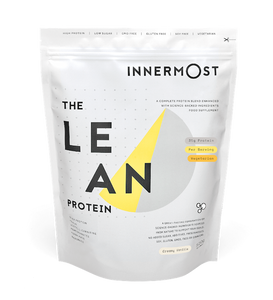
The Lean Protein
Whey protein powder for weight-loss.

Your GLP-1 Survival Kit

28th January 2026

28th January 2026

January always brings the same conversation back into focus.

Weight loss. Discipline. Resetting habits. Doing things “properly” this time.

What’s changed this year is how many people are now having that conversation alongside GLP-1 medications.

If you haven’t come across them yet, GLP-1s are a class of medications originally developed for type 2 diabetes, now widely prescribed for weight loss. You’ll recognise some of the brand names from headlines, podcasts, and increasingly, from people around you.

Depending on which data set you look at, estimates suggest that over one in ten adults are either using, or seriously considering, a GLP-1. That number is rising quickly.

So rather than avoiding the topic, I want to address it properly.

Our position on GLP-1s

Let me be clear about where we stand.

GLP-1 medications should not be the first thing people reach for if their goal is fat loss. A healthy diet, regular resistance training, movement, sleep, and consistency still do the heavy lifting for most people.

But there are cases where GLP-1s can be helpful.

  • People with significant weight to lose.
  • People with metabolic challenges.
  • People who have genuinely tried to do the right things and still struggled.

In those situations, medication can be a tool.

The problem is that too many people treat it as the solution. And that’s where things start to unravel.

What GLP-1 actually does (in plain English)

GLP-1 is a hormone your body already produces. Its job is to:

  • Slow gastric emptying (food stays in your stomach longer)
  • Increase feelings of fullness
  • Reduce appetite and food noise
  • Improve blood sugar control

GLP-1 medications amplify this signal. You eat less. You feel full faster. Weight drops. But appetite suppression doesn’t discriminate.

It doesn’t just reduce calories. It reduces everything.

  • Protein intake falls.
  • Strength training often drops off.
  • Muscle mass can decline.
  • Skin elasticity is challenged by rapid weight loss.

This is why people are now talking about:

  • Muscle loss
  • “Ozempic face”
  • Feeling weak or flat despite the scale moving

None of this is inevitable. But it is predictable if you don’t build the right structure around the medication.

The GLP-1 Survival Kit

If someone is going to use a GLP-1, there are a few non-negotiables I’d want them thinking about from day one. And interestingly, these apply even if you’re not taking one.

1. Protein is no longer optional

When appetite drops, protein intake is usually the first casualty. That’s a problem, because protein is what protects lean muscle mass, metabolic rate, and long-term body composition. Research consistently shows that people losing weight without adequate protein lose more muscle alongside fat. On GLP-1s, that risk increases. If you’re eating less overall, protein needs to be prioritised, not left to chance. This is exactly why our protein powders remain the hero products in our system. It’s infrastructure. Not a “fitness add-on”. Take a look at any of our protein powders.

2. Resistance training protects what the scale can’t see

Rapid weight loss without resistance training almost guarantees muscle loss. You don’t need to train like an athlete. But you do need to load muscle regularly. Two to four sessions a week. Compound movements. Progression where possible. This isn’t about aesthetics. It’s about staying strong, capable, and metabolically healthy as the weight comes off.

3. Skin needs support during rapid change

When weight drops quickly, skin doesn’t always keep up. Collagen intake won’t perform miracles, but it does support skin structure, elasticity, and connective tissue during periods of rapid change. Think of it as helping the body adapt, rather than trying to reverse damage after the fact. Take a look at The Glow Blend.

4. Digestion and tolerance determine whether this works long term

GLP-1 medications slow digestion by design. For many people, that shows up as bloating, reflux, nausea, or food simply sitting uncomfortably after meals. When digestion feels off, people start avoiding protein, fibre, or meals altogether. Supporting digestion is about making sure smaller meals are actually broken down, absorbed, and tolerated properly. Digestive enzymes can help reduce discomfort, improve protein tolerance, and support nutrient absorption when digestion is slowed. Take a look at The Digest Capsules.

How can I increase my GLP-1 naturally?

For those not using medication, there are also ways to support your body’s own GLP-1 production.

  • Protein-rich meals.
  • Fibre from whole foods.
  • Healthy fats.
  • Resistance training.
  • Eating slowly and mindfully.

These don’t produce pharmaceutical-level effects, but they move appetite regulation in the right direction without overriding your system.

Partnering with Simple Online Healthcare

This brings me to something we’ve been quietly working on. We recently partnered with Simple Online Healthcare, one of the fastest-growing digital pharmacies in the UK. 

They work with thousands of people using GLP-1 medications and saw a gap. People were losing weight, but not always in a way that supported long-term health, strength, or confidence. 

The Lean Protein, The Digest Capsules, and The Glow Blend are now part of their ecosystem to support wrap-around care.

Not as a replacement for lifestyle.
Not as a shortcut.
But as structure.

I’m proud of this partnership because it reflects how we think about wellness.

Not ideology. Not extremes. Just better decisions, stacked properly.

Even if you’re not on GLP-1…

Everything above still applies.

January isn’t about doing something drastic. It’s about setting up systems that make the next 11 months easier.

  • Protein as a foundation.
  • Training that preserves strength.
  • Support where it actually helps.
  • Noise removed.

That’s how progress compounds.

Thank you, as always, for trusting us with a small part of your routine. It genuinely matters, and it’s not something I take lightly.


Product Spotlight

Need Expert Advice?

Other Insights

The Best Supplements for Muscle Recovery
Nobody has ever asked me which supplements are best for muscle recovery. Instead, they ask how to build muscle. They ask how to tone up without getting bulky. Recovery is a big part of the answer to both, but one that nobody goes looking for. Which is a shame, because it's where an enormous amount of good training goes to waste. It's also where a lot of money gets wasted. Your local supplement shop or preferred online retailer is almost certainly full of products that either duplicate something you're already taking or do a completely different job to the one implied on the label. Neither makes them bad products, but it does make them a poor use of your budget. The short version is like the rest of the fitness industry – there’s a ton of misinformation out there and it’s easy to get lost in the noise. So this is the list I'd give you if you asked. Nine supplements that are well worth considering, three that are probably worth giving a miss, and how to put them together without paying twice for the same thing. Key takeaways Protein, creatine and tart cherry have the strongest evidence behind them. If you only ever buy three things, buy these. Magnesium, zinc and vitamin D don't speed recovery up so much as lessen the things that hold it back. Vitamin D is crucial, especially through a British winter where there’s not as much sun. Omega-3 and curcumin help manage the inflammatory response. These are useful during heavy training blocks, but not something you want to suppress all year round. Carbohydrate and electrolytes only become a priority when your recovery turnaround is short: think two sessions a day, endurance work, or training in heat. BCAAs aren't a recovery supplement. EAAs work but they usually duplicate your protein powder if it’s high quality. Glutamine's evidence in trained, well-fed people is weak. Tart cherry appears to help you produce force again sooner rather than make you feel less sore, which is the more useful of the two anyway. No supplement compensates for poor sleep, insufficient protein or badly managed training load. What recovery actually involves Before we get to the list, we should take a moment to understand what we're asking these supplements to do. It’ll also start to explain why some of them work and why others never really had a chance. After a hard session, you need three things to happen. Your muscles need repairing, which requires a steady supply of amino acids (the building blocks of new muscle tissue). The inflammation that follows training needs to run its course and resolve; it isn't the enemy here, it's part of how you adapt, but it does need managing rather than leaving to run wild. And your body needs to refuel and reset: your muscle glycogen needs replenishing, hydration restored, and your hormones and nervous system brought back to baseline, most of which happens whilst you're asleep. Which means a supplement can really only do one of three jobs. Supply raw materials. Moderate the inflammatory response. Or support the systems doing the actual repair work. If it doesn't fit into one of those three categories, it's an expensive maybe at best. Keep that in mind as we go, because it's the quickest way to work out whether something belongs in your stack. We've covered the science of post-workout recovery and what's actually happening when you get DOMS in more detail elsewhere. This piece is about what to take to aid things. The non-negotiables These three have the strongest evidence behind them and the biggest practical effect. If you only ever buy three things, make it these. Protein powder (the type matters less than you think) Protein is the raw material. It’s the headliner of recovery and anything muscle related as a whole. Everything else here is a supporting act. You can't build a house without bricks, and you can't rebuild muscle without amino acids. The research points fairly consistently to 1.6g to 2.2g of protein per kilogram of bodyweight per day if you're training seriously, spread across the day in servings of roughly 0.3g per kilogram. For most people that's 25g to 40g at a time. Powder isn't magic. It's simply the most convenient and cost-effective way to close the gap between what you eat and what you need. Where it gets interesting is which type, because that's where you hear a lot of marketing noise. Firstly, should you choose whey concentrate or isolate? Isolate is filtered further, so it comes in around 90% protein by weight against roughly 70-80% for concentrate, with less lactose and less fat. But here's the part the labels tend to skip: when your total daily protein is matched, isolate has no meaningful advantage for muscle growth or recovery. Choose it if lactose bothers you, or if you're on a tight calorie budget and want the nutrient density. Don't pay extra expecting more muscle. It pays (literally) to know what you’re getting. Casein digests more slowly and gives a sustained release of amino acids over several hours, which makes it quite useful before bed or across a long gap between meals. The better protein blends usually include at least some casein for exactly that reason. Egg protein is excellent, and one of the best options if you're avoiding dairy. But it's worth clearing up a myth that refuses to die: egg is not the most bioavailable protein you can buy. On DIAAS, the current gold standard for measuring protein quality, whey and milk protein score at or above whole egg. Egg is very good. It just isn't the winner it's usually sold as. You deserve a straight answer about beef protein too. It’s often marketed as a cleaner, lower calorie alternative to whey, but a significant proportion of beef protein products are made from hydrolysed collagen or gelatin rather than muscle meat, and collagen has a poor amino acid profile for our purposes. Very little leucine, and no tryptophan at all. It simply can't drive muscle protein synthesis the way whey does. The same applies to collagen powders generally: collagen is a protein, but it isn't a muscle-building one. For most people, a blend covering both fast and slow digesting sources is the most sensible choice. The Strong Protein gives you 34g per serving from whey concentrate, whey isolate and casein together, so you get the immediate spike and the sustained release without managing two tubs. Creatine monohydrate Creatine is the most researched supplement in sports nutrition, and it still gets filed under "strength and size" rather than recovery. That's a mistake. People view creatine purely for its ability to enhance performance, and it definitely does, but it also has value for recovery. That value lies in how quickly you can produce force again. By topping up the phosphocreatine system that fuels high-intensity effort, creatine helps restore performance between hard sessions, and it plays a role in glycogen resynthesis alongside carbohydrates. I do need to provide one honest caveat though. The evidence on whether creatine actually reduces markers of muscle damage is genuinely mixed. One systematic review is titled, without a hint of irony, The Paradoxical Effect of Creatine Monohydrate on Muscle Damage Markers. So I won't tell you it lowers your creatine kinase. What it reliably does is get you back to training hard sooner, which, being honest, is the outcome that really matters to many of the people taking it. Take 3-5g daily, every day, rest days included. Timing is irrelevant. Consistency isn't. You don't need to load, and you want plain monohydrate; the more expensive forms have never convincingly beaten it. If you want a proven, science-backed source of quality creatine, you can find that right here on the Innermost site. The Power Booster is 5g of German-sourced creatine monohydrate and nothing else. There's also 3g built into The Strong Protein if you'd rather not manage another tub. Tart cherry (montmorency) Most articles on the subject of tart cherry get it slightly wrong, so let’s be precise and clear things up. You'll usually see tart cherry described as a soreness remedy. A 2026 systematic review and meta-analysis of 19 trials found something more interesting. There were significant improvements in the recovery of maximal voluntary contraction (your ability to produce force), and the effect grew over the days following exercise. There were also reductions in C-reactive protein, a marker of inflammation. What there wasn't was a significant pooled effect on muscle soreness itself. So tart cherry appears to help you perform again sooner rather than help you feel less sore. If you're training or competing to a schedule, that's comfortably the more useful of the two. The authors of the review do flag low to moderate certainty and a lot of variation between studies, so treat it as promising evidence rather than set in stone fact. There's one other thing worth adding. Inflammation is part of the signal that drives adaptation, so suppressing it aggressively all year round may cost you some of the progress you're training for. Use tart cherry when recovering quickly genuinely matters more than adapting maximally. That might be during competition weeks, a congested fixture list, or perhaps a hard training camp. Then take it back out. The Strong Protein includes 300mg of Montmorency cherry alongside 250mg of bilberry, both for their anthocyanin content. The supporting cast These four won't transform your recovery on their own. What they do instead is help to lessen the things that might be holding it back, which for a lot of people is where the real gains are hiding. Magnesium Magnesium is involved in hundreds of enzymatic reactions, including muscle contraction and relaxation, energy production and protein synthesis. It's also one of the more reliable influencers of sleep quality, which makes it a recovery supplement twice over. It's worth paying attention to because UK intakes are frequently below the recommended daily amount, particularly among younger adults, and hard training increases what you lose through sweat. Form matters more than dose here. Magnesium glycinate or citrate are far better absorbed than the cheap magnesium oxide you'll find in most supermarket products. Aim for 200-400mg daily. There's 200mg in The Strong Protein, and magnesium appears again as part of the ZMA in The Recover Capsules. Zinc Zinc supports immune function, protein synthesis and hormone production, and like magnesium you lose it through sweat, so heavy training weeks are sure to increase the amount you need. We need to be precise about the hormonal claim here, because this is one of the most oversold supplements going. Zinc supports normal testosterone production if you're deficient. It will not push your levels above normal if you're already topped up, and no amount of fancy packaging will ever change that. Correcting a genuine shortfall is worth doing. Chasing a hormonal edge you don't have isn't. Don't megadose either, because sustained high zinc intakes interfere with copper absorption. Around 10-15mg a day is plenty for most people. The Recover Capsules include zinc as part of their ZMA content if you’re looking for a supplement to cover multiple bases in one. Vitamin D If you train in the UK, Vitamin D is one of the things that’s likely to be limiting you without you even realising it. Between roughly October and March, the sun doesn't climb high enough at our latitude for your skin to make meaningful amounts of vitamin D, no matter how much time you spend outside. The NHS advice is that everyone should consider a daily supplement through autumn and winter for exactly that reason. For recovery specifically, vitamin D is involved in muscle function and force production, and low levels have been linked to reduced strength and higher injury risk in athletes. It's also the least exciting item on this list, which is probably why it gets skipped over. Our Recover Capsules provide 1000IU per serving, which is 500% NRV. Whether you choose them or not, make sure you’re getting enough Vitamin D! I truly can’t stress that enough. Omega-3 (EPA and DHA) Omega-3 fatty acids help resolve your body’s inflammatory response rather than simply blunting it, and there's reasonable evidence for reduced soreness and better retention of muscle function after damaging exercise. Look for around 2g of combined EPA and DHA daily, and read the label properly. Plenty of fish oil products advertise an impressive capsule size whilst delivering a fraction of that in actual EPA and DHA. Third-party testing for purity is worth paying for if you’re unsure, and algal oil is an equivalent option if you don't eat fish. Worth it in specific situations These two aren't for everyone. In the right context, though, they're excellent. Curcumin Curcumin, the active compound in turmeric, has built up a reasonable body of meta-analytic evidence for reduced muscle soreness, lower creatine kinase and better retention of functional strength after damaging exercise. It's doing the same job as tart cherry: managing the inflammatory response rather than supplying raw materials. Bioavailability is the main thing to consider here. Curcumin on its own is poorly absorbed, so adding more turmeric to your cooking won't achieve anything useful. Look for a formulation enhanced with piperine (a natural compound found in black pepper), or a phytosome or liposomal preparation. Apply the same caveat as tart cherry. This is a tool for congested periods, not a year-round default. Carbohydrate and electrolytes Refuelling is the third job, and it's the one most lifters can happily ignore. If you train once a day and eat properly, your normal meals will restore glycogen comfortably before your next session. It becomes a real priority when the turnaround is short. If you’re doing two sessions in a day, lots of endurance work, compete in tournament formats, or are training in heat, you might need some additional support. In those cases the research points to roughly 1.0-1.2g of carbohydrate per kilogram of bodyweight per hour in the first few hours after finishing, which is difficult to hit through solid food alone. Hydration belongs here too. Sweat costs you fluid and sodium, and turning up to your next session dehydrated will take more from you than most supplements can give back. The Hydrate Blend covers the electrolyte side with sodium, potassium, magnesium and calcium. It’s well worth considering if you’re in the market for a top tier electrolyte blend. What about BCAAs, EAAs and glutamine? This is where a lot of people spend too much money, so let's be direct. BCAAs Branched-chain amino acids aren't a recovery supplement, and the reason is simple. They're three of the nine essential amino acids, and you can't build a complete muscle protein from an incomplete set. If your daily protein is adequate, adding BCAAs on top adds nothing to the repair process. That's a separate question from whether they do anything at all. Taken before or during training they have a role in perceived exertion and central fatigue, helping the session feel more manageable rather than helping you recover from it afterwards. That's a legitimate job, and it's why you'll find 5g of BCAAs in The Workout Blend, sitting alongside citrulline, beta-alanine and caffeine in a pre-workout formula. Just don't buy them expecting a recovery benefit they were never designed to deliver. EAAs Essential amino acids do work. All nine are present, so unlike BCAAs they can genuinely fuel muscle protein synthesis. The problem is redundancy. If you're already hitting 1.6-2.2g/kg of protein a day from food and a protein powder, you're paying a second time for something you've already bought. There are real cases where they earn their place. Poor appetite. Avoiding dairy without a good alternative. Training fasted first thing in the morning. Older trainees dealing with anabolic resistance, where the leucine threshold is genuinely harder to reach. Outside of those, sort your total protein out first and pay close attention to your diet overall. L-Glutamine Glutamine has a strong reputation and a weak evidence base, at least for the people usually buying it. In trained, well-fed individuals it has repeatedly failed to produce meaningful improvements in soreness, strength recovery or body composition. The gut and immune benefits people cite are real enough, but they come largely from research in extreme endurance loads and clinical settings. Those are states of physiological stress that lifting three to five times a week simply doesn't replicate. If you're training hard and eating enough protein, you're almost certainly getting plenty of glutamine already. You’d be better off spending that money on protein or creatine. How to build your recovery stack Rather than buying everything at once, build it in layers. The Foundation: protein, creatine, vitamin D. This is the version almost nobody regrets. Raw materials, force restoration, and the deficiency most likely to be holding you back. If budget is tight, stop here. You're already in a really strong position and are capturing the majority of the benefits available from supplements when it comes to muscle recovery specifically. Complete: add magnesium, zinc and omega-3. Worth it once you're training four or more times a week and the basics are consistent. These address what accumulates with volume, and the sleep quality everything else depends on. Hard block: add tart cherry, curcumin, carbohydrate and electrolytes. Reserve these for periods where recovering fast genuinely matters more than adapting maximally. Then take them back out, save your money and rely on your diet, which should always be the foundation of everything you put into your body anyway. Notice that the list gets shorter as your budget gets tighter, not longer. That's deliberate. The most important recovery tool isn't a supplement It would be strange to write all of this without saying the obvious thing. Sleep is the single biggest recovery variable you have, and no combination of capsules compensates for consistently getting six hours or more of sleep a night. Your total daily protein matters far more than which powder you choose. And managing your training load, programming deloads before you need them rather than after, will do more for how you feel and perform than anything on this list. Supplements are worth taking. They're worth taking because they close specific, identifiable gaps, not because they replace the fundamentals. They're the final few percent, and the foundations have to be there first. If sleep is where you're struggling, The Reset Capsules combine reishi, L-glycine, lemon balm and chamomile for exactly that. But the habits come first. Read more
The Glow Blend: A Confession
I need to tell you something I've never said publicly, and it's not flattering. When our product team first brought me a plan for a collagen supplement, my honest reaction was no. Not "let me think about it." A flat no. And if I'm being fully honest about why, it wasn't the science. It was that collagen felt, in my head, like a beauty category. Something for someone else's brand. Not ours. I built Innermost around performance and evidence. Protein, creatine, mushrooms, electrolytes. Things I could point to a study for and feel comfortable talking about at a dinner table full of people who workout regularly. Collagen sat in a different mental folder. Skincare aisle. Jars with gold lids and brand sponsorship by one of the Kardashians. I'd absorbed a version of what "beauty" meant without ever examining it. The argument in the room So we had the argument internally. A proper one. A few people on the team pushed back hard, and rightly so. One of them put it to me plainly: we started Innermost to follow the evidence wherever it goes, not to follow it everywhere except the places that feel awkward. That line stuck with me. Here's what changed my mind, and it wasn't a feeling. It was the research. What the evidence actually says Collagen is the most abundant protein in your body. It's structural, it's in your skin, your joints, your gut lining, and production declines steadily from your mid-twenties onward. That's not a marketing claim, that's basic physiology. The question was never whether collagen matters. It was whether supplementing it actually does anything, and that's where most of the category falls apart. Most collagen products on the market use whole collagen molecules, which are too large to be absorbed effectively when you drink them. The ones that do use hydrolysed peptides, which are broken down into smaller chains your body can actually take up, still run into a second problem: dose. A lot of labels list collagen content that sits well below the 2 to 10 grams used in the trials that show measurable effects on skin elasticity and hydration. You're paying for a placebo with good branding. The ingredient most brands leave out The third problem is the one that convinced me completely. Vitamin C isn't a nice-to-have alongside collagen. It's a required co-factor for your body to actually synthesise collagen at the cellular level. Without adequate vitamin C, the enzymes responsible for stabilising collagen structure don't function properly. You can take a perfectly dosed hydrolysed peptide and still get a fraction of the benefit if the product doesn't include enough vitamin C alongside it. Most don't. They sell you the raw material and leave out the one thing your body needs to use it. Once I saw the category clearly, laid out like that, the decision stopped being about how I felt and started being about what the evidence supported. That's the whole operating principle of Innermost. I couldn't defend saying no to a legitimate, well-evidenced product category. What we built So we built The Glow Blend properly. Hydrolysed collagen peptides at a dose that reflects the research, alongside vitamin C, hyaluronic acid for hydration, biotin and folic acid for hair and nail health. Nothing in it that doesn't earn its place. What surprised me after launch The part I didn't expect was the response once we launched it. A good number of the messages came from women, as you'd expect, and they were generous and specific about what they'd noticed. But a surprising number came from men. Customers writing in to say they'd felt exactly what I'd felt, that awkward little flinch at "collagen," and had quietly bought it anyway because the ingredient breakdown made sense to them. That response told me more about why this category needed an honest voice in it than any research paper did. I'm not going to pretend I have this fully figured out. I still catch myself, occasionally, hesitating slightly before I mention it in a room. Old habits sit deeper than good evidence sometimes. But I take it, and increasingly a lot of men I respect take it too, quietly, without needing to make a thing of it. If this sounds familiar If any part of this resonated, and you've felt that same small resistance to a category you assumed wasn't for you, hit reply and tell me. I'd genuinely like to know I'm not the only one who had to get over it. And if you know someone, a friend, a partner, who could use this exact reasoning rather than a tesimonial, forward it on. It might do more good coming from someone else's honesty than an ad ever could. Read more