








icon-account icon-glass

Popular Products

The Lean Protein
Whey protein powder for weight-loss.
The Energy Booster
Pre/intra-workout powder with BCAAs.

The Best Healthy High-Protein Smoothie Recipes To Keep You Full

2nd March 2021

2nd March 2021

By Shivraj Bassi

Smoothies are an ideal food. They’re quick and easy to make, fully customisable to your taste, packed with nutrients and vitamins and best of all, are hugely good for you (assuming you make them right, that is). 

While smoothies are traditionally a breakfast food, they’re good at any time of day. Portable and easy to eat, you can pack your healthy smoothie recipes with fruits and vegetables and ingredients such as nuts and seeds. Plus the all-important ingredients of Innermost protein powder, to give you a protein boost to power you through your workouts, refuel your body post-exercise and give you the strength to tackle your day head on. 

Are smoothies healthy? Well, that depends on the drink. The ones below certainly are, but smoothies, especially the ones you buy, can be packed with sugar, non-beneficial ingredients and even things like ice cream. After all, there’s a difference between a protein smoothie and a milkshake, even if not everyone knows that.

We’ve assembled our favourite protein smoothie recipes for when you’re looking for inspiration about mixing up how you eat your protein powder, want to try some new tasty fruit combinations or simply want to try something different. 

Making these healthy breakfast smoothies couldn’t be easier - simply add all of the ingredients to a blender and blitz until smooth and creamy. You might want to add a little more or less liquid depending on whether you like your protein smoothies thick and spoonable, or thinner and better for sipping from an Innermost bottle

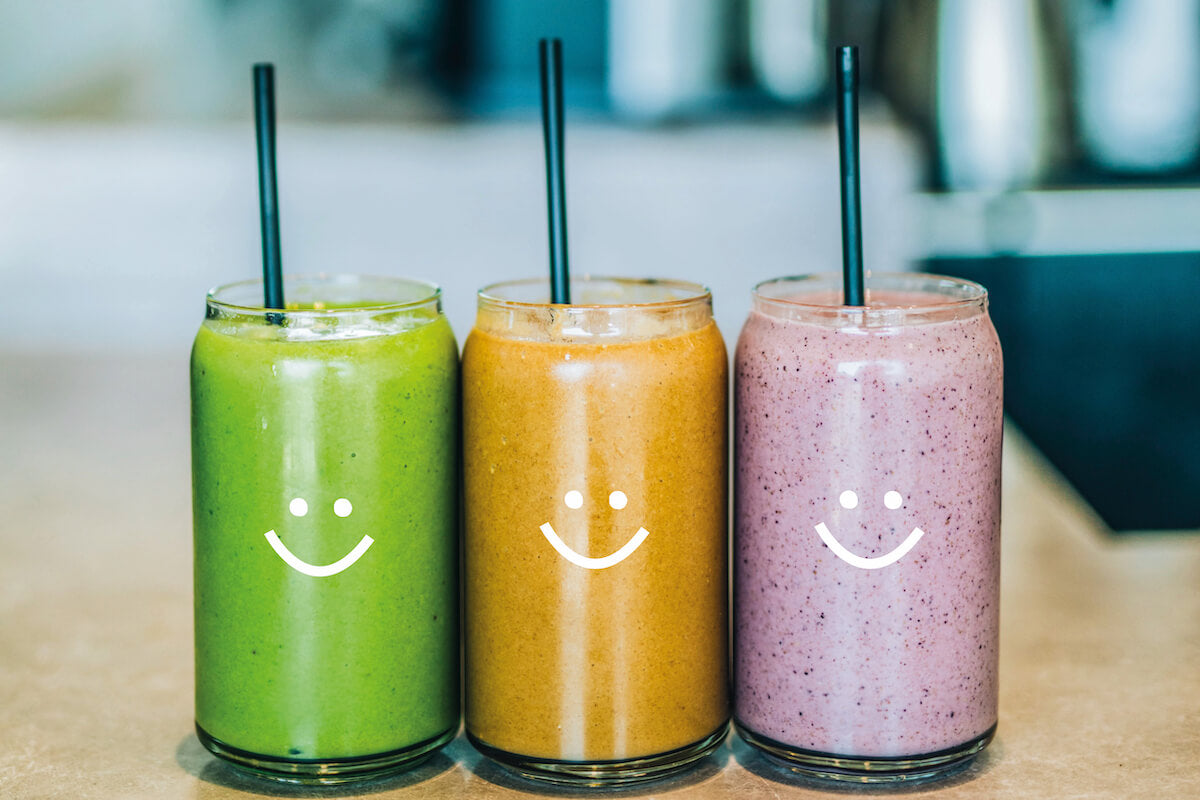
Another great tip, especially when it’s hot outside, is to add a handful of ice cubes to the blender and make a smoothie with the texture of soft-serve ice cream. Serve in a bowl with a spoon, and you’ll smile as you eat it. 

Photo by Denis Tuksar on Unsplash

Very berry smoothie

Berries are packed with antioxidants, making them both delicious and good for you. For this recipe, it’s convenient to keep a bag of your favourite mixed berries in the freezer so you can make this knockout protein smoothie whenever the craving hits. We love blueberries and raspberries, but let your tastebuds guide you. 

  • A handful of ice cubes
  • 4 tbsp water or plant milk
  • 3 big handfuls frozen mixed berries
  • 1 big handful spinach
  • 2 tbsp plain yogurt
  • 2 scoops strawberry protein powder
  • 1 tbsp almonds or walnuts
  • 1 tbsp flaxseed

Chocolate-cherry delight

If you’re a fan of chocolate-covered cherries (and who isn’t?), this smoothie is for you. Cherries are rich in fibre, vitamin C, K and A as well as potassium, magnesium and antioxidants galore. And the chocolate element? That’s what makes this recipe so delicious.

  • A handful of ice cubes
  • 4 tbsp milk or plant milk
  • 2 scoops of chocolate protein powder
  • 2 big handfuls of cherries, fresh or frozen (don’t forget to remove the pits first)
  • 2 big handfuls of spinach
  • 1banana
  • 1 tbsp cacao nibs

Sweet as apple pie

Just like that pie your grandma made you, except packed with protein, vitamins and minerals instead of butter and sugar. Don’t skip the cinnamon for this one - it’s essential. 

  • A handful of ice cubes
  • 4 tbsp plant milk
  • 2 scoops of vanilla protein powder
  • 1 apple, core removed and cut into chunks (leave the skin on for extra nutrients)
  • 1 big handful spinach
  • 2 tbsp almonds or walnuts
  • 2 tbsp oats
  • 1 tsp cinnamon, plus extra to sprinkle on top


Piña colada protein smoothie

You might not be able to sip a piña colada on the beach on a tuesday morning after spin class, but you can easily whip up this tropical protein smoothie recipe. Try to resist the urge to add a splash of rum (or don’t - and check out our hangover cures for the morning after). 

  • A handful of ice cubes
  • 4 tbsp plant milk (coconut works well here)
  • 2 scoops of vanilla protein powder
  • Half a banana
  • 2 big handfuls chopped pineapple, fresh or frozen
  • 1 big handful spinach
  • 1 tbsp flaxseed
  • 4 tbsp coconut yogurt

Mint choc-chip breakfast smoothie

Gelato shop closed for the night? Blend up this minty, chocolatey delight at home instead, and you’ll feel more virtuous and look better the next morning. This healthy smoothie recipe will give you the mint choc-chip fix you need without the calories of ice cream. 

  • A handful of ice cubes
  • 4 tbsp plant milk
  • 2 scoops of chocolate protein powder
  • Half a banana
  • 1 tbsp almonds or walnuts
  • 1 tbsp cacao nibs
  • 1 tbsp unsweetened cocoa powder
  • Small handful of mint leaves (add more if you want it super minty!)

Green goddess smoothie

Avocado isn’t just for smashing onto toast. The rich, creamy texture of avocado is perfect for whizzing into a protein smoothie recipe. The healthy fats will keep you full for longer and the green colour will let everyone know how healthy you are. 

  • A handful of ice cubes
  • 4 tbsp water
  • 2 scoops vanilla protein powder
  • 2 big handfuls of spinach
  • 2 big handfuls of kale
  • Half an avocado
  • 1 big handful of grapes
  • A squeeze of lemon

Need Expert Advice?

Other Insights

Our Top Tips For Maintaining A Healthy Daily Wellness Routine
Muscle: The New Longevity Biomarker
A few years ago, muscle meant one thing - Aesthetics. Size. Definition. Abs in good lighting. But that framing is outdated. Today, muscle is being discussed in medical literature as something very different. Not vanity. Not ego. Not “gym culture.” Muscle is increasingly viewed as a longevity biomarker. And for those of us in our 30s and 40s who still train, still work hard, still want to feel capable as life gets busier, that matters. Because this isn’t about looking 22. It’s about moving well at 32, 42 or 52.   Muscle Is Metabolic Infrastructure Skeletal muscle is not just tissue that contracts. It is one of the body’s primary metabolic organs. It is the largest site of glucose disposal. It plays a critical role in insulin sensitivity. It acts as a reservoir of amino acids during stress. It influences inflammation, hormone balance, and even immune resilience. Multiple large cohort studies have shown that higher lean mass is associated with lower all-cause mortality. Loss of muscle with age, known as sarcopenia, predicts frailty, falls, metabolic dysfunction, and loss of independence. That’s not fitness industry hype. That’s epidemiology. At 22, muscle is impressive. At 42, muscle is protective. That shift in perspective changes everything.   The Reality of Ageing Physiology From our mid-30s onward, muscle protein synthesis becomes less responsive. We need a slightly stronger signal to stimulate growth and repair. Recovery slows. Sleep becomes lighter. Stress has a bigger physiological cost. None of this is dramatic. It is gradual. But gradual decline is still decline. Based on our customer surveys that you kindly complete from time to time, we see that many of us do not train because we’re insecure. We train because we want to stay capable. We want to keep progressing. We want to look athletic, yes, but more importantly, we want to feel strong in meetings, on long-haul flights, on weekend runs, and as we get older. Wellness, for you, is infrastructure. Not identity. Muscle is part of that infrastructure.   The Protein Signal Matters More Than Volume One of the most underappreciated realities of ageing physiology is that protein intake becomes more important, not less. Research suggests that as we age, we require a slightly higher per-meal dose of high-quality protein to maximally stimulate muscle protein synthesis. The amino acid leucine plays a key role in triggering this process. That means: Total daily protein matters Distribution across the day matters Quality and digestibility matter This is not about chasing extreme intake. It is about ensuring the signal is strong enough to maintain and build lean tissue in a body that is no longer 21. For many of you, that is exactly why The Strong Protein exists in your routine. Not because you want to “bulk,” but because you understand that maintaining muscle is a daily habit, not a seasonal goal. It is simple. Behaviour-light. Infrastructure.   Recovery Is Where Muscle Becomes Longevity Building muscle is not just about training stimulus. It is about the recovery environment that allows adaptation to occur. Sleep quality. Electrolyte balance. Stress management. Micronutrient sufficiency. Chronic under-recovery accelerates muscle breakdown. Elevated cortisol, inadequate protein intake, and high life stress create a net catabolic environment. That is where structure becomes powerful. For some of you, that structure includes: Prioritising protein post-training Supporting cellular energy production Managing oxidative stress and inflammation The Power Booster (pure creatine monohydrate) and The Recover Capsules (our unique science-backed recovery supplement) were built around that idea. Not to create dependency. Not to promise miracles. But to support the physiological processes that allow training to compound rather than break you down. Muscle is not built in the gym. It’s built in recovery. And recovery is increasingly what separates the 35-year-old who thrives from the 35-year-old who plateaus. This Is Not Gym Culture The supplement industry still markets protein like it is 2008. Aggressive language. Shredded physiques. Short-term transformations. But that narrative misses the real story. The real story is metabolic resilience. The real story is blood sugar stability during long workdays. The real story is maintaining lean mass during high-stress periods so you do not feel physically diminished when life demands more from you. You are not trying to become someone else. You are trying to sustain who you are becoming. That is a very different motivation. The Compounding Effect Muscle does not protect you overnight. It compounds. Every training session completed.Every protein target met.Every recovery cycle respected. The benefit accrues quietly. Five years from now, you either have more lean mass than you do today, or less. That difference will influence how you move, how you metabolise food, how you respond to stress, and how independent you remain later in life. It is subtle. But it is powerful. Many of us already understand something that trends often ignore. Health is not a six-week challenge. It is a decades-long investment. Muscle is not aesthetic. It’s insurance. Insurance against frailty. Insurance against metabolic dysfunction. Insurance against the quiet erosion of capability. And unlike most insurance policies, this one improves how you feel today while it protects you tomorrow. If you train, you are already sending the signal. The question is whether your nutrition and recovery support that signal strongly enough. Because the goal is not to look young. The goal is to stay capable. Read more