








icon-account icon-glass

Popular Products

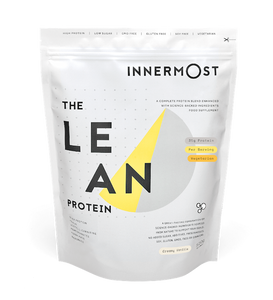
The Lean Protein
Whey protein powder for weight-loss.
The Energy Booster
Pre/intra-workout powder with BCAAs.

Taryl Boothe / Q&A

25th September 2020

25th September 2020

By Caitlin Bell

We recently sat down with Mancunian model making waves in the industry, Taryl Boothe, to get the low-down on everything going on his life lately, from food, to fitness, to looking to the future.

Hey Taryl! So what does health and fitness means to you?

I've always been inspired by fitness. When my dad was younger, he was a gymnast and part of a breakdancing group called Broken Glass. Seeing old images of my dad in the gym and dancing inspired me, and I wanted a body like that. I first started training when I was in college at the age of 17. I lied that I was 18 to get my membership and then I would go with a group of friends for about a year. I was consistent with it, but was still a very slim teenager with no muscle at all!

I kept at it and then I moved down to London to study Design for Art Direction at University of the Arts. London was a big move for me at the age of 18 and it was a lot to take in. So the gym became my best friend. It was a place for me to clear my head. It also went hand-in-hand with my uni work as it helped keep me focused.

Focusing on health and fitness has allowed me to be consistent, and to me, consistency is the key to success. Being in the modelling and influencer industry where it's quite cut-throat comes with a lot of setbacks, so I try and treat it like I’m training. 


What's your training philosophy?

My philosophy for training is (as cliché as it sounds) to always keep going no matter how unmotivated you are. It can be tough at times. But once it becomes an everyday routine, you know you're on your way to success.

I also follow multiple Instagram account dedicated to fitness that I find inspiring. My favourites are: Mike Thurston (@mikethurston), Joe Delaney (@shredbundy), Devon Lévesque (@devonlevesque), and Simeon Panda (@simeonpanda). All these guys have incorporated fitness into their life and made a huge living off the back of it. In the digital age, they've found a way to draw in huge audiences and utilise their fitness lifestyle to influence other people.

So what's your hustle?

Right now my favourite hustle is Instagram. It's allowed me to connect with people from all around the world. It can be difficult to get a job with a creative degree, but Instagram has allowed me to keep going, and create content for different brands such as JD Sports, The North Face, and Reebok.


What does #liveinnermost mean to you?

To me, it means that everything starts from within. In terms of fitness, it’s what you put into your body that fuels you and keeps you going. So living 'Innermost' you're conscious about what you're putting into your body and you want the right things that you know will benefit you.

Favourite Innermost products?

The Strong Protein and The Power Booster. They go hand-in-hand with each other. The protein is crafted to maximise muscle and strength gains and designed to support energy and power. The Power Booster supports power output and endurance - great for an intense training session. The chocolate protein flavour also taste seriously good!

Where do you see yourself in three years?

In three years I hope to see myself on the cover of Men’s Health, with multiple brand deals as a successful businessman (not quite sure what in yet, I have too many ideas in my head).


What are you reading right now? 

I currently have three books on my bedside table. The Motivation Manifesto (by Brendon Burchard), Money: Know More, Make More, Give More (by Rob Moore) and Good Vibes, Good Life (by Vex King).

Best quote to live by?

"I want freedom for the full expression of my personality" - Mahatma Gandhi.

Favourite place you've visited?

My favourite city is definitely Paris. I was able to experience Paris Fashion Week Men’s SS20 with my modelling agency. We stayed right by the Arc de Triomphe - it was a dream. 


What does confidence mean to you?

Confidence to me is someone who is effortless and doesn’t let things get to them. 

Latest obsession?

Binge-watching Dexter. This is my second time watching it and I just finished it again after eight seasons! I've also been sitting for hours watching YouTube videos from channels like TED-Ed, Vox, The B1M, Forbes, Kai Bent-Lee and Levi Bent-Lee. It's a mixture of factual, everyday goings-on in the world and fashion/lifestyle.

Who or what motivates you?

My family and friends motivate me. To have such a supportive network around me means a lot.

One thing that would make the world a better place?

One thing that would make the world a better place is if everyone in the world had freedom without any constraints, to a certain extent. I mean more on a level of when you're at school, for example. Growing up, I felt like things seemed quite limited in terms of what you could do. I only realised the possibilities in the world when I got to university. I knew things could happen for me but it seemed so far out of reach. Now I know the sky is the limit and anything is possible. They don’t tell you that stuff at school.


To keep up with everything Taryl's doing, don't forget to follow him @tarylboothe. And to read more Q&As with Innermost Insiders, click here.

Need Expert Advice?

Other Insights

Person working out
It’s that time of the year again - the New Year's fitness buzz. A time where motivation is high, new workout plans are made, gym bags make a return, and everything feels full of possibility! And yet, for many people, this momentum is short-lived. By mid-February, routines can start to slip. Sessions get skipped. Motivation fades. The resolution quietly dissolves, something often accompanied by frustration or guilt. If that sounds at all familiar, it’s firstly worth saying this upfront: it’s not a personal failure. In most cases, it’s a structural one. It might sound strange, but having a long term and consistent fitness routine isn’t solely about having the most ‘willpower’, or forcing yourself to run just because it’s ‘new year, new me’, it’s about building an individual routine that works for you and sets you up in the best position to hit your workout goals in the long term. To make things easier, we’ve put together this nifty guide diving into the science of new year’s fitness, why traditional workout resolutions so often fall apart, and what genuinely helps when it comes to building habits that last for the long term. Right, let’s get into it. Why New Year’s fitness resolutions don’t succeed  Before exploring how you can set your fitness goals for the long term, it’s important to understand why so many fall short.  The main reason comes down to something psychologists call the “fresh start effect”. This is a period that interrupts the calendar schedule (such as New Year's), creating a mental separation between the past and the future. Such a fresh start makes change - like the restarting of a fitness routine - mentally easier to overcome because the past feels neatly boxed away.  While this sounds good on paper, the problem is that motivation alone isn’t enough to sustain long-term behavioural change.  Many New Year’s fitness routines struggle to last because they often: Focus on outcomes instead of training plans and sustainable behaviours. Target instant change Focus on unrealistic fitness goals Shall we run from the top? Outcome-based targets One pitfall people often find themselves in is setting a New Year’s fitness goal that is driven by outcome without proper planning.  Some examples might be: Losing weight  Getting fit  Running a marathon All great targets to strive for, yet without a training plan or strategy to achieve them, they can quickly feel unattainable and therefore interest drops off. This makes creating and sticking to a new year’s exercise plan key to achieving your goals, asking: what do you want to achieve? What steps are you going to take to achieve them? And how will you measure your progress? Too much change and unattainable fitness goals With the fresh start effect, it can feel productive to try and overhaul all your health practices. A new training plan. A stricter diet. Earlier mornings. Fewer social plans. Better sleep. More productivity. Individually, these changes are all positive (we’ve spoken about the positive effects of many in the past ourselves). Making all these large life changes in a short space of time, however, can lead to something called ‘cognitive overload’. Each new habit requires attention, decision-making, and self-control, leading to decision fatigue buildup and increasing the likelihood that behaviours will be dropped rather than maintained. Sustainable change tends to work the opposite way. Small, manageable shifts layered gradually over time allow habits to stabilise before new ones are added. Instead of replacing your entire lifestyle in January, long-term routines are built by choosing one or two priorities, letting them settle, and then building from there. Unrealistic fitness goals Another common reason why new year workout plans don’t work is that the end goals being set aren’t realistic to achieve in the time frame given. Training every day. Completely overhauling diet. Expecting visible results within weeks are just a few sure-fire ways to see your fitness plans gone by the end of January. This is because when progress isn’t immediately visible, individual motivation drops. Any missed sessions start to feel like failure, and the routine becomes something to avoid rather than return to. This can lead to a plateau in motivation and a workout rut that sees you lose all motivation to continue your fitness plan. The best way to avoid this? Tailor your New Year’s workout plan to what is realistic for you to achieve. Remember, everyone is different and you should avoid trying to replicate someone’s workout plan who is at a much different point in their journey. What helps you stick to a fitness routine So now we’ve covered the pitfalls faced with New Year's resolutions, what are some of the ways that you can set yourself up for success going into 2026? Starting your workouts small It might sound a little backward, but maintaining a new year’s fitness routine is all about incremental improvements - starting small and building up to ambitious fitness goals. In essence, try to make your workouts feel manageable from the outset.  This removes much of the physical and mental friction caused by sharp changes and removes the possibility of overtraining syndrome - something that can lead to both physical and mental fatigue. Instead of asking your body and mind to adapt to a dramatic shift all at once, you allow both to adjust gradually - which is exactly how sustainable habits are formed. Personal, not performative goals A common reason New Year's fitness routines fall apart is that the goal itself was never truly personal.  Many resolutions are shaped - often unconsciously - by external pressures: how we think we should look, what others are doing, or what feels ‘socially impressive’. These goals can create a strong initial push, but they rarely provide enough depth to sustain effort in the long term. Personal goals, by contrast, are rooted in lived experience. They’re connected to how you want to feel day-to-day, not how you want to appear to others. Wanting more stable energy through the afternoon, fewer aches and pains, better sleep, or improved resilience during stressful periods may not sound as dramatic as a body transformation, but they’re far more motivating over time.  This is supported by behavioural research showing that exercise routines rooted in intrinsic motivation - feeling better, moving more easily, managing stress - are significantly more likely to be maintained long-term than goals shaped by appearance or external pressure. These outcomes are felt quickly and repeatedly, which reinforces the habit itself. Fitting fitness into your routine Again, seems counterintuitive, but a workout routine that only works under perfect conditions won’t survive beyond January.  You can’t change things like long workdays, family responsibilities, travel, and low-energy weeks, and you shouldn’t try to. Your regular workout routine should function around these things. The key here is that fitness is flexible. It allows for shorter sessions, longer sessions, varied training styles, and a broader definition of movement that can all be tailored to your day-to-day routine. Your also not limited by location, you could workout at home, at the gym, with groups, whatever fits into your routine.  The role of recovery in New Year’s fitness One of the most overlooked reasons people struggle to stick to New Year’s fitness routines is actually physical and mental fatigue. While this is to be expected to some extent - and you can control fatigue by following the above tips - you also need to consider the importance of effective recovery and how you are fuelling your body between workouts. Just some of the ways you can improve recovery are: Sleep quality: Quality sleep is when the body actually recovers, repairs tissue, and resets energy levels for the next day. Without it, even light training can start to feel disproportionately demanding. Effective hydration: Staying properly hydrated helps support circulation, muscle function, and focus, making both workouts and recovery feel smoother and more manageable. Complete nutrition: Providing the body with enough protein, carbohydrates, fats, and micronutrients gives it the building blocks it needs to repair, adapt, and maintain steady energy over time. It’s also worth considering tailored nutrition-focused supplementation such as Innermost’s The Recover Capsules and The Hydrate Blend. Reframing New Year fitness: from resolution to routine An effective mindset shift you can make this new year is moving away from the idea of a “resolution” and towards a routine. Resolutions are often outcome-focused - lose weight, build muscle, run faster. Routines are behaviour-focused - train three times a week, walk daily, prioritise recovery. This reframing is also key when thinking about how to stick to your New Year’s fitness resolution. Instead of asking, “Am I seeing results yet?”, the more useful question becomes, “Can I repeat this next week?” Remember, the most effective fitness routines aren’t created in January - they’re carried through February, March, and beyond. References Dai, H., Milkman K.L., Riis,J. (2013).The Fresh Start Effect: Temporal Landmarks Motivate Aspirational Behavior. Management Science. 60 (10), 2563-2582. Click here. Cezar, B., Macada, A. (2023). Cognitive Overload, Anxiety, Cognitive Fatigue, Avoidance Behavior and Data Literacy in Big Data environments. Information Processing & Management. 60 (6). Click here. Ntoumanis, N., Healy, L. et.al. (2014). Self-Regulatory Responses to Unattainable Goals: The Role of Goal Motives. 13 (5), 594-612. Click here. Cleveland Clinic. Overtraining Syndrome. Click here. Sebire,S., Standage, M., Vansteenkiste,M. (2011). Predicting objectively assessed physical activity from the content and regulation of exercise goals: evidence for a mediational model. 33 (2), 175-197. Click here.   Read more
Why the Festive Period Breaks Your Habits
Every year, the festive period gets blamed for breaking people’s health. Too many meals out. Too many late nights. Too many “I’ll start again in January” moments. By the time the New Year arrives, the narrative is already locked in. Damage done. Time to reset, detox, or punish yourself back into shape. But here’s the truth. The festive period doesn’t ruin your health. Losing structure does. The end of the year is uniquely disruptive. Work schedules loosen. Social plans multiply. Travel, celebrations, and irregular routines blur the days together. Sleep shifts later. Meal timing becomes unpredictable. Hydration drops. Movement becomes sporadic. Stress quietly rises. Food gets the blame because it’s visible. But the real changes are happening beneath the surface. Our bodies are built around rhythm. Circadian biology governs hormones, appetite, energy, glucose regulation, and recovery. When sleep timing drifts and meals become inconsistent, insulin sensitivity drops, hunger cues become noisier, and cravings increase. Not because you’ve lost discipline, but because your physiology is responding exactly as it should. This is why willpower fails so reliably during the festive period. Willpower is not a plan. It never was. Behaviour follows environment. And the end-of-year environment is designed to disrupt even the best intentions. More social pressure. More choice. Less routine. Less recovery. Expecting motivation to override that is unrealistic. Yet the wellness industry loves this moment. January resets. Detoxes. Thirty-day transformations. The implication is always the same. You slipped up. Now fix it. That framing is wrong. You didn’t fail. Your anchors disappeared. So instead of trying to be perfect between now and the New Year, there’s a better approach. Protect structure. Not outcomes. I think of this as a Minimum Effective Routine. The smallest set of habits that keep your system regulated when life gets noisy. You don’t need control all day. You need a few non-negotiables. First, a morning anchor. How you start the day sets the tone for everything that follows. Consistent wake times, early light exposure, and hydration matter more than whether you train or not. Even during the festive period, waking within a similar window each day helps stabilise energy, appetite, and sleep later on. Second, a nutrition anchor. Health doesn’t unravel because of one rich meal. It unravels when eating becomes random. Skipped meals followed by late, heavy dinners create blood sugar swings that drive overeating. One simple rule makes a difference. Anchor at least one meal per day around protein and fibre. No tracking. No guilt. Just consistency. Protein in particular becomes critical when routines loosen. It supports lean mass, regulates appetite hormones like GLP-1, and reduces the likelihood of grazing later in the day. Third, a movement anchor. This is not about training hard. It’s about staying active. Walking, light resistance work, mobility, or a short session at home. Ten to twenty minutes counts. Movement improves glucose handling, digestion, mood, and sleep quality. It is one of the most reliable ways to offset stress and irregular eating. Fourth, an evening wind-down anchor. Late nights are part of the festive period. That’s normal. What matters is how often they stack. Alcohol, screens, and social stimulation all fragment sleep. A simple wind-down routine most nights helps signal safety to your nervous system. Lower lights. Fewer screens. Breathing. Reading. Repetition matters more than perfection. These anchors don’t make you “healthy”. They keep you regulated. Now, an honest word on supplements. Supplements won’t rescue a chaotic routine. Anyone promising that is selling shortcuts. But they can support physiology when structure is under pressure. Hydration often drops at this time of year, especially when alcohol intake increases. Electrolytes support fluid balance, nerve signalling, and muscle function. Protein becomes more important when meals are irregular, helping to stabilise appetite and maintain muscle. Micronutrients also matter when sleep, stress, and food quality are inconsistent. This is how we think about Innermost products. Not as a reset. Not as a fix. But as tools that support the fundamentals when life is busy and routines loosen. The biggest mistake people make is treating the festive period as a write-off and the New Year as a clean slate. That approach creates a cycle of extremes. If you protect structure now, the New Year doesn’t need repairing. There’s no detox required. No dramatic restart. Just continuity. Finally, as we close out the year, I want to say thank you. Thank you for your support. Thank you for trusting us in an industry that often values hype over health. And thank you for being part of a community that cares about doing things properly. I hope you enjoy the festive period with your friends and loved ones, get some well-earned rest, and step into 2026 feeling steady, not behind. Read more