










If you’re at all in the fitness space, you’ve probably heard of whey protein. It’s one of the most widely used supplements for supporting strength and recovery and is something we have spoken about at length in previous blogs.
Whey protein is a milk-derived protein created from the liquid whey separated during cheese-making. As it comes from milk, it is easy to assume that every whey protein powder is halal; however, the reality is a little more nuanced.
In short, whey protein can be halal, but its suitability depends on how the whey was produced, what has been added to the finished formula and the controls followed during manufacturing. Certain details, including the source of enzymes used during cheese-making, may not be obvious from the ingredients listed on the packaging.
Understanding these steps can help you make a more informed choice and find a halal whey protein that supports your dietary requirements and training goals.
Is Whey protein halal?
Whey protein can be halal, but not every whey protein powder is automatically halal.
Its status depends on several connected factors including: where the milk came from, how the whey was separated from it, what else is in the finished formula, and how that formula was manufactured.
Milk itself is permissible, which is where much of the confusion starts. But whey isn't drawn straight from the animal. It's a by-product of cheese-making, and cheese-making means adding something to milk to split it into solid curds and liquid whey. That something is rennet, a coagulating enzyme, and its origin is one of the most important variables when assessing cheese-derived whey.
Is whey protein isolate halal?
Whey protein isolate is a highly filtered form of whey that contains a greater proportion of protein and lower levels of lactose, fat and carbohydrate. It can be halal, but the word “isolate” is not a halal claim. It only describes the way the whey has been processed.
The additional filtration does not automatically mean that a whey isolate protein powder is halal – the source of any enzymes or processing aids must still be considered, along with every other ingredient added to the final powder.
Is whey protein concentrate halal?
Whey protein concentrate is a filtered form of whey that retains more of its naturally occurring lactose, fat and other milk components than isolate. It can also be halal, and its nutritional composition does not make it any more or less suitable from a halal perspective.
What matters is how the original whey was sourced and processed, followed by what happens when it is turned into a finished supplement. A whey concentrate made using suitable ingredients and manufacturing controls can meet halal requirements in the same way as a certified whey isolate.
Whether a product uses isolate, concentrate or a combination of the two, the same broader conditions determine whether the finished whey protein is halal.
What makes whey protein halal
For a whey protein powder to be considered halal, the complete product needs to meet halal requirements. Below we have listed some of the key considerations that help to ensure halal compliance.
The milk must come from a permissible animal
Milk from animals such as cattle, goats and sheep is generally considered halal because it is taken while the animal is alive and does not depend on how the animal is later slaughtered.
A suitable whey source
This is one of the most important factors, but also one of the hardest to verify from a product label alone.
Now stick with us as there are a few considerations here:
Where microbial or plant-derived rennet has been used, the resulting whey is generally regarded as halal. The same applies where the rennet comes from an animal slaughtered according to Islamic requirements. Where the rennet comes from an animal that was not slaughtered in this way, scholarly opinions can differ. Some interpretations consider the rennet, and therefore the whey produced from it, to be unsuitable, while others may regard it as permissible provided it is not porcine in origin.
This is why recognised halal certification provides the clearest practical assurance of compliance when choosing a supplement.
Halal-compliant added ingredients
Any added flavourings, emulsifiers, sweeteners, vitamins and functional ingredients also need to be considered for halal compliance.
A halal whey ingredient does not automatically make the complete protein powder halal if other parts of the formula have not been assessed. Some flavour systems use carriers or processing aids that are not obvious from the label, while certain emulsifiers, anti-caking agents or added nutrients may be derived from non-halal animal sources.
Every part of the finished formula needs to be considered, including ingredients used in small amounts and those introduced during processing.
Prevention of cross-contamination
Key to halal certification is actually the prevention of cross-contamination between any halal and non-halal sources.
Ingredients should be stored, handled and blended in a way that prevents contact with non-compliant materials. Cleaning procedures should also be strongly adhered to during manufacturing, especially if shared production equipment is being used between halal and non-halal sources.
How to check whether a whey protein is halal
So, your next question is likely to be ‘how can I tell if a whey protein powder is halal?” You don’t have insight into the manufacturing process so how are you meant to know?
Below we have included a handful of tell-tale signs:
Look for recognised halal certification
It sounds simple enough, but the first step is to find out if a whey protein powder is halal certified.
Look for certification information on the packaging or the brand’s official product page. If the product is halal certified, then this is the first place it will be mentioned. Certification means an independent body has assessed the product across sourcing, processing and manufacturing and has determined the product to be halal-compliant.
Review the complete ingredient list
Even if a whey protein is halal certified, you might also find it reassuring to review the ingredients. Some of the key ingredients that could impact halal certification are the following:
- Flavourings - some flavour systems use ethanol or other carriers, so their composition and residual levels may require review.
- Emulsifiers - soy lecithin and sunflower lecithin are both plant-derived and fine. An unspecified "emulsifier" is worth querying.
- L-cysteine (E920) - this can be derived from animal sources.
- Anti-caking agents - some stearates are animal-derived.
- Gelatin – this is relevant if you're looking at capsules or bars rather than protein powders.
Ingredient transparency is also useful for reasons beyond halal suitability. You may want to avoid a particular sweetener, check for allergens or choose a formula designed around a specific training or wellbeing goal.
Use official brand sources
When verifying halal status, use the product packaging and the manufacturer’s current website as your primary sources. Third-party marketplaces and comparison sites can contain outdated information as product formulas change. This could mean that a product that was once halal-compliant is no longer being produced with halal ingredients.
It’s also important to look for a clear statement that the finished product is ‘halal certified’. Phrases such as “made with halal ingredients” or “suitable for halal diets” don’t necessarily mean that the product as a whole is halal-compliant which can catch people out.
A transparent manufacturer should be able to tell you which products are certified and whether that certification covers the flavour you are considering.
Finding a halal whey protein you can trust
If we haven’t made it clear, whey protein can be halal, but the answer depends on more than the fact that it comes from milk. The source of the rennet, the wider ingredient list and the way the finished product is manufactured can all affect whether it is suitable.
For most consumers, recognised halal certification offers the clearest reassurance. It confirms that the complete product has been assessed, rather than leaving you to interpret a supply chain that is rarely visible from the label alone.
At Innermost, we are proud to offer two halal certified whey protein powders with all flavours being compliant:
- The Strong Protein - designed to support strength, performance and recovery.
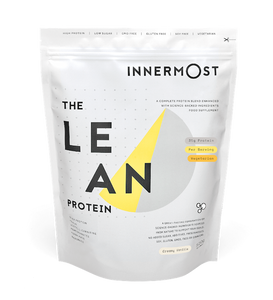
- The Lean Protein - supports daily protein intake and healthy body composition goals.
Both combine trusted certification with premium quality and great taste. Explore Innermost’s halal-certified protein powders to find the option that best fits your goals.
References
- Mirzakulova, A., Sarsembaeva, T., Suleimenova, Z., Kowalski, Ł., Gajdzik, B., Wolniak, R., Bembenek, M. (2025). Whey: Composition, processing, application, and prospects in functional and nutritional beverages: A review. Foods. 14(18). Click here.
- Mestawet, A., France, T., Mulcahy, P., O’Mahony, J. (2024). Microfiltration retentate co-product from whey protein isolate production: Composition, processing, applications and potential for value addition. Trends Food Sci Technol. 153. Click here.
- IFANCA Pakistan. (2022). What is the source of rennet? General Halal. Click here.
- Hassan, F., Hanif, A. (2017). Halal issues in processed food: Misuse of the Halal logo. J Emerg Econ Islam Res. 5(3). Click here.
- Halal Certification Services. (2026). Halal certification requirements. Click here.