







icon-account icon-glass

Popular Products

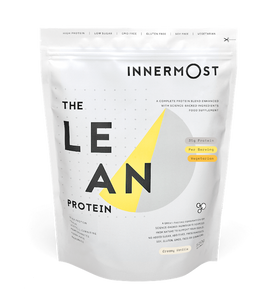
The Lean Protein
Whey protein powder for weight-loss.

Innermost Recommends: October 2020

30th October 2020

30th October 2020

By Innermost

October marks Black History Month. For that reason, we’ve dedicated this month’s recommendations to ways that we can learn more about black stories and achievements through the things we’ve been reading and watching, and with books, TV shows and more, we've found some amazing things to share with the Innermost community. So without further ado here’s what we got up to in October.

Reading

Natives: Race and Class in the Ruins of Empire by Akala
“Covering everything from the police, education and identity to politics, sexual objectification and the far right, Akala speaks directly to that British squeamishness we have when it comes to confronting issues of race and class. It's well worth a read.” - Catherine

I Know Why The Caged Bird Sings by Maya Angelou
“The subject - a black woman brought up in the Deep South surrounded by bigotry and poverty - touches themes that may be familiar to many but it’s the way the material has been written; thoughtful, measured and often amusing, communicated through an engaging style of writing, which captures the imagination and leaves a much deeper understanding.” - Allison


Little Leaders: Bold Women in Black by Vashti Harrison
“I bought these Little Leader books for my 4 year old niece. They feature trailblazing women from history whose inspiring stories don't often get told in history classes. They're bold, they're bright and they're different. Just like my niece!" - Shiv

The Color Purple by Alice Walker
“This is a very heavy read, with hard hitting topics that may leave you feeling uncomfortable. However, it’s also about strong badass women, who stand up for themselves through the hard times they are put through.” ­- Caitlin

Watching

13th on Netflix
“This documentary is up there in terms of something that's thought-provoking and relevant, now more than ever. An urgent and emotionally devastating exploration of racial inequality in the USA and the corruption of its justice system. It turns everything you think you know about crime and punishment on it's head.” - Shiv 


Hidden Figures
“An incredible true story you don't hear about in history classes. It's about a group of amazing black women in America and the obstacles they had to overcome not only working as women at NASA, playing critical roles behind the scenes in the early successes of NASA's space missions in the 1960s, but, also segregation as they fought for equality. Truly inspiring." - Caitlin

Selma on Netflix
“A gripping historical drama outlining the events surrounding the historic voting rights march taken by Martin Luther King Jr and his followers from Selma to Montgomery in the face of violent opposition." - Allison

Doing

Barre classes
“As someone who used to be a dancer, I often find myself missing the routine and familiarity of doing classes three or four times a week. However, I’ve recently tried to get back into the swing of things with a mixture of barre and dance-inspired workout classes. Not only are they great for you physically, but they’re also just really good fun. Most gyms provide some sort of class like this these days, but if yours doesn’t just search on YouTube.” – Robyn

Stretching and meditation
“I’ve been making an active effort to spend time stretching morning and evening to help get my body in gear and to help wind down at the end of the day. A great way to clear an anxious mind. Madfit has some great videos to follow from home, and Mimi Bouchard has an excellent library of mindfulness/meditation techniques to choose from.” – Grace

Bullet journaling
“I've recently become obsessed with bullet journaling because I feel like it helps with my productivity SO much, while also giving me a bit of a creative outlet. It makes me feel so put together and artistic at the same time.” - Allison


View this post on Instagram

thanks to @grace.journals for tagging me in this stunning spread! 😍 // Use the hashtag #bulletjournalss for a chance of being featured. Use the code BULLET10 for 10% off at @thewashitapeshop, @notebook_therapy, and @kawaiipenshop! (they all provide worldwide shipping!). Remember to shop around! 🛒🤍 • • • • • • • #bulletjournalss #bujo #bulletjournal #bulletjournals #study #studyblr #studygram #studyspiration #motivation #stationery #planner #pens #washitape #bulletjournals #plan #studying #bujoweeklyspread #journals #plannerjunkie #productivity #notes #studyaddict #stationeryaddict #journal #studyspo #studyinspo #journal #bujoideas #bulletjournaljunkies

A post shared by bullet journal inspiration.📖✏️ (@bullet.journals) on


That's all for October. But if you can't wait until November and want to see what we got up to last month in September, check it out here. 
Need Expert Advice?

Other Insights

What Happened To My Training Over Summer (Honestly)
I did not train well this summer. A holiday to spend time with my family, a run of work trips, a couple of injuries I was trying to cope with (left shoulder and right forearm for those who are interested). If you'd asked me in June how consistent I'd be over the summer, I'd have said very. I was wrong. Most people quietly assume the founder of a wellness brand has this figured out. The truth is I run a brand, I try to have a life outside it, and summer is the season where routine goes to die for almost everyone I know. I don't think that's a personal failing. I think it's just what a normal year looks like. What I want to talk about is what actually happens to your body when this happens, because the research here is more reassuring than you might expect. What detraining research actually shows There's a real body of science on this. Strength and cardiovascular fitness don't decline at the same rate, and they don't decline anywhere near as fast as people fear. Cardiovascular fitness is the first thing to soften. Your VO2 max starts drifting down within a couple of weeks of stopping structured training, because your heart and blood vessels adapt to demand quickly in both directions. Strength is a different story. Studies that track people through a few weeks off training consistently find that measurable strength loss is small, often barely noticeable, for the first three to four weeks. The muscle itself takes even longer to shrink in any meaningful way. Several studies looking specifically at detraining periods found that visible loss of muscle protein and structure often doesn't show up until somewhere between five and eight months without any training at all. A summer of patchy sessions is nowhere near that. The reassuring partThe part I find genuinely reassuring is what's called muscle memory, and it's not just a phrase people use to feel better about a break. When you train, your muscle cells add nuclei, essentially more control centres for building protein. Research shows those nuclei stick around for months after you stop training, well past the point where the muscle itself has started to shrink. When you come back, you're not starting from zero. You're reactivating machinery that never actually left. That's a large part of why people who return to training after a long break tend to regain lost strength and size far faster than it took to build in the first place, often within four to eight weeks depending on how long the layoff was. Some of you might remember this happening post-Covid. So if you had a summer like mine, the honest scientific answer is that you probably lost less than it feels like, and you'll get it back faster than you think. What I'm actually doing this month Nothing dramatic. I'm not doing a reset week or a punishing comeback programme. I'm just going back to five structured sessions a week, prioritising the compound lifts I know well, and being honest that the first couple of sessions will feel harder than they did in June.  Don’t forget your proteinThe other thing I'm paying more attention to is protein, simply because it's the one lever that makes the rebuilding phase more efficient. Adequate protein intake supports the muscle protein synthesis that's doing the actual work of restoring what softened over summer. I've been leaning on The Health Protein for this. It's plant-based, built around pea and brown rice protein for a full amino acid profile, with glutamine in there to support recovery. If you'd rather stick with a whey based option, that's a completely reasonable choice too, and The Strong Protein remains built for exactly that. If you had a messy summer, you're not behind. You're just at the start of a normal, unremarkable return to routine, and the research says that's a far shorter road back than most people assume. Forward this to anyonre you know who is dreading their first session back. I'd genuinely like to know what generally works for you post-summer. Structured plan, just showing up once, anything. Reply and tell me. Even if it’s a one-liner, I’d love to hear from you. Read more
The Glow Blend: A Confession
I need to tell you something I've never said publicly, and it's not flattering. When our product team first brought me a plan for a collagen supplement, my honest reaction was no. Not "let me think about it." A flat no. And if I'm being fully honest about why, it wasn't the science. It was that collagen felt, in my head, like a beauty category. Something for someone else's brand. Not ours. I built Innermost around performance and evidence. Protein, creatine, mushrooms, electrolytes. Things I could point to a study for and feel comfortable talking about at a dinner table full of people who workout regularly. Collagen sat in a different mental folder. Skincare aisle. Jars with gold lids and brand sponsorship by one of the Kardashians. I'd absorbed a version of what "beauty" meant without ever examining it. The argument in the room So we had the argument internally. A proper one. A few people on the team pushed back hard, and rightly so. One of them put it to me plainly: we started Innermost to follow the evidence wherever it goes, not to follow it everywhere except the places that feel awkward. That line stuck with me. Here's what changed my mind, and it wasn't a feeling. It was the research. What the evidence actually says Collagen is the most abundant protein in your body. It's structural, it's in your skin, your joints, your gut lining, and production declines steadily from your mid-twenties onward. That's not a marketing claim, that's basic physiology. The question was never whether collagen matters. It was whether supplementing it actually does anything, and that's where most of the category falls apart. Most collagen products on the market use whole collagen molecules, which are too large to be absorbed effectively when you drink them. The ones that do use hydrolysed peptides, which are broken down into smaller chains your body can actually take up, still run into a second problem: dose. A lot of labels list collagen content that sits well below the 2 to 10 grams used in the trials that show measurable effects on skin elasticity and hydration. You're paying for a placebo with good branding. The ingredient most brands leave out The third problem is the one that convinced me completely. Vitamin C isn't a nice-to-have alongside collagen. It's a required co-factor for your body to actually synthesise collagen at the cellular level. Without adequate vitamin C, the enzymes responsible for stabilising collagen structure don't function properly. You can take a perfectly dosed hydrolysed peptide and still get a fraction of the benefit if the product doesn't include enough vitamin C alongside it. Most don't. They sell you the raw material and leave out the one thing your body needs to use it. Once I saw the category clearly, laid out like that, the decision stopped being about how I felt and started being about what the evidence supported. That's the whole operating principle of Innermost. I couldn't defend saying no to a legitimate, well-evidenced product category. What we built So we built The Glow Blend properly. Hydrolysed collagen peptides at a dose that reflects the research, alongside vitamin C, hyaluronic acid for hydration, biotin and folic acid for hair and nail health. Nothing in it that doesn't earn its place. What surprised me after launch The part I didn't expect was the response once we launched it. A good number of the messages came from women, as you'd expect, and they were generous and specific about what they'd noticed. But a surprising number came from men. Customers writing in to say they'd felt exactly what I'd felt, that awkward little flinch at "collagen," and had quietly bought it anyway because the ingredient breakdown made sense to them. That response told me more about why this category needed an honest voice in it than any research paper did. I'm not going to pretend I have this fully figured out. I still catch myself, occasionally, hesitating slightly before I mention it in a room. Old habits sit deeper than good evidence sometimes. But I take it, and increasingly a lot of men I respect take it too, quietly, without needing to make a thing of it. If this sounds familiar If any part of this resonated, and you've felt that same small resistance to a category you assumed wasn't for you, hit reply and tell me. I'd genuinely like to know I'm not the only one who had to get over it. And if you know someone, a friend, a partner, who could use this exact reasoning rather than a tesimonial, forward it on. It might do more good coming from someone else's honesty. Read more