










The word ‘creatine’ might conjure up images of gym bros, but don’t fall into the trap of thinking it’s just for men. Creatine is one of the most widely researched supplements in the nutrition game, and one which can offer a host of benefits to many people.
Let’s dig into the topic of creatine for women – how it works, proven benefits, how it differs for women vs men, and how to start working it into your routine.
What is creatine?
To put it simply, creatine is a mineral our bodies naturally produce which helps to create Adenosine Triphosphate (ATP) – a very important energy-carrying molecule.
It has been extensively researched for its ability to help increase performance in high intensity exercise1, potentially leading to greater training results.
You can find out more in our complete guide to creatine.
Creatine for women: why interest is growing
There are a lot of misconceptions around creatine – maybe you’ve heard it’s for ‘bulking’ or that it causes undesirable water retention. Either way, there have definitely been some ideas floating around which could understandably have put people off working it into their nutrition regime.
In reality, creatine can support performance, strength and recovery without changing your body composition in the way some might assume. It can be a great tool for not only strength training but also HIIT and functional fitness, as well as overall health and even ageing!1
With all this in mind and more research coming out all the time, it’s no surprise that interest is growing amongst women when it comes to making use of creatine.
Creatine for women vs men: is there a difference?
Creatine works in the same biological way for both men and women, but there are some differences in terms of the results or impacts you may see.
In general, women tend to have significantly lower baseline creatine stores than men2, meaning creatine supplementation can be potentially even more beneficial for them. That being said, nutritional requirements and impacts can vary hugely based on each person’s individual hormone concentration, especially during different phases of the menstrual cycle3 – so results can differ.
The benefits of creatine for women
Improved strength and performance
Creatine helps regenerate and produce ATP4, which allows for better performance in short bursts of intense activity. As such, it can be a very valuable tool for supporting progressive overload in strength training, allowing you to lift heavier and see greater results from your workouts.
Support for lean muscle and body composition
Combing creatine supplementation with resistance training is a widely recognised method for increasing lean muscle mass5, which can make a significant difference to your overall body composition.
One of the common misconceptions of creatine we spoke about earlier is water retention and subsequent weight gain. Whilst the water retention point isn’t untrue, the water is stored inside the muscle cells rather than under the skin6, which actually makes your muscles appear larger and more defined.
You could typically see an initial weight ‘gain’ when starting with creatine due to this, but this usually stabilises after a few weeks.
Cognitive and mental benefits
Aside from the huge physical benefits, creatine can actually offer a helping hand when it comes to cognition and mood, too.
Some research has shown creatine has indicated positive effects by restoring brain energy levels, and it may even be more effective for females2. Other studies have even found evidence that creatine use can improve short term memory, reasoning and intelligence7.
Hormonal and life stage support
The evidence is still emerging on this topic, but there are a host of potential creatine benefits for women when it comes to hormonal and life stage support.
For example, it is suggested that post-menopausal females can see benefits in terms of skeletal muscle size and function when supplementing creatine, as well as favourable effects on bones themselves.
With hormone-related changes influencing the way creatine is produced in the body, supplementation can be particularly important during your period, as well as during and after pregnancy or menopause2.
Side effects of creatine for women
When adding any new supplement into your regime, considering any possible side effects is a common part of the process. Thankfully, creatine side effects for women are very minimal!
We’ve discussed water retention already, but this can sometimes lead to a 1-2kg initial weight gain which will usually stabilise in a few weeks – and your extra-hydrated muscles can actually perform even better as a result.
The other commonly discussed side effect is gastrointestinal distress (stomach cramps, nausea etc). This is typically only an issue if you’re taking very high doses of more than 10g at any one time, so stick to the product’s recommended servings and you should be in the clear.
Overall, creatine is a safe supplement to take when used within regular dosing guidelines1.
How to start using creatine
As with any new supplement you’re interested in taking advantage of, the best way to start is by making it as simple as possible to fit into your regular routine.
A typical daily dose of creatine sits between 3-5g, so look for a product which can give you that in an easy-to-use form. For example, Innermost’s The Power Booster contains 60x 5g servings – the perfect amount for a full eight week cycle if consuming daily. Just mix a serving with water or juice, or even throw it into a protein shake and you’re all set for the day.
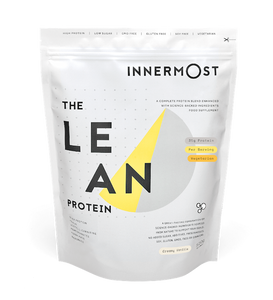
That’s not the only way to have creatine, though. Innermost’s The Strong Protein is a super powerful protein blend with 34g protein and 3g of creatine in every serving – giving you everything you need for a properly fuelled, powerful workout.
So, it’s a very effective supplement and it’s very easy to take. What’s not to love?
Creatine for women – easy and effective
Creatine is well-researched, easy to use and it can be super effective. If you’re interested in improving your performance, recovery and strength, it’s almost a no-brainer.
Make it a part of your daily wellness routine, stay consistent with it and see the results - we think you’ll like them.
References
- Kreider RB, Kalman DS, Antonio J, Ziegenfuss TN, Wildman R, Collins R, Candow DG, Kleiner SM, Almada AL, Lopez HL. International Society of Sports Nutrition position stand: safety and efficacy of creatine supplementation in exercise, sport, and medicine. J Int Soc Sports Nutr. 2017 Jun 13;14:18. doi: 10.1186/s12970-017-0173-z. PMID: 28615996; PMCID: PMC5469049. Click here.
- Smith-Ryan AE, Cabre HE, Eckerson JM, Candow DG. Creatine Supplementation in Women's Health: A Lifespan Perspective. Nutrients. 2021 Mar 8;13(3):877. doi: 10.3390/nu13030877. PMID: 33800439; PMCID: PMC7998865. Click here.
- Wohlgemuth KJ, Arieta LR, Brewer GJ, Hoselton AL, Gould LM, Smith-Ryan AE. Sex differences and considerations for female specific nutritional strategies: a narrative review. J Int Soc Sports Nutr. 2021 Apr 1;18(1):27. doi: 10.1186/s12970-021-00422-8. PMID: 33794937; PMCID: PMC8015182. Click here.
- Saito S, Cao DY, Okuno A, Li X, Peng Z, Kelel M, Tsuji NM. Creatine supplementation enhances immunological function of neutrophils by increasing cellular adenosine triphosphate. Biosci Microbiota Food Health. 2022;41(4):185-194. doi: 10.12938/bmfh.2022-018. Epub 2022 Jun 17. PMID: 36258765; PMCID: PMC9533032. Click here.
- Mohammad Ali Izadi, Farhad Daryanoosh, The effect of creatine supplementation on muscle protein synthesis in athletes: A review. Nutrition Clinique et Métabolisme,Volume 39, Issue 4, 2025, Pages 273-281, ISSN 0985-0562. Click here.
- Powers ME, Arnold BL, Weltman AL, Perrin DH, Mistry D, Kahler DM, Kraemer W, Volek J. Creatine Supplementation Increases Total Body Water Without Altering Fluid Distribution. J Athl Train. 2003 Mar;38(1):44-50. PMID: 12937471; PMCID: PMC155510. Click here.
- Avgerinos KI, Spyrou N, Bougioukas KI, Kapogiannis D. Effects of creatine supplementation on cognitive function of healthy individuals: A systematic review of randomized controlled trials. Exp Gerontol. 2018 Jul 15;108:166-173. doi: 10.1016/j.exger.2018.04.013. Epub 2018 Apr 25. PMID: 29704637; PMCID: PMC6093191. Click here.