








icon-account icon-glass

Popular Products

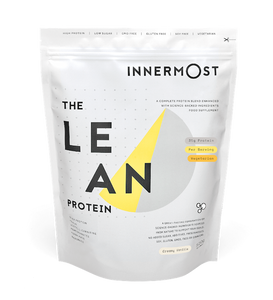
The Lean Protein
Whey protein powder for weight-loss.
The Energy Booster
Pre/intra-workout powder with BCAAs.

The Importance of Habit with La Pochette

19th May 2022

19th May 2022

With intelligent design and environmental consciousness as a priority, La Pochette creates gym and travel accessories designed to be by your side no matter where your plans happen to be taking you - rather than hidden away in a gym locker for days. Read on to join La Pochette in exploring the importance of creating regular, manageable habits to assist busy lifestyles, and how to do just that.

Creatures of Habit

As humans, we’re creatures of habit.  Whether we realise it or not, we are what we repeatedly do, and it’s this we’re told that influences our ability to achieve life’s goals. 

Conventional wisdom teaches us to ‘reach for the stars’ and ‘focus on the end goal’ to achieve results.  This is all well and good, but how do we actually get there?  Whilst our aim may be to possess the abs of Zendaya for example, we need to know how to get there.

In his bestseller ‘Atomic Habits’, James Clear acknowledges the impact habits have on our achievements in life.  As creatures of habit, he states we can take ownership and structure our habits to enable us to reach our goals.  Whilst this may sound like a lot of work, the action or habit which helps us arrive at our goal can be small.  Research has proven it’s more likely we’ll stick to something if it’s ‘doable’, or a nudge, rather than a gargantuan chore.  After all, changes that seem small and insignificant compound to form consequential results over time.

Health and Wellbeing 

Dr Becky Gillaspy, a US based science and nutrition specialist, has taken this a step further.  Far from thinking about habits as predominantly bad or unyielding (Ed Sheeran!), Gillaspy talks about making habits work for you, particularly when it comes to health and wellbeing.  This is where brands like Innermost, and luxury lifestyle accessories brand La Pochette can help, providing solutions that make creating new and healthy habits effortless.

Referencing Clear’s book, Gillaspy cites the example of a test group who wanted to increase their exercise levels.  Whilst the entire group were given material on the benefits of exercise, half were also asked to commit to planning when and where they were going to exercise.  In other words, they were asked to come up with a plan, or ‘how’ to achieve their end result.  In doing so, this group realised double the exercise time of the group who weren’t asked about their intent.  This is known as ‘Implementation Intent’, and improves the likelihood of following through on an intention or idea.  

Making It Stick

You might be thinking, this is great in theory, but how do we make it stick?  As Clear states, we need to ensure we make it easy by removing any potential barriers, and giving ourselves mental cues. 

One way of doing this would be to pack your gym kit in your La Pochette Sweat Bag, or La Pochette Shoe Carry the night before a workout, and to leave that kit by the door ready to go.  Practical, water resistant, antibacterial and machine washable, both provide clever functionality without compromising on style. 

Think about booking into a class ahead of time, and paying for it, making it far more likely you’ll attend.  Roping a friend in too means you’re more likely to commit and make it happen. 

Keep your swim kit with you in the waterproof La Pochette Wet Bag, and squeeze in a swim session during your busy day knowing so are always ready to work out, no excuses.

Behavioural change comes about when habits are not only easy, but also attractive and gratifying.  This gave rise to Vogue labelling the La Pochette brand as their ‘Gym Bag Hero’, because as well as being chic, the collection utilises sustainable materials.  The products themselves also enable sustainable practices, replacing single use plastic bags used post-workout or swim.

Today’s hybrid living means multiple transitions throughout the day from offices to gyms, to our social lives, and with it the burden of carrying all the kit and equipment necessary to achieve that day. La Pochette provides intelligently designed, stylish, environmentally sound solutions to enable you to become a creature of good habit. 

As renowned Philosopher and Sage Confucius once said, (and who better to take life lessons from), ‘All people are the same, only their habits differ”.  Let’s grab our bags, book that abs class and go….

To hear more about the La Pochette story, and to visit the shop, go to https://lapochette.co/


References

Clear, J (2018) Atomic Habits: An Easy & Proven Way to Build Good Habits & Break Bad Ones, Penguin Publishing Group, USA

Dr Becky Gillaspy (2019) 2 Habit Hacks You Can Use to Exercise More | How To Stick To Habits

Available from: https://www.youtube.com/watch?v=ed-8URqxyH0&t=154s (last accessed 16th May 2022) 

 

Need Expert Advice?

Other Insights

Why Natural Protein Supplementation Matters
Walk into any health shop, or scroll any supplement site, and you often find that protein powders start to blur into one. Almost all of them make the same promises on the front: ‘high in protein’, ‘no added sugar’, ‘no additional additives’. The wording is so similar that telling a genuinely good product from a synthetically produced product is harder than it should be. Read past the figure on the front however and you'll usually find a protein that contains artificial sweeteners, synthetic flavourings and colours, and even fillers or bulking agents just to name a few. The reason they tend to do this is that costs of production are much cheaper as a result of the lower quality ingredients. A naturally formulated protein supplement works the other way around. The protein comes from a quality source, the flavour and sweetness come from ingredients you'd recognise rather than ones built in a lab, and anything that doesn't need to be there is left out. This piece is about that difference: what natural really means for a protein supplement, why it matters, and how to spot it for yourself. What "natural" actually means in protein supplements "Natural" is one of the most used and least understood words in wellness, printed on plenty of labels with very little behind it. There's no strict, regulated definition for it, so a brand can reach for the word fairly freely. This is why it pays to know what you're actually looking for. Used honestly, natural points to ingredients that come from recognisable sources and are processed as lightly as the format allows. For protein, that usually means a base derived from food such as: Whey Pea Hemp Brown rice Other plant-based proteins Just as telling is what gets left out, and how openly the packaging accounts for what stays in. A natural protein supplement has little to hide, so the label tends to be short and the reasoning easy to follow. The real test is whether the formula makes sense as a whole. Can you understand what's in it? Does each ingredient have a clear purpose? And does the brand explain the benefit plainly, rather than hiding behind vague wellness language? Why ingredient quality matters in protein supplements When people compare protein powders, the first thing they often look at is the amount of protein per serving. It matters, but this number doesn’t tell you everything about a supplement’s quality. A synthetically formulated powder may contain just as much protein per serving as a natural alternative, but it may also include more artificial additives that are bad for your health.  This is especially important as supplementation is usually taken regularly as part of a daily routine. If something becomes part of your breakfast, post-workout routine or afternoon shake, the quality of the overall formula may influence how well it fits into your daily routine. Natural protein powders are often separated by a few key criteria: Ingredient sourcing: Whey is highly bioavailable and naturally rich in essential amino acids that support muscle repair. A good plant-based blend can also be effective when it is built to provide a strong amino acid profile. What surrounds the protein: Sweeteners, thickeners and flavourings affect taste, texture and how a shake feels once you have taken it. Some formulas rely heavily on artificial sweeteners, gums or thickeners, which may contribute to bloating or digestive discomfort. Digestibility: A protein you absorb and tolerate comfortably is more useful than a bigger number on the label that does not sit well with your body. Purpose: A formula built around a specific goal, such as strength, performance, energy or satiety, is more useful than a generic powder with no clear reason behind the ingredients. The benefits of natural protein supplementation The real value of natural supplementation becomes clearer when you look beyond protein content alone. Below are some of the key benefits of choosing natural protein supplements over more artificial or heavily processed alternatives. Supporting strength and lean muscle Building strength and lean muscle is one of the main reasons people turn to natural protein supplements.  A good one supports muscle repair after training and helps maintain muscle over the longer term. That's especially useful if you train regularly and eat well but can't always put together a high-protein meal straight after a session. Helping with recovery after exercise After a workout, your body needs nutrients to repair and adapt, and protein is central to that process, particularly if you train several times a week. A natural protein supplement offers a convenient way to support recovery without making nutrition feel complicated, whether mixed into a shake, smoothie or simple post-workout snack. Supporting satiety and body composition goals Protein keeps you feeling fuller for longer, which makes balanced eating easier to stick to.  For anyone working towards fat loss, lean muscle or general body composition, natural protein supplementation helps steady your daily nutrition alongside whole foods, movement and rest, without relying on the added sugar that some cheaper formulas contain. Making daily nutrition easier Even with good intentions, it is not always easy to get enough protein through meals alone. Busy days, training schedules and travel can all make consistency harder.  A natural protein gives you a simple, repeatable way to keep your intake up on the days that get away from you, using ingredients you can actually recognise. Natural supplementation doesn't have to taste bland There's a common assumption that natural supplements have to taste bland, chalky or unpleasant. Plenty of people have met exactly that: a protein that sounds healthy on paper but turns out too earthy, too sweet or too gritty to enjoy. It gets used for a few days, then pushed to the back of the cupboard. The problem there is usually the formulation, not the missing additives. Chalky, overly sweet shakes come from corners being cut. Getting flavour and texture right without falling back on heavy sweeteners is genuinely hard, which is a good sign a brand has done the work. Taste matters for a practical reason as much as an enjoyable one. A protein you look forward to is one you'll keep using, and consistency is what actually delivers results. The best-formulated supplement on the shelf does nothing while it sits unopened. The innermost approach to natural protein Everything above is the standard we at Innermost hold ourselves to. Our proteins are built on clean and naturally-derived ingredients, formulated with the backing of nutritional science rather than guesswork. We leave out the fillers, bulking agents and needless extras that have no business being in a quality protein, and we're open about what goes in and why. We also happen to think clean and natural should taste good, because a protein you enjoy is a protein you'll actually use.  Explore our protein powders to find the formula that best fits your goals, routine and lifestyle. References Morton, W., Murphy, T., et al (2018). A systematic review, meta-analysis and meta-regression of the effect of protein supplementation on resistance training-induced gains in muscle mass and strength in healthy adults. Br J Sports Med. 52(6). Click here. Jäger, R., Kerksick, C., et al (2017). International Society of Sports Nutrition Position Stand: protein and exercise. J Int Soc Sports Nutr. Click here. Seijo, M., Naclerio, F. (2019). Whey Protein Supplementation and Muscle Mass: Current Perspectives. Click here. Read more
The Protein Mistake That's Holding Back Your Results
I've written at length about creatine. I've written about collagen, electrolytes, the GLP-1 moment, even the science of sleep. But I've never written a personal email about protein. That's a strange omission for someone who built a brand that makes some pretty ground-breaking protein powders. So let me explain why, and then actually say the thing I've been avoiding. Protein is the most foundational supplement in the Innermost range. It's also the hardest subject for me to write about personally, because there's nothing surprising about it. Creatine had a story. Collagen had a story. Protein is well... protein. Everyone knows you should eat more of it. The mechanism is not a secret. Muscle protein synthesis, leucine threshold, net nitrogen balance. If you've been in the fitness space for more than a couple of years, you've read this before. And I think that's the problem. The familiarity makes people stop paying attention. Here's what I actually think about protein, after a decade of working in this space. Most people in their thirties and forties are under-consuming protein and don't know it. Not by a small amount. The gap between what most people eat and what the research supports for muscle maintenance and body composition outcomes is significant. Studies looking at optimal intake for adults prioritising body composition consistently point to between 1.6 and 2.2 grams per kilogram of bodyweight per day. Most people are eating somewhere between 0.8 and 1.2. The difference is not cosmetic. Adequate protein intake directly affects your ability to preserve muscle tissue during a caloric deficit. It supports recovery between sessions. It has a measurable effect on satiety, which means it influences total caloric intake downstream, not just at the point you consume it. There's a subtler point too, and this is the one I've come to think matters most: protein is the nutrient where consistency compounds most directly. The benefits of creatine saturate over time in a relatively predictable way. Collagen has a timeline that research measures in months. But protein's effect on body composition is essentially continuous. Every day you hit your target, you preserve something. Every day you don't, you lose a small amount of ground. Over a summer, that adds up. This is what I've observed personally, and it's backed by the research on muscle protein turnover. The people who maintain their body composition through summer are not, in my experience, the people who train harder during that period. Most of them train less. Their routines are disrupted. They're travelling. Their eating is less structured. The people who come back in September looking broadly the same as they left in June are the ones who kept their protein intake consistent. That's it. That's the variable. Why I take The Lean Protein I’ve been taking The Lean Protein the past few months for a straightforward reason: the protein-to-calorie ratio. Much like our other protein blends, each serving delivers over 30 grams of protein. The calorie count is low relative to that protein yield. When my training is consistent and my eating is structured, I don't think about this very much. But in the periods when those things are less reliable, that ratio becomes the thing that holds the rest together. The formula also includes acetyl-L-carnitine, inulin, pomegranate extract, and yerba mate. These aren't afterthoughts. Acetyl-L-carnitine has a research base in fat metabolism. Inulin supports satiety and gut function. The pomegranate extract is included for its antioxidant contribution to recovery. This means that the formula does more work per serving than a standard whey and just what I need going into summer. The thing the industry gets wrong about protein Most protein marketing leads with taste and price per gram. Both matter. But neither tells you whether the formula will support body composition outcomes over time. The two questions I'd ask before buying any protein powder are: what is the actual protein-to-calorie ratio, and what is the leucine content per serving.  Leucine is the branched-chain amino acid most directly linked to triggering muscle protein synthesis, and there is a threshold dose, roughly 2.5 to 3 grams per serving, below which the anabolic response is blunted. Many protein powders do not disclose this. They just list total protein and move on. The Lean Protein does not have this problem. The formula is transparent. The dose is evidence-based. One thing I'd ask you to consider: if you've never actually checked whether you're hitting your protein targets, try tracking it for three days. Most people find the gap is larger than they expected. If you're not sure which Innermost product fits your specific goal, the quiz on our site is a good place to start. Find the right protein for your goal   Read more