icon-account icon-glass

Popular Products

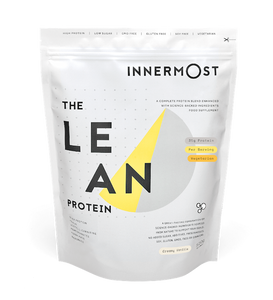
The Lean Protein
Whey protein powder for weight-loss.
The Energy Booster
Pre/intra-workout powder with BCAAs.

Ben Hall

Ben is an unashamed nerd of all things training and has over a decade of coaching experience. Passionate about bodybuilding and powerlifting, he's always researching new training methodologies and wanting to understand the science behind things, making him a go to source for gym knowledge. Over the years, he's achieved significant physical and mental transformations for both his clients and himself and loves nothing more than seeing the positive change fitness can bring to someone's life.

How to Build Lean Muscle – Everything You’ll Ever Need to Know
Building lean muscle is one of the most common goals people have when they get into fitness. It’s also one of the most misunderstood! For example, did you know that ‘toning up’ which is something it seems like nearly everyone wants to do at some point, is actually simply a combination of fat loss and lean muscle growth?  Gaining lean muscle mass can mean many things to many different people.  For some, it means adding shape without feeling bulky. For others, it means getting stronger, improving body composition, looking more athletic, or simply feeling better in their own skin. However you define it, the principles remain the same: you need to train with purpose, eat enough of the right nutrients, recover properly and give your body enough time to adapt. That all sounds simple enough, doesn’t it? In some respects, it is. In practice, it can feel a lot more confusing. For one, there are so many questions to be answered: Should you lift heavy or chase higher reps? Should you bulk, cut or maintain? How much protein do you really need? And how long does it take to build lean muscle in a way you can actually see? I’ve been passionate about fitness for more than 12 years now and I have been a qualified coach for nearly a decade. I’ve trained as a powerlifter, a bodybuilder, even a runner, and something I’ve noticed crosses all these disciplines is how easy it is to overcomplicate things. Muscle growth especially! It’s not always about doing more, either; the people who make the best progress are rarely the ones chasing the most extreme routine. They are usually the ones who can repeat the basics consistently: train hard, eat well, recover properly and adjust the plan to suit their own body. This guide explains how to build lean muscle in a practical, evidence-informed way. I’ll draw from my own extensive experience and cover training, nutrition, recovery, and even mindset, which is so often overlooked yet is incredibly important. I’m going to condense more than a decade of trial, plenty of error, and maybe even a few moments of true success to help you get better results than ever before. So, whether you’re completely new and just starting on your fitness journey, a seasoned gym goer looking for another point of view or you’ve hit a plateau and can’t break through it, stick with me. Because one thing you’ll find nowadays is that the fitness world is completely full of misinformation. Some of it is just plain wrong, some even outright dangerous. You won’t find any of that here. Just proven, evidence-backed approaches you can adapt for yourself. Let’s get to it. Key takeaways Before we get into it, here are some of the key takeaways around building lean muscle: Building lean muscle means gaining muscle while keeping fat gain to a minimum. The goal is controlled, sustainable progress rather than simply gaining weight quickly. Resistance training is the main driver of muscle growth. To keep progressing, your training should include progressive overload, enough volume, good technique and the right level of intensity. Nutrition provides the raw materials for muscle repair and growth. Most people need enough calories, consistent protein intake, carbohydrates to support training and healthy fats for overall wellbeing. Recovery is where muscle growth actually happens. Sleep, rest days, deloads and stress management all play an important role in helping your body adapt. Your starting point matters. Someone who struggles to gain weight may need a different training and nutrition approach from someone who gains weight easily. Supplements can support the process, but they do not replace the basics. Protein powder, creatine, caffeine and multivitamins are most useful when training, nutrition and recovery are already in place. Building lean muscle takes time. You may feel stronger within a few weeks, but visible changes usually become clearer over 8–12 weeks, with more meaningful progress over several months. The best plan is the one you can follow consistently. Muscle growth is built through repeated habits, not short bursts of perfection. What does “lean muscle” actually mean? Technically, all muscle is lean tissue. When people talk about building “lean muscle”, they usually mean gaining muscle while keeping fat gain to a minimum. That distinction is more important than you might realise because building muscle requires energy. It’s a bodily process that requires fuel as well as the right building blocks. A factory can’t produce things without power or raw materials, and your body is the same. For most people, gaining muscle is easier when you’re eating enough food to support training performance, recovery and growth. But that doesn’t mean you need to force-feed yourself or chase scale weight at any cost. A better goal is to build muscle in a controlled, sustainable way. For some, that might mean gaining weight slowly while keeping body fat in check. For others, it might mean improving muscle tone and strength while maintaining a similar body weight. Beginners, or people returning after time away from training, may even be able to build muscle and lose fat at the same time. The first thing you’ll need to do is understand where you’re starting from. A lean, naturally active person who struggles to gain weight will need a different strategy from someone whose main goal is to build muscle while reducing body fat. The principles are similar, but the application changes. The foundations of building lean muscle There is no magic workout, diet plan or supplement that builds lean muscle on its own. Muscle growth is the result of a combination of:  Training stimulus that gives your body a reason to adapt Nutrition to provide the raw materials we spoke about earlier Recovery creates the environment where adaptation can happen Consistency ties it all together. That last point matters more than most people realise. In fact, I can’t stress enough just how crucial it is. You can run the best training programme in the world, but if you only follow it for three weeks before changing everything, you’ll never know whether it worked. Muscle growth, especially quality muscle with minimal fat gain, is built over months and years, not a few intense sessions. How to train to build lean muscle Resistance training is the main driver of muscle growth because the human body is highly adaptive. Moving a lot of weight around regularly tells your body to make more of what’s powering that movement, muscle!  Nutrition and recovery support the process, but lifting provides the signal. At this point, you’ll also want to take the time to understand the difference between getting stronger and getting bigger.  Strength is primarily a nervous response and, though a bigger muscle is a potentially stronger one, the main adaptations that contribute to strength happen in the nervous system. Have you ever lifted a weight that really challenged you, or watched someone go for a heavy set, and noticed your muscles physically shaking? That’s your nervous system not responding quickly enough. Over time, as we practice and get used to heavier loads, those muscle shakes go away at lower weights because the nervous system is adapting to what’s being asked of it. So, what about muscle growth, or hypertrophy, as you’ll often hear it referred to? Well, strength training will definitely gain you some muscle too, and often that muscle will be quite lean too, but pure hypertrophy requires a slightly different approach. To break that down, we first need to understand what muscle growth is a response to. When we lift weights, we temporarily damage our muscles by causing microscopic tears to the fibres. As we recover, provided we provide the right nutrients, our bodies repair that damage and also make new muscle tissue. Doing this consistently over time in a continuous cycle of breaking down and rebuilding your muscles is what leads to net growth and yes, even a bit of strength gain too! Strength and hypertrophy training do crossover; they just have different priorities. The trick with hypertrophy is to find the sweet spot. Not stimulating your muscles enough (either through too little volume or not enough resistance) simply won’t yield results, whereas annihilating your body on a daily basis will lead to overtraining, injury and possibly even less muscle mass than you started with! The aim is not simply to exercise or burn calories. The aim is to create enough tension and progression for your muscles to adapt, whilst providing the right environment for them to recover effectively. Always remember, training is simply the stimulus. The results come outside of that. Those who prioritise good nutrition and recovery are the ones who win in the long run. With that being said, here are a few core concepts and commonly asked questions around training for muscle growth specifically: Progressive overload: the principle that matters most The concept of progressive overload is genuinely quite simple; it means gradually increasing the demands placed on your muscles over time. That might mean lifting more weight, performing more reps, adding sets, improving your technique, increasing your range of motion, slowing down the eccentric phase of a lift, or training closer to failure with better control. It does not mean maxing out every session. In fact, trying to go heavier every week without managing fatigue is one of the fastest ways to stall and a sure-fire way to get yourself injured. In my experience, this is where a lot of people go wrong. They either change their workouts too often to track progress, or they turn every session into a test of willpower. Good training sits somewhere in the middle. You need enough structure to measure improvement, but enough flexibility to account for real life, energy levels and recovery. If you are not getting stronger, adding reps, improving form or increasing total work over time, your body may not have enough reason to grow. Even if it is, you won’t be growing as effectively as you could. Ultimately, you should be challenging yourself. It’s how you improve, and, in this case, that improvement comes in the form of more muscle mass. How heavy should you lift? You do not need to train exclusively in one rep range to build lean muscle; In fact, I’d strongly discourage that.  A more practical approach is to use a blend of rep ranges but to consider how much work you’re doing at any one time. In general, higher rep ranges equate to more work because, though you’re reducing the weight, you’re lifting more in total.  For example, let’s say you can deadlift 100kg for a set of 5, but you can deadlift 60kg for a set of 12. In the set of 5, you lifted a total of 500kg, whereas in the set of 12 you lifted 720kg. That’s 220kg more! That means more work and, in general, more calories burnt. We’ll explore why your body type might make you consider this in more detail a bit later on. Different rep ranges 1-3: Lower rep sets, in the 1-3 range, are perfect for compound movements like the classic squat, bench press or deadlift. This tends to be the range powerlifters spend a lot of their time in. However, don’t underestimate the potential of low rep sets when it comes to muscle growth. The key is that it needs to be challenging. 3 reps of an easy weight won’t do anything, but 3 reps of a weight you’re struggling to move by the end can be a powerful growth signal. 4-6: In my honest opinion, this is the rep range that’s the holy grail for lean muscle growth. That’s because there are 2 different types of muscle hypertrophy: myofibrillar and sarcoplasmic, sometimes referred to as functional and non-functional. The full science behind these 2 terms is a bit beyond the scope of this article, but essentially  Myofibrillar (functional) hypertrophy refers to the growth of muscle via increases in its active contractile tissue. 4-6 rep sets of compound movements like the aforementioned squat, bench and deadlift are the perfect way to stimulate this because they cause mechanical damage to the muscle that, once repaired, results in more lean muscle tissue with less fluid retention. 6-12: This is the classic ‘hypertrophy range’ and it’s so commonly used by bodybuilders that it’s a bit of a cliché at this point. There’s plenty of reason behind that because it does work. At this rep range, most people can handle weights that provide a sufficient amount of challenge, but they’re handling them for long enough that their muscles spend enough time under tension to grow. Speak to an old school bodybuilder and you’ll probably hear them mention king TUT!  That’s because muscles don’t recognise weight or reps; they only recognise the amount of tension you place them under. Increasing that tension over time (progressive overload) is really the key to any muscle growth. It should be noted that, especially towards the higher end of this rep range, sarcoplasmic hypertrophy becomes more likely. This is also known as non-functional hypertrophy because it causes an expansion in the non-contractile elements of muscle tissue, like the sarcoplasmic reticulum, which are responsible for holding more glycogen and retaining more water. These are great if you want the pumped bodybuilder appearance but less so if your goal is lean gains. See why I said 4-6 reps is such an overlooked range for training? 12+: Whilst higher rep sets do have their place, there comes a time when they begin to feel more like cardio than a resistance exercise. That’s especially true once you start approaching 15-20 reps. Sure, there’s an argument for these, especially at the end of a workout as a finisher, but when you’re less fatigued you may find more benefit to going a little heavier,  The goal is not to find one perfect rep range. The goal is to train hard, use good technique and progress over time. RPE, RiR and why they’re important If you haven’t already, chances are you’ll come across these two terms before too long. They’re both great indicators as to how intense your training is and are arguably more important than the amount of weight you’re using. RPE: Stands for Rate of Perceived Exertion and is, quite literally, how hard it feels like you’re working. RPE applies to pretty much any fitness activity, not just weightlifting.  To judge RPE, you use a scale from 1 to 10, where 1 feels like you’re hardly working at all and 10 is an all-out maximum effort. For muscle growth, you should be working at an RPE of between 7 and 9. This provides enough training stimulus in each set without causing excessive fatigue to your nervous system, meaning you can still achieve a good amount of volume consistently. RiR: This means Reps in Reserve and it’s closely related to RPE. RiR relates to the number of repetitions you have left with good form before muscle failure.  To ensure you’re training to grow, it’s best to leave about 1-3 reps in reserve during the majority of your sets. Training to complete failure every set causes excessive fatigue, especially if you’re not an experienced lifter. Getting close but not quite hitting full failure means you can recover effectively between sets and keep training. Still, on your last set there’s nothing wrong with leaving nothing in reserve! Compound lifts vs isolation exercises A strong lean muscle-building programme should include both compound and isolation exercises. Compound lifts use several joints and muscle groups at once. Squats, deadlifts, presses, rows, pull-ups and lunges are all good examples. These movements are efficient, measurable and excellent for building overall strength and muscle mass. Isolation exercises target specific muscles more directly. Curls, triceps extensions, lateral raises, hamstring curls, leg extensions and calf raises all have their place. Isolation movements are great at the end of a workout to fully fatigue a muscle group or alternatively, you could try one at the start if you wanted to work a particular muscle harder during your compounds. This is known as pre-exhaustion and is a great way to add some variety to your training! There is sometimes a tendency to treat isolation work as less important or less serious, but that misses the point. If you want balanced development, some muscles will need more direct work than they get from compound lifts alone. Side delts, calves, hamstrings, arms and rear delts are common examples. The best hypertrophy programmes combine big lifts that give you a strong foundation with accessory work that fills in the gaps. How often should you train to build lean muscle? Like with so much else in the fitness industry, the honest answer here is that it depends. Most people can build lean muscle with three to five well-structured sessions per week. That really is a sweeping generalisation though and you have to experiment to find what works best for your body and lifestyle.  Three sessions can work well for beginners, busy professionals, or people who also run, cycle, play sport or attend gym classes. Four sessions is often a sweet spot for intermediate lifters because it allows enough volume without dominating the week. Five sessions can work well for more experienced lifters, provided recovery is managed properly. Advanced trainees might even find themselves doing six or even seven sessions a week but at this point recovery becomes an essential consideration, as does the intensity level of each workout. What matters most is not the number of sessions on paper, but the quality of the work you can repeat. A three-day full-body plan can be far more effective than a five-day split that you only follow occasionally. Equally, a more advanced lifter may need additional volume and frequency to keep progressing. My honest advice here is try a few different styles and frequencies of training. If you’ve been lifting for a while, then ask yourself what you enjoy the most. Be honest with yourself about what you can stick to consistently and programme from there. A good starting point is to train each major muscle group twice per week where possible, then adjust based on progress, soreness, recovery and schedule. Above all else, remember that something is better than nothing. For optimal results you should be challenging yourself and aiming to progress over time. However, just showing up is better than nothing and everyone starts somewhere! How much volume do you need? Training volume usually refers to the amount of work you do, often measured as sets per muscle group per week. Most of the research into training for lean muscle growth generally supports a relationship between training volume and hypertrophy. Higher weekly set volumes often produce greater muscle growth up to a point. One meta-analysis found a graded dose-response relationship between weekly resistance training volume and increases in muscle mass, although individual recovery and training status still matter. In practical terms, the majority of people do well with 10–20 challenging sets per muscle group per week, although beginners may grow with less and more experienced lifters may need to fine-tune from there. The important word is “challenging”. Ten hard, well-executed sets are not the same as ten easy sets that never get close to failure. Equally, more volume is not always better. If your performance is dropping, your joints feel irritated, soreness lasts for days, and motivation is falling, you may be doing more than you can recover from. More training only helps if you can adapt to it. Nutrition for Lean Muscle Growth Training gives your body the signal to grow, but nutrition gives it the support. If you want to build lean muscle, your diet needs to help you train hard, recover well and provide enough protein and energy for muscle repair. Do you need a calorie surplus? To gain muscle as efficiently as possible, it’s generally advisable to eat in a slight calorie surplus. That means consuming a little more energy than your body burns. The size of that surplus matters, especially if lean muscle gains are the goal. A large surplus might add up to more scale weight more quickly, but much of that extra weight may be fat. A smaller, controlled surplus is usually better for building lean muscle because it supports performance and recovery without excessive fat gain. Start with a 200-300 calorie surplus and go from there. Pay attention to the scales, what you see in the mirror and, of course, your performance. From here, make small, gradual changes until you find your sweet spot. The above information does not mean everyone who wants to build muscle needs to bulk immediately. Beginners, people returning after a break, and those with higher body fat levels may be able to build muscle at maintenance calories or even in a modest deficit. More experienced lifters who are already lean will usually need a more deliberate surplus to make noticeable progress. If your body fat percentage is already quite high, it’s advisable to lose some fat first. The human body builds muscle more effectively when it’s leaner and not carrying around excess weight. This is where context is important. If someone is naturally slim and struggles to gain weight, they probably need to eat more than they think. If someone gains fat easily, they may need a more cautious approach. Protein is the key Protein is essential for building lean muscle because it provides amino acids, which your body uses to repair and build muscle tissue. The International Society of Sports Nutrition states that an overall daily protein intake of 1.4–2.0g per kg of body weight per day is sufficient for most exercising individuals, with higher intakes potentially useful in certain situations, such as dieting phases or more demanding training blocks. In practice, most people aiming to build lean muscle will sit somewhere around 1.6–2.2g per kg of body weight per day. For an 80kg person, that would be roughly 128–176g of protein per day. Good sources include lean meat, fish, eggs, Greek yoghurt, cottage cheese, tofu, tempeh, beans, lentils and high-quality protein powders. The exact mix will depend on your dietary preferences, digestion, budget and lifestyle. For a bit of help here, check out our article on the best foods for muscle growth, where we break down what to eat and why. The most important factor when it comes to muscle growth is total protein intake. Meal timing can help, but it matters less than consistently eating enough protein across the day. The best results are achieved by those who track what they eat and follow a proper nutrition plan. However, if this feels intimidating, or if life gets in the way sometimes, just start out by actively trying to eat a bit more protein. You’ll be surprised how far this can carry you, especially if you’re new to training. Carbohydrates: fuel for better training Carbohydrates often get unfairly blamed when people are trying to stay lean, but if your goal is to build muscle, carbs shouldn’t be overlooked. Carbohydrates help fuel resistance training, support performance, and replenish muscle glycogen. If you are training hard but not eating enough carbs, you may find your sessions feel flat, your lifts stall, and your recovery suffers. You might also find it harder to get the pump that so many bodybuilders obsess over. That does not mean you need to eat huge amounts of sugar or abandon any structure. It simply means carbohydrates should not be feared. Oats, rice, potatoes, fruit, pasta and even wholegrain bread are all great examples and can be used to fuel your training. If your training is poor and your carb intake is very low, increasing carbohydrates around your sessions may be one of the simplest ways to improve your sessions. Fats – don’t overlook them! Dietary fats support general health, hormone production and the absorption of fat-soluble vitamins. Sources such as olive oil, avocado, nuts, seeds, oily fish and whole eggs can all form part of a healthy diet. Fats are also calorie-dense, which can be useful for people who struggle to gain weight. However, that same calorie density means portions matter, particularly if you gain fat easily or are trying to maintain a leaner body composition while building muscle. Remember, one gram of fat contains 9 calories, whereas a gram of carbohydrate or protein contains only 4 calories.  A balanced lean muscle diet does not need to be low-fat or high-fat. It needs to provide enough overall energy, enough protein and enough carbohydrates to support training. Meal timing: useful, but not magic Meal timing is worth thinking about, but it should not distract from the basics. For most people, spreading their food intake across 3 to 5 meals per day is a sensible approach. It makes protein targets easier to hit and gives your body regular opportunities to support muscle protein synthesis. The ISSN notes that per-meal protein recommendations are often around 0.25g per kg of body weight, or roughly 20–40g of high-quality protein, depending on the person and context. Before training, a meal containing protein and carbohydrates can help support performance. After training, another protein-rich meal within a few hours is a useful habit, especially if you train hard or have another session soon. You do not need to obsess over a tiny “anabolic window”. That concept has long since been disproven. What you do need to do is eat enough, often enough, to support the work you are asking your body to do. Supplements that can support lean muscle growth Supplements do not replace training, nutrition or recovery. They work best when the foundations are already in place. That said, the right supplement stack can make gaining lean muscle easier, especially for people with busy schedules or higher protein needs.  Protein powder Protein powder is not magic. It is simply a convenient way to increase protein intake. It can be particularly useful if you struggle to hit your target through food alone, train early in the morning, need a quick post-workout option, or want a protein-rich snack that fits around a busy day. The best protein powder is one you digest well, enjoy drinking and can use consistently. Look at the amino acid profile too and ensure it’s of high quality. If you’re looking for a high quality protein with a delicious flavour from a brand you can rely on, check out our range of science backed protein powders. Creatine Creatine monohydrate is one of the most widely researched sports supplements you can buy. The ISSN position stand notes that creatine monohydrate can help increase muscle creatine stores, support high-intensity exercise capacity and improve training adaptations over time. A common maintenance dose is 3–5g per day, although some people use a short loading phase before moving to a maintenance dose.  Timing matters less than consistency. Taking creatine daily is far more important than worrying about whether it is pre- or post-workout. Caffeine and pre-workout Caffeine can support focus, alertness and training performance, particularly when you are tired or training early. The trade-off is sleep. If caffeine is too late in the day and affects your sleep, it may eventually undermine the very recovery you need for muscle growth. It’s easy to get caught up chasing a higher dose of caffeine or loading up with stimulants before every workout, but the truth is that these can increase your body’s stress levels and negatively impact both your recovery and your mental state. For many people, the best pre-workout strategy is not just finding something stronger, but finding something that improves training without damaging recovery. If you’re particularly sensitive to caffeine, you can find plenty of stimulant-free pre-workouts that help improve your workouts without the nasty side effects. Multivitamins Training hard places stress on your body in several ways. One of the most overlooked is that it depletes your micronutrient levels. Whilst protein, carbs and fats provide you the fuel for training and recovery, vitamins and minerals help regulate many of your bodily processes and contribute to your overall health. When demands are higher, a multivitamin supplement can be invaluable. They’re relatively inexpensive and help top up your levels quickly. I thoroughly recommend adding one to your supplement stack. Make sure to do your research when considering any supplement and that it genuinely has a place in your routine. At Innermost, we developed our range because we know how many poor-quality supplements there are out there that often do more harm than good or are simply a waste of money. Our range is backed by science and only uses the highest quality ingredients in the quantities specified so you know exactly what you’re getting and why it works. Recovery: where muscle growth actually happens One of the biggest mistakes people make when trying to build lean muscle is assuming that more training always means more progress. Training just creates the stimulus. It’s how you recover that determines your results. If you are under-recovered, your performance drops, your motivation dips and your risk of injury increases. You may still be “working hard”, but you are no longer creating the best environment for growth. Sleep and muscle growth Sleep affects training performance, appetite, mood, recovery and motivation. In fact, sleep affects just about everything! So it won’t surprise you to know that getting enough sleep is one of, if not the most important things you can do to maximise your muscle gain. The general guidance for most adults is to get around 8 hours of sleep per night. In real life, we all know that’s not always possible. Work, family, stress and travel all get in the way. What’s really key is to make sure you get good quality sleep. Try to wind down a bit before bed, minimise your screen time and keep the temperature a bit cooler. All of these things contribute to better sleep, which means better recovery and better results. As Arnold Schwarzenegger once said ‘sleep faster!’. If 8 hours is a challenge, aim for 6 but make those 6 hours good quality. Better sleep will not only help your body recover. It can also improve decision-making, hunger regulation and the consistency of your training. Rest days are essential Rest days are not wasted days. They’re opportunities to recover better! A good rest day might include walking, mobility work, gentle stretching or simply taking a full break from structured training. What matters is that the rest day supports your next session rather than becoming another hidden workout. This is something a lot of committed gym-goers struggle with. When you care about training, it can feel counterproductive to do less. But recovery is not the opposite of progress. It is part of the process that allows progress to happen. Deloads A deload is a planned reduction in training volume, intensity or both. You might need one if your performance has dropped for several sessions, your joints feel beaten up, soreness is lingering, motivation has fallen sharply or every workout feels harder than it should. Deloads are particularly useful for intermediate and advanced lifters who train hard enough to accumulate fatigue. They are not a sign that your programme has failed. They are a way of managing training stress so you can keep progressing over the long term. Incorporating a deloading period regularly is effectively a way of hitting the reset button. It keeps you in good condition and allows you to recover from that accumulated fatigue while still working on technique and form.  Stress and muscle growth Stress is not just emotional. It is physiological. Hard training, poor sleep, dieting, work pressure, illness, travel and life stress all contribute to your total recovery load. Your body does not separate “gym stress” and “life stress” as neatly as you might like. If life is particularly demanding, you may need to adjust your training temporarily. That could mean reducing volume, maintaining strength, walking more, eating consistently and prioritising sleep until things settle. The goal is not to train perfectly in a vacuum. The goal is to build a plan that works in real life. As we’ve already discussed, the best training plan is one you can stick to consistently, and that consistency comes from working around your daily life. Should your body type affect how you build lean muscle This is an interesting question and one that needs its own article to answer fully. Well, it really needs 3 articles! That’s because of something you may have heard of: The somatotype theory. Developed in the 1940’s by psychologist William H. Sheldon, the somatotype theory was intended to correlate physical body types with personality traits. However, it also details 3 fundamental body types which you may be familiar with: the ectomorph, endomorph and mesomorph. In simple terms, these are described as follows: An ectomorph is naturally slimmer and may struggle to gain weight. A mesomorph is naturally more muscular or athletic. An endomorph gains weight more easily and may struggle to stay lean. The science behind somatotypes is debated, and it would be too simplistic to say your body type determines your training plan. Most people do not fit neatly into one category, and your results are influenced by genetics, appetite, lifestyle, training history, sleep, stress, age and activity levels. For this reason, the somatotype theory has been largely disproven, though the idea can still be useful as a coaching shorthand. Not because you are fixed as one “type”, but because your starting point should influence your approach. The ectomorph (if you struggle to gain weight or muscle) If you are naturally slim, highly active, have a smaller appetite or struggle to gain weight, you probably lean more towards the ectomorph body type. It’s likely your main challenge is often not finding a harder workout. It‘s eating and recovering enough to grow. Your training should focus on progressive strength work, good technique and enough volume to stimulate growth without burying your recovery. Heavy compound lifts should be your core focus, supported by carefully chosen accessory work and sensible rest periods. Training as an ectomorph is all about efficiency and getting the most bang for your buck. Your faster metabolism is likely to work against you when you need a calorie surplus to grow effectively. Therefore, remember the concept of work we spoke about earlier and get the most stimulus you can for the least work. In reality that means leaning more into strength training, with lower rep sets and less volume. Too many classes, too much cardio, too many junk sets and not enough food can leave you constantly busy but not actually growing. Your nutrition as an ectomorph should focus on a consistent calorie surplus. Calorie-dense foods such as oats, rice, pasta, olive oil, nut butter, dried fruit, full-fat yoghurt and smoothies all help. If your appetite is low, liquid calories can be a potential way to increase your intake. The endomorph (if you gain weight easily) If you gain weight easily or have a history of struggling to lose fat, chances are you have an endomorphic body. As an endomorph, building lean muscle may require a more controlled approach. That doesn’t mean you need to do anything drastic like avoiding food, cutting carbs aggressively or turning every workout into a calorie-burning punishment. What it does mean is you’ll need to be more careful with your calories and the choices you make nutritionally. Lifting should still be the foundation and there’s some good news here. Endomorphs tend to have slightly wider hips and shorter limbs in relation to their torso. That means they’re set up perfectly for weightlifting and their levers handle big compound lifts much more easily. Whereas the ectomorph’s longer limbs mean their levers work against them when attempting movements like the deadlift, the endomorph is naturally suited to this. Training for muscle growth as an endomorph should consider your both your advantages and the things working against you. Since you hold weight easily, focus on that myofibrillar hypertrophy approach we mentioned earlier (which is optimal for lean muscle anyway) during your compound lifts. Then, up the workload with some higher rep isolation movements. You may also benefit from slightly higher overall training volume, conditioning work and a consistent step target to keep your conditioning stays in check. From a nutrition perspective, you may not need a large surplus. Depending on your starting point, you may build muscle at maintenance, in a small surplus or even in a slight deficit. Keep protein intake as your primary focus regardless, and place carbohydrates around training to support performance. Endomorphs might feel hard done by as their natural tendency is towards a less athletic physique, but if they take the right approach they actually get the best of both worlds: they can gain muscle much easier than an ectomorph and get stronger more effectively than a mesomorph. So, if this sounds like you, don’t worry! You need a more considered approach than the others, but your potential is just as great. The mesomorph (if you build muscle relatively easily) The mesomorph is the body type everyone wishes they had. Tight waist, wide shoulders and they only seem to need to look at a barbell to gain muscle, right? Well, not quite. Yes, the mesomorph tends to gain muscle more easily than other body types, but they still need a considered approach that considers their strengths and limitations. Training should focus on the classic hypertrophy range of 6-12 rep sets, with a moderate amount of volume. Mesomorphs can still get very strong, but their levers aren’t quite as good as those of the endomorph, so focusing more on isolating muscle groups after your compounds may provide better results. Even if you respond well to training, you still need recovery. Good genetics do not remove the need for sleep, rest days and sensible programming. Your starting point matters more than the label Rather than asking, “Am I an ectomorph, mesomorph or endomorph?”, it’s more useful to ask better questions. Remember, the somatotype theory has been largely disproven, and we’re all somewhat a combination of all 3 anyway. Everyone is unique and there’s no one size fits all approach. I know that’s cliché to say, but it really is true. Instead, try asking yourself things like: Do you struggle to gain weight? Do you gain fat easily? Is your appetite high or low? Are you active outside the gym? Are you recovering well? Are you getting stronger over time? Is your current plan sustainable? Your body type does not define your results. It simply gives you clues about the direction you may need to take and what may be best to focus on. The psychology of building lean muscle The mental aspect of building lean muscle is often overlooked, but it can be the difference between a plan that works for six weeks and a lifestyle that works for years. Mindset is everything in fitness, especially when you have physique goals. How many times have you dreaded a session but enjoyed it once you got there? If you’ve never been in a gym before because you’re intimidated, what is it that’s really making you feel that way? In both those cases, what’s happening is your mind becoming the enemy. To truly succeed and achieve your goals, you need to tame that and get your mentality right. Because when things get really hard (and sometimes they will!), that’s what keeps you going. Here are a few things you’ll want to think about: Patience matters Muscle growth is slow. There’s no getting around it so I’ll just be straight with you. Real muscle growth takes years, not days. Years of consistency, hard graft and finding what works for you. That can be frustrating, especially when social media makes dramatic transformations look normal. I’m not saying you can’t get great results quickly because you can, but the reality is it’ll probably take a lot longer than you’re hoping. We all seem to want everything right now, but the true reward isn’t actually how you look at the end, it’s the journey you took to get there and how it changes you as a person. The most impressive physiques are built through long periods of consistent training, eating and recovery. If you expect visible changes every week, you may end up constantly changing your plan. If you understand that progress takes time, you are more likely to stick with the process long enough for it to work. So knuckle down and be patient, you will get there in time! Confidence comes from repetition Many people think they need confidence before they can train properly. In truth, you’ll never get that confidence unless you just go for it. The first few weeks in the gym may feel awkward. You may not know where everything is. You may worry people are watching. But the more you show up, the more normal it becomes. Confidence is built through action and repetition. Avoid the comparison trap Your progress will not look exactly like someone else’s. Why? Because you’re not that person and you never will be, nor will they be you. Training age, genetics, sleep, stress, nutrition, injury history, hormones and lifestyle all affect results. Someone else’s transformation may be inspiring, but it should not become the measure of your own worth. The better comparison is usually with your previous self. Are you stronger than you were three months ago? Are you more consistent? Are you recovering better? Are you making better choices more often? That’s where sustainable progress comes from. How long does it take to build lean muscle? So, how long to build lean muscle in a way that you can actually notice? The honest answer is (again!) that it depends. Your rate of muscle gain will be influenced by your training experience, genetics, nutrition, sleep, consistency, age, sex, stress levels and starting body composition. However, there are some realistic expectations you can have. The first 4 weeks In the first month, you’ll almost certainly start getting stronger, feeling more confident and more connected to your training routine. Some early strength gains come from improved coordination, better technique and nervous system adaptation rather than significant new muscle tissue. That doesn’t mean they’re any less valuable. They’re part of the foundation and mean you can train harder! I always advise new gym trainees to focus on their strength gains, at least at first. They’re much easier to measure and happen quicker, so you’ll be much more likely to stay motivated that way. 8–12 weeks After 8–12 weeks of consistent training, early visual changes will begin to take place. You may see better muscle tone, improved posture, stronger lifts and more confidence in the gym. If you’re optimising your nutrition and recovery, this is often where the first meaningful signs of a change in body composition appear. 3–6 months Over three to six months, progress becomes more noticeable. This is where consistent training, protein intake, sleep and progressive overload begin to compound. Depending on the goal you’re training for, you’ll start to see clearer changes in shape, strength and performance. For intermediate lifters, this is often a more realistic timeframe for visible progress. Once you are past the beginner stage, muscle growth slows, requiring more patience and careful planning. 12 months and beyond A year of consistent training can completely change how someone looks, feels and performs. That does not mean every week will be perfect. It means the overall trend is consistent enough to move you forward. A year of mostly good training will always beat a few weeks of perfection followed by months of inconsistency. Common mistakes that stop people building lean muscle Most muscle-building mistakes come from either doing too little of the important things or doing too much of the wrong things. Nutrition Not eating enough is one of the most common issues, especially for people who want to stay lean. If your weight is not moving, your lifts are stalling, and you feel flat in the gym, you may simply not be giving your body enough energy to grow. As humans, we seem to have been conditioned to feel that more food and more calories are always bad. It most definitely isn’t, and more calories, especially from whole or clean sources, will improve everything from your gains to your performance. Related to this, not eating enough protein is another obvious but important barrier. Protein is not the only nutrient that matters, but it is essential for muscle repair and growth. Remember, you can’t build a house with no bricks and a factory can’t produce things without materials, so how can you expect to gain muscle without protein? Programme hopping Programme hopping is another major problem. If you change your plan every two weeks, you make it almost impossible to track progress. You do not need a new workout every Monday. You need a good plan performed consistently for long enough to judge whether it is working. On the subject of this, track your workouts just as you’d track your food! Progressive overload is hard to apply based on guesswork and memory alone. If you keep a log of what you lifted when, not only can you plan your next session more easily, you can also look back and see how much you’ve improved over time! Training intensity Chasing soreness can also be misleading. A good workout may make you sore, but soreness is not the goal. Progress is measured through better performance, improved technique, appropriate effort and visible adaptation over time. You should be training with intensity, but not so much that you destroy your nervous system, accumulate too much fatigue and get injured. Get in, provide that training stimulus, enjoy your workout, then get out and recover properly. At the other end of the scale, some people train too far from failure. If every set feels easy and you always stop long before the muscle is challenged, you’re almost certainly not creating enough stimulus to grow. Whilst pain and soreness are rarely a reliable sign that your training is working, you’ll need to accept that training for muscle growth may involve some degree of discomfort. The goal is to challenge yourself, and challenge isn’t supposed to be comfortable! Overreliance on supplements Finally, many people over-rely on supplements. There’s no magic pill or powder that’s a substitute for hard work and the clue is in the name. A supplement should do just that: supplement your diet to help you get more of something, such as protein or vitamins.  Protein powder, creatine and other products can support your plan, but they cannot replace training, nutrition and recovery. Get the basics right first, then see your supplement stack as the cherry on top of a hugely multifaceted cake! Remember to make sure any supplements you do use are high quality! Building lean muscle is simple, but not easy Learning how to build lean muscle doesn’t require a perfect routine, an extreme diet or a complicated supplement stack. It requires a clear understanding of the basics and the patience to apply them consistently. Train hard enough to give your body a reason to adapt. Eat enough protein and calories to support growth. Recover properly. Adjust your approach based on your body, lifestyle and goals. Then give the process time. Lean muscle is not built by doing everything perfectly for a few days. It is built by doing the important things well, again and again, until they become part of who you are. Read more